
In this issue:
Product Spotlight: CBCT Imaging for More Informed Clinical Decisions
A patient presents vague discomfort around a heavily restored molar. The 2D image raises questions but does not fully answer them. Is there a fracture? Is the lesion larger than it appears? Is the site suitable for an implant or does the bone tell a different story?
For many general practices, these are the moments when 3D imaging moves from “advanced technology” to practical clinical necessity. The value is not simply in seeing more; it is in seeing clearly enough to make better decisions, explain findings with confidence and keep treatment moving without sending the patient elsewhere for additional imaging.
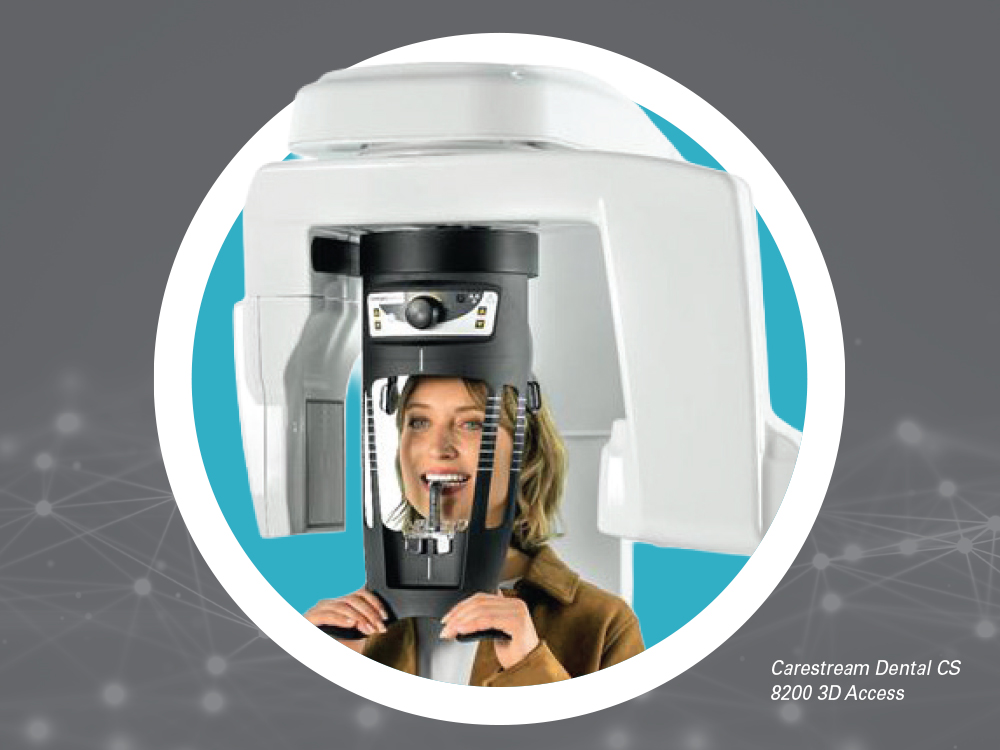
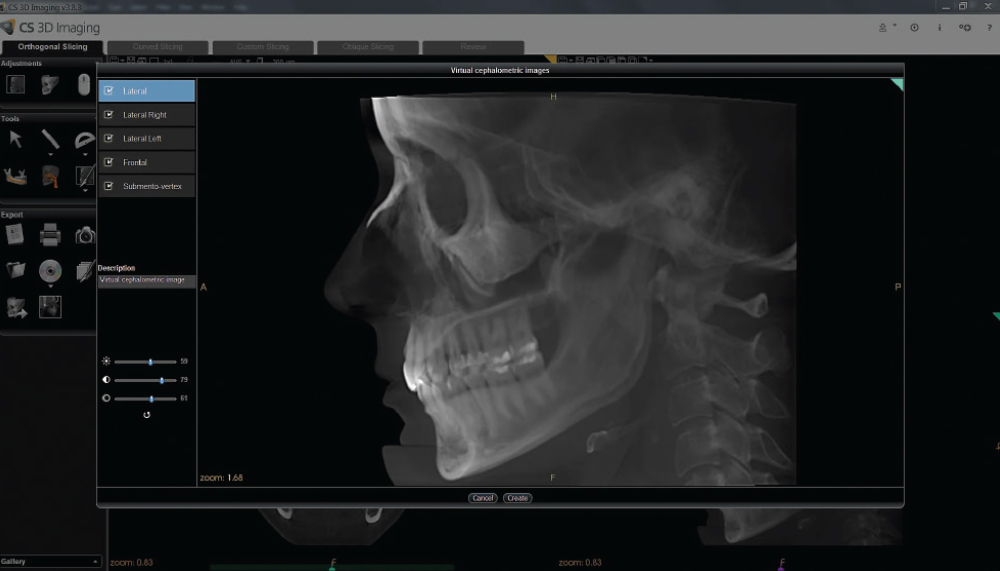
The CS 8200 3D Access (Carestream Dental, LLC; Atlanta, Ga.) was designed for that transition. Positioned as an entry into the world of CBCT imaging, it delivers state-of-the-art 3D imaging with a compact, intuitive system built for everyday practice needs. The platform combines panoramic imaging, CBCT, 3D model scanning and optional cephalometric imaging in a 4-in-1 solution, allowing clinicians to expand their diagnostic capabilities without overcomplicating the workflow.
BUILT FOR THE FIRST STEP INTO 3D
For many dentists, the question is not whether CBCT has clinical value, but whether the practice is ready for it. Will the team be comfortable using it? Will the system fit into the office? Will it make daily care more efficient or add complexity?
The CS 8200 3D Access answers those concerns with an intuitive interface, simple hardware and an ultracompact footprint. All available viewing settings are available on the same screen, making exam setup easier and helping support a faster workflow.
WHEN 2D LEAVES QUESTIONS BEHIND
Traditional 2D imaging remains essential, but it cannot always reveal the full anatomy behind a clinical concern. A periapical radiograph may suggest pathology without showing its full extent. A panoramic image may identify an impacted third molar without clearly defining its relationship to surrounding structures. An implant site may appear promising until ridge anatomy, bone volume or anatomical limitations are evaluated in 3D.
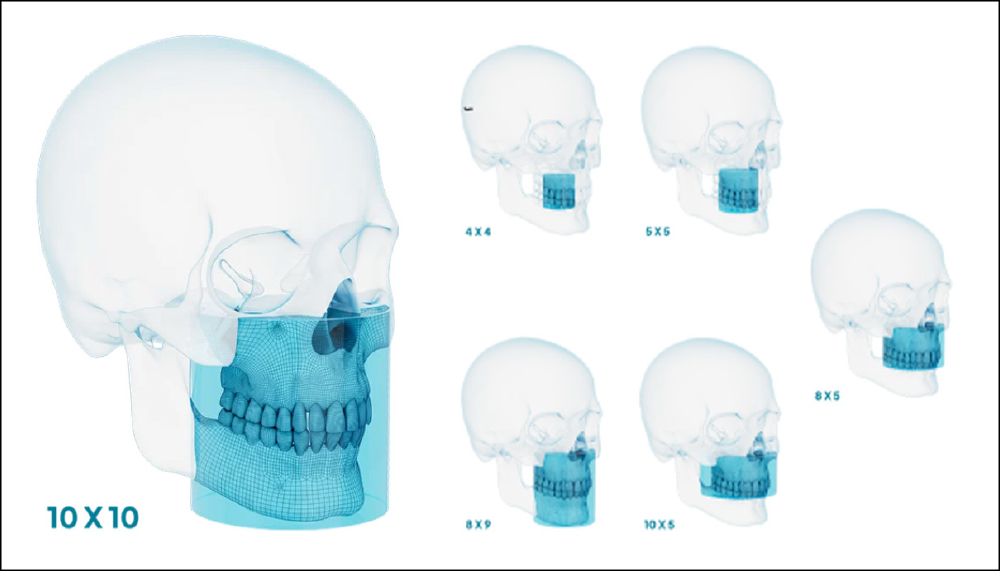
The CS 8200 3D Access gives clinicians another level of diagnostic information for implant planning, endodontics, periodontal assessment, fractures, third molars, impactions, orthodontic evaluation and other everyday indications. With up to six selectable fields of view, including full-arch scanning, the system allows clinicians to match the image to the clinical question and obtain the right view for each exam at the appropriate dose.
DETAIL THAT SUPPORTS DECISIVE TREATMENT PLANNING
The value of 3D imaging depends on image clarity. The CS 8200 3D Access offers 75-micron CBCT resolution, helping clinicians visualize fine clinical details, which is particularly advantageous in endodontic cases where subtle anatomy can influence diagnosis and treatment planning.
Artifact reduction is another important consideration. Many patients present with crowns, posts, restorations, implants or other metal structures that can interfere with interpretation. Carestream’s CS MAR software module is designed to reduce metal artifacts and allow more effective image comparison, supporting clearer visualization and more confident diagnosis.
A clearer view of anatomy can influence whether a tooth is restored or referred, an implant plan is modified, or a patient better understands a treatment recommendation.
FROM SCAN TO PLAN
For 3D imaging to become part of daily practice, the workflow must keep moving after the scan is captured. The CS 8200 3D Access is built on an open platform designed to support seamless workflow integration, including connection with CS Imaging software and digital tools used across restorative, surgical, orthodontic and collaborative treatment planning.
A scan may inform implant planning, guide a referral conversation, support lab communication or help a patient better understand why a treatment path is being recommended. When imaging data can move more easily through the digital workflow, 3D diagnostics become more useful in everyday care.
SAME-DAY IMAGING, MORE CONFIDENT CONVERSATIONS
One of the most practical benefits of in-office CBCT is immediacy. When the scan can be taken during the same visit, the dentist can evaluate findings, discuss options with the patient and determine the next step without waiting for an outside imaging appointment.
That can change the tone of the conversation. Rather than explaining uncertainty, the clinician can show the anatomy behind the recommendation. A 3D image can clarify why an implant requires additional planning, an endodontic case is more complex than it first appeared or a specific treatment path is recommended.
A SMARTER ENTRY POINT INTO CBCT
The promise is simple: more confident diagnosing for clinicians, greater clarity for patients and an accessible path to 3D imaging for dental teams.
For practices ready to move beyond the limits of 2D imaging, the CS 8200 3D Access offers a practical entry into CBCT, combining compact design, intuitive operation, selectable fields of view, 75-micron resolution, artifact reduction and open workflow integration.