
In this issue:
From Skepticism to Same-Visit Smiles: My Digital Dentistry Story
Author

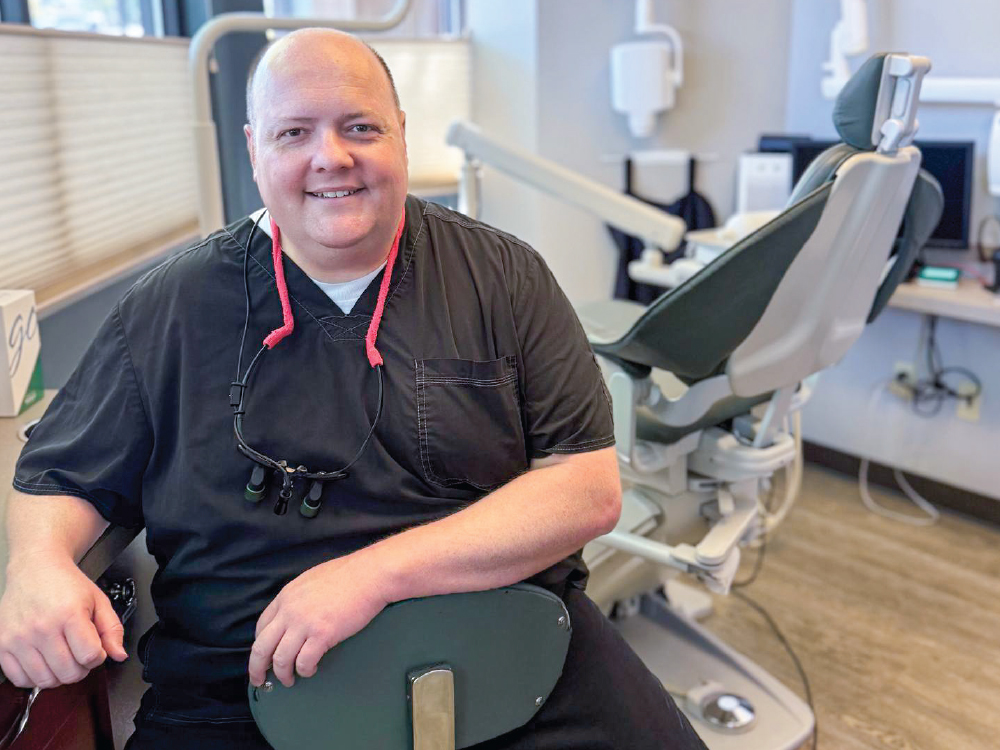
After more than a decade of watching the evolution of digital dentistry, I finally decided to embrace a fully digital, in-office workflow. What I found was even more than a faster, more efficient system. I found a way to provide my patients with a transformative dental experience.
I’ve gone from a skeptic to running a multi-mill, 3D-printing practice that fabricates implant restorations as well as pediatric appliances. Instead of the headaches and difficulty I expected while adapting to these new processes, I found a model of care built around speed, simplicity, precision and, most importantly, trust.
ADOPTING TECHNOLOGY FOR A GROWING PRACTICE
I was first introduced to digital dentistry in 2013. Some of the scanners available at that time required titanium dioxide contrast powder and, while the concept was promising, the workflow felt messy and impractical. I could see the potential but did not think the technology was quite ready.
My perception changed when I got my hands on the iTero Element® 2 scanner (Align Technology, Inc.; Tempe, Ariz.) while working in a pediatric practice in Santa Fe, New Mexico. I began using it for restorative dentistry and immediately saw meaningful improvements in accuracy, speed and ease of use. For me, that was the point when digital scanning finally felt practical enough to make a real difference in everyday care.
I was equally wary of early milling systems. Too many restorations fractured because of material limitations, so I kept an eye out for when both materials and technology would become more predictable and trustworthy.
In 2019, I purchased a practice in Ashland, Oregon, that was heavily focused on implants but still relied on film X-rays and traditional VPS impressions. While attending a course at the Resnik Implant Institute, I came across a Glidewell exhibit showcasing the fastmill.io™ and learned it could mill fully sintered zirconia. That was the moment I chose to believe that technology had evolved enough to support the kind of workflow I wanted to build.
We ordered an iTero scanner in March 2020, and it arrived the very day COVID- 19 shut everything down. My first instinct was to send it back, but instead I took it home and started experimenting with it. When the practice reopened, the impact was immediate. Turnaround times became much faster, cases came back from the lab more accurately, and seating was easier and more efficient.
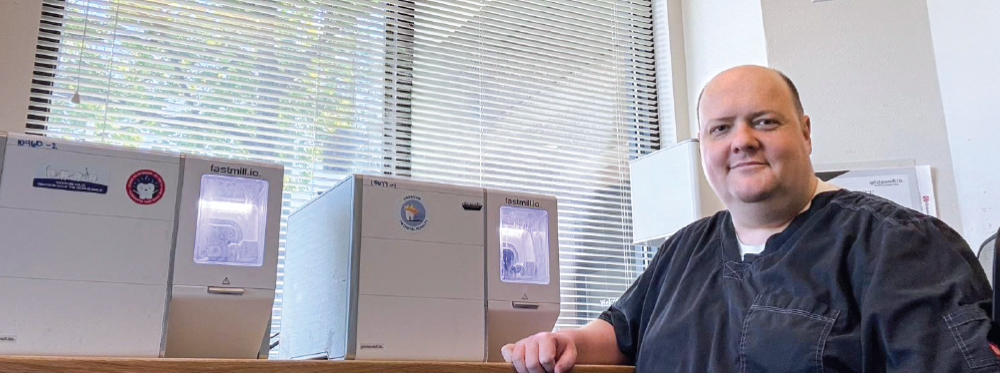
Not long after that, I committed to adding a fastmill.io mill. By 2021, the growth in our practice made a second mill necessary, not just for redundancy, but because the volume demanded it.
HOW DIGITAL DENTISTRY CHANGED MY PRACTICE
Like many clinicians, I had real concerns about adopting a fully digital, chairside workflow. Training and support were my biggest questions because with any new technology, you don’t know what you don’t know. What changed my perspective was having access to responsive design help, troubleshooting and workflow guidance. Once I experienced that level of support, adoption felt far less intimidating.
Today, we run two mills and a 3D printer, and we are even beta-testing newer technology like facial scanning. Digital dentistry now drives everything we do, not because it is new, but because it has become essential to how we deliver care.
The shift changed our day-to-day workflow in meaningful ways. We now complete crown preparations and seat crowns in the morning, then use the afternoon for team meetings and operational planning. By consolidating work into four focused days, we eliminated Friday hours and created a consistent long weekend for the team.
Before that change, team meetings often cut into production time. Once we restructured the schedule, we were able to maintain the same output even with the clinic closed for part of the day. The result was not only more efficient, but less stressful. Scheduling became easier, emergencies became more manageable, and we were better able to give patients the three things they want most: care that is painless, affordable and quick.
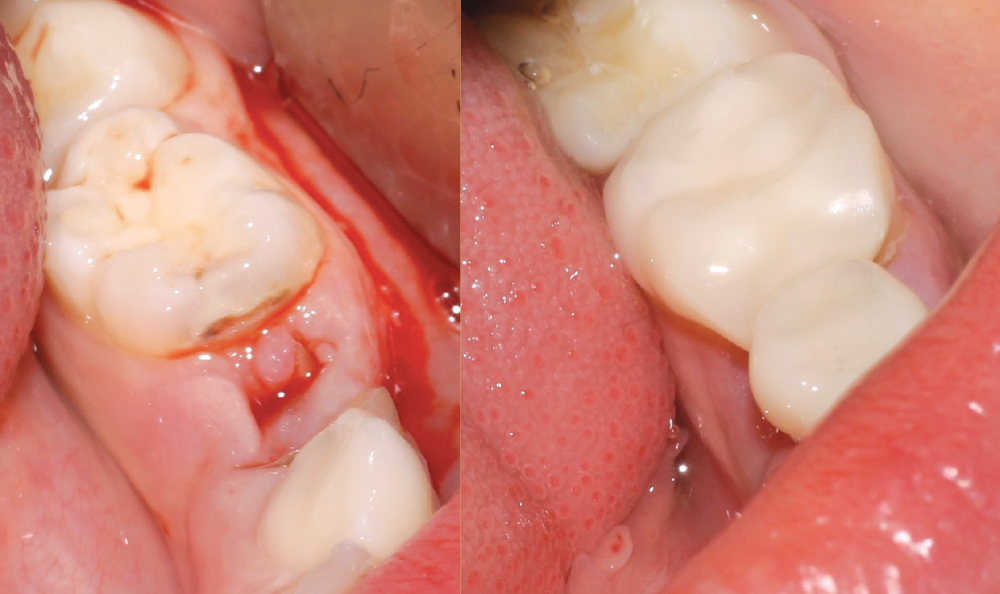
Production increased as we moved to a same-visit model, but production is not the metric that matters most to me. Trust is. Patients know that if something breaks, I can often fix it immediately. Whether it is a fractured front tooth, a bridge or an implant provisional, I can address the issue right away. AI-driven design, digital mirroring of adjacent teeth and the elimination of traditional impressions all make care faster and more predictable. That immediacy builds confidence, and confidence builds loyalty.
WHY TECHNOLOGY BUILDS TRUST
Digital dentistry has also changed the culture of my practice. Team motivation increased as we added new technology. One example is Brittany, my “assistant of awesomeness,” who took the initiative to calculate how many mouthguards we could produce for patients based on the implant restorations we were already doing. She effectively mapped out how the addition of a 3D printer could pay for itself. That kind of engagement happens when a team sees technology not as a burden, but as a tool that expands what is possible.
We perform a full-mouth scan on every new patient so they can see what we see. That digital co-discovery changes everything. Patients understand their condition immediately, which leads to more collaborative treatment planning. Instead of simply telling them what they need, we can ask, “What do you think?” That shared decision-making leads to greater treatment acceptance because patients feel informed and involved in the process.
Patients respond strongly to the speed and transparency of a technology driven experience. They recognize right away that this is not old-school dentistry. Fast appointments, visual planning and predictable outcomes help justify the value of care. Those conversations about cost become easier when patients understand that the value is not only the restoration itself, but fewer appointments, less disruption and a more convenient path to the final result.
When patients can see digital smile previews, printed models or even trial designs placed intraorally, the experience becomes transformative. They begin to understand how quickly their appearance and confidence can change. At that point, cost objections become less significant because they are no longer simply buying a crown. They are investing in themselves.
Education and customer support have played a major role in making our practice’s transformation possible. I have taken nearly every course I can, from bridges to anterior esthetics to screw-retained crowns. What stands out is not only the clarity of the instruction, but also the emphasis on staff training. Just as important, the learning does not end after a weekend course. Access to clinicians, engineers and designers creates an ongoing support system that is invaluable in daily practice. In many ways, it feels like having a major dental lab on speed dial.
In addition, this technology has also opened new possibilities in areas I might not have expected, including pediatric care.
For clinicians who remain hesitant about chairside digital dentistry, my view is simple: If you do not yet have a digital scanner and are not seriously considering chairside milling and 3D printing for restorative dentistry, you are already behind. This technology is about more than efficiency. It is about relationships. It is about creating a better experience for patients, building confidence in treatment and giving your team the tools to do their best work
iTero Element is a registered trademark of Align Technology, Inc.