
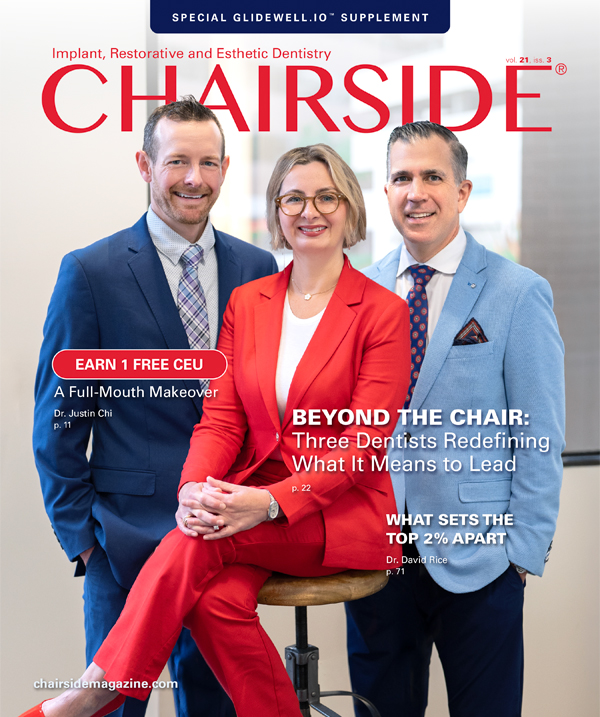
In this issue:
How Does Intellectual Property Improve Patient Care?
Author

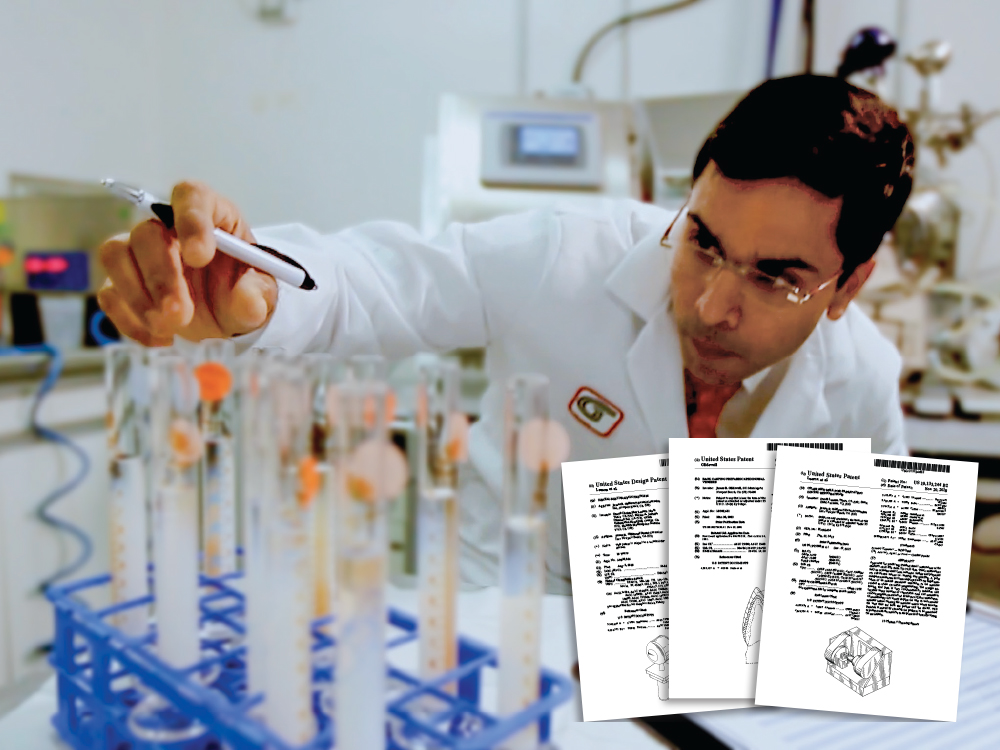
You may not think about intellectual property while scanning a preparation, treatment planning an implant case or delivering a restoration. Yet many of the tools, materials and techniques you rely on every day exist because they were once protected, refined and brought to market through patented innovation.
Every innovation that benefits your practice begins with an idea. The idea can take years of engineering, testing, refinement and investment to bring to market. Patents help protect that process and give inventors and companies a way to safeguard novel solutions long enough to justify the cost of development.
FROM IDEA TO OPERATORY
In the simplest terms, a patent grants the inventor a period of time when competitors are prevented from copying the innovation. But in practical terms, especially in a field like dentistry, it does something larger: It creates an incentive for companies to invest in innovation. Without this legal protection, competitors could simply copy the result without bearing any of the upfront cost of development. That reality would discourage investment in the very kinds of advancements that push dentistry forward.
Just as important, patents require disclosure. In exchange for protection, inventors must describe how their invention works and contributes to the broader knowledge base that helps industries evolve over time. The National Science Foundation identifies patents as one of the documented outputs through which newly created knowledge is transferred and applied across sectors.1
For dentists, that means technologies used chairside often reflect far more than a single product launch. They reflect years of experimentation, technical problem-solving, and incremental improvement, much of which is visible in the patent record long before it becomes visible in a practice.
WHY PATENTS MATTER TO THE ECONOMY
Patents are often discussed as legal tools, but they are also economic engines. The U.S. Patent and Trademark Office says patents help generate more than $8 trillion in economic activity each year.2 That broader economic context is relevant to dentistry, given that dental technology depends on the intersection of healthcare, precision manufacturing, digital design, software and materials science.
In other words, a patent portfolio is not merely a collection of legal assets. It is a signal of sustained technical effort and evidence that resources are being committed to developing solutions that improve care and efficiency over time.
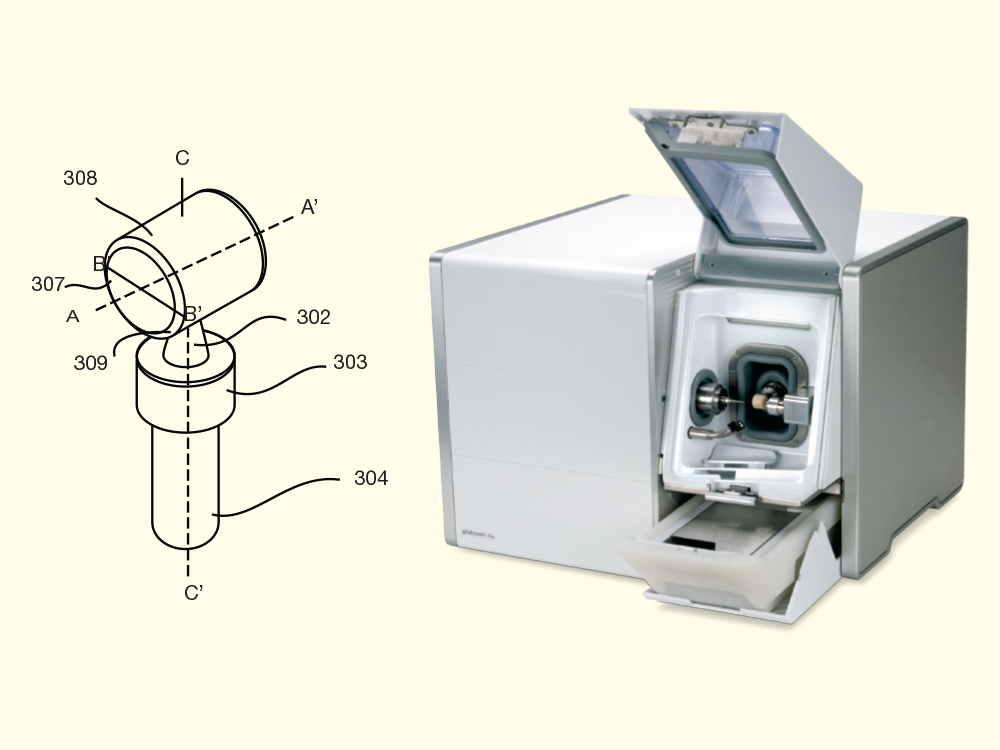
Dental patents are often not just about products. They are about systems, workflows, software environments and manufacturing methods. Digital dentistry offers some of the clearest examples. CAD/CAM systems, design software, intraoral scanning, 3D printing and clear aligner workflows are all shaped by layers of intellectual property that extend far beyond the final device or appliance.
For dentists, patents may seem distant from everyday practice, but their effects are not. They influence which technologies reach the market and where the next wave of clinical capability may emerge.
Since its first patent in March 2005, Glidewell has continued to advance the science of restorative dentistry with proprietary inventions in CAD/CAM engineering and manufacturing, software and equipment, implant manufacturing, customized at-scale milling, additive manufacturing, and a whole range of devices that help drive the dental world forward.
In dentistry, a patent isn’t just a certificate on a wall or a corporate milestone; it’s the mark of someone who saw a challenge in daily practice and chose to solve it in a way that could be tested, improved and shared at scale.
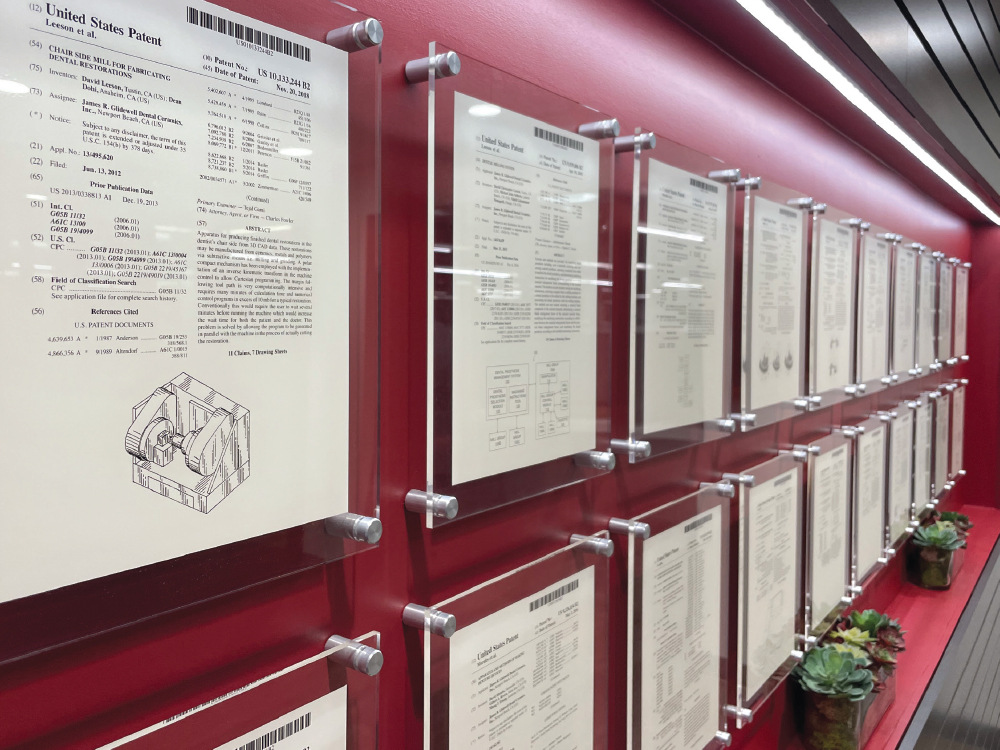
At Glidewell, that mindset is rooted in constant change. Materials evolve, workflows advance and expectations for care continue to rise. Standing still is not an option. Innovation must be continuous, intentional and practical for the clinician. Patents aren’t separate from dentistry; they’re part of how the profession moves forward, turning everyday clinical challenges into better solutions for both dentists and the patients they serve.
References
-
National Science Board; National Science Foundation. Invention, knowledge transfer, and innovation
[internet]. Alexandria (VA): National Science Foundation; 2024. Available from: https://
-
Vidal K. Quality U.S. patents drive our economy and solve world problems [internet]. Alexandria
(VA): United States Patent and Trademark Office; 2024 Dec 9. Available from: https://www.
uspto.gov/blog/quality-us-patents-drive-our-economy-and-solve-world-problems.