
2201 Dupont Dr., Irvine, CA 92612
© 2020-2026 Glidewell. All rights reserved.
800-854-7256 USA
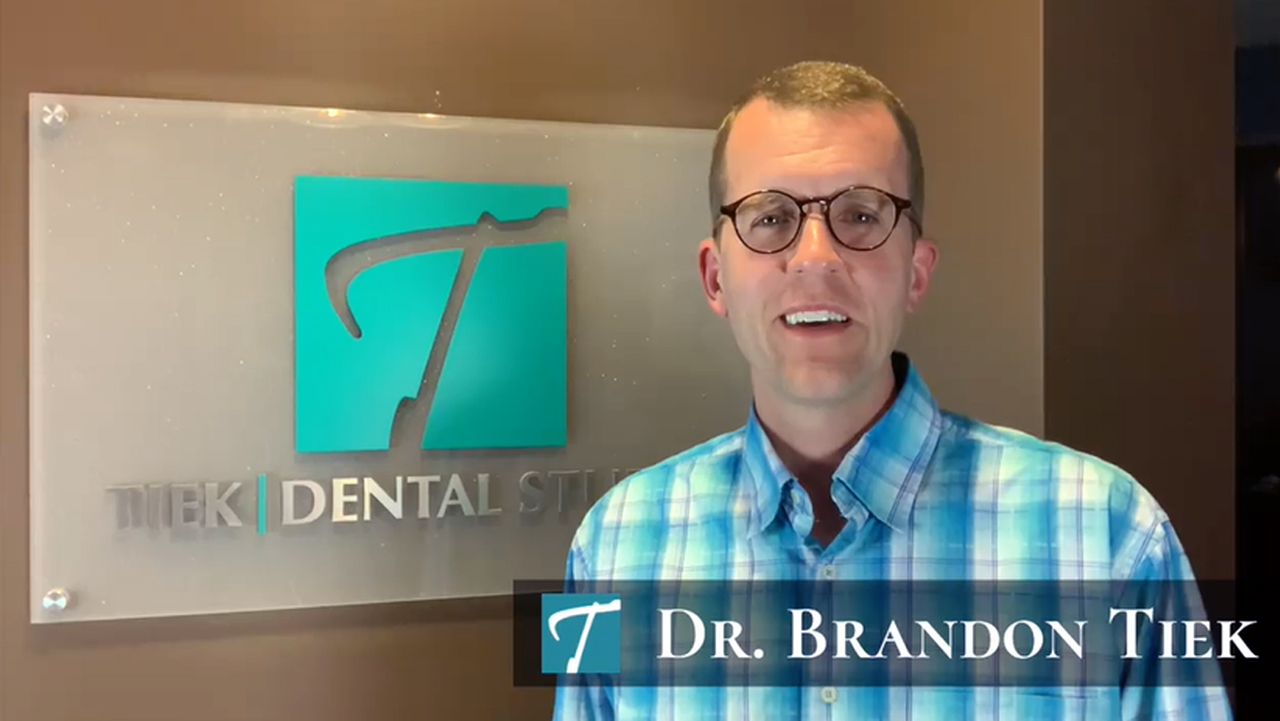
Podcast host Dr. Brandon Tiek turns dental tips into easy listening for patients.

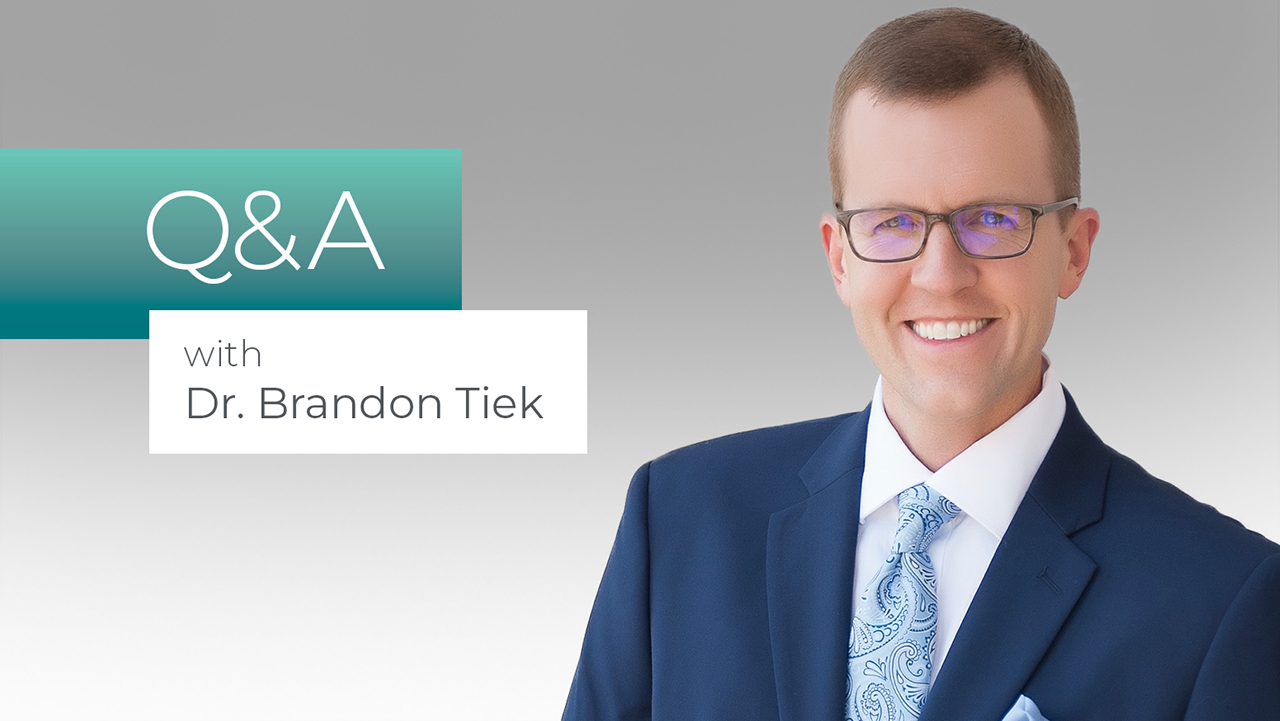
He has a dentist’s hands and the mellifluous voice of a drive-time radio host. So with those two qualities, you better bet he has a podcast.
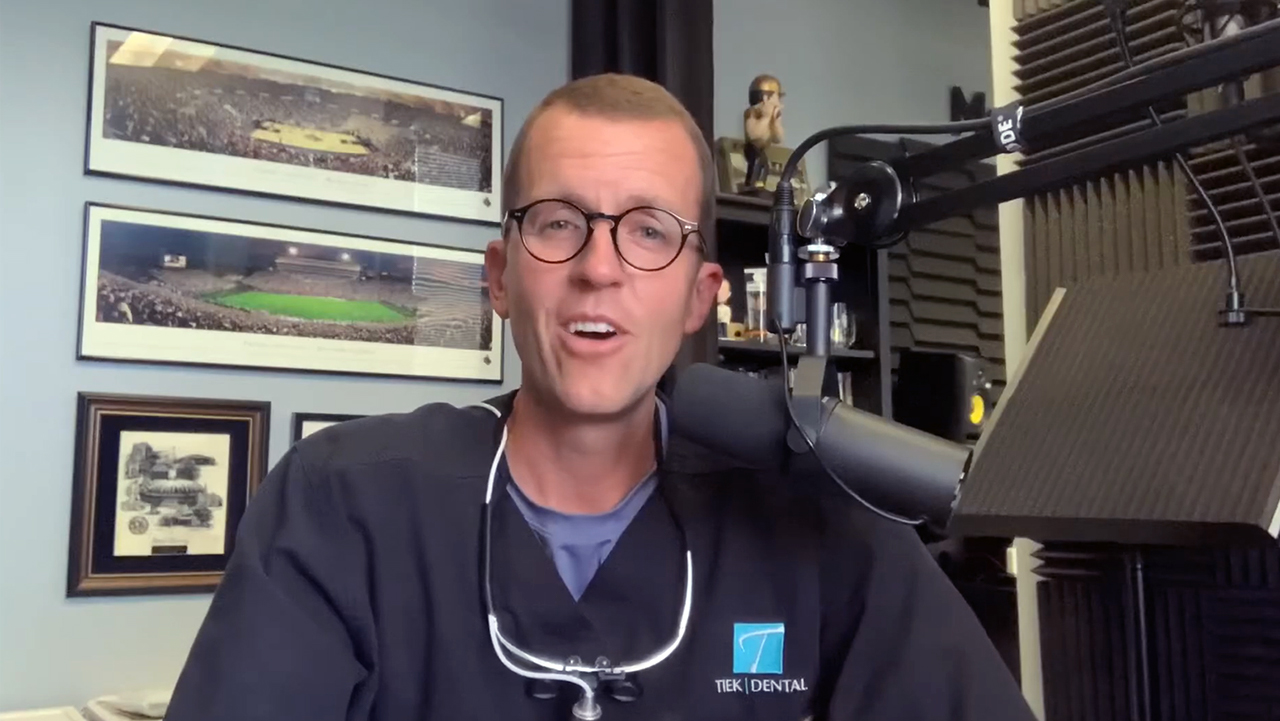
Dr. Brandon Tiek is the clinician behind “Teeth Talk Radio,” a dental podcast that he records from his dental office in Carmel, Indiana. His practice, which is aptly named Tiek Dental Studio, houses a recording setup at the back. Acoustic foam panels and a microphone orient the space for a genuine audiophile like Dr. Tiek, while sports memorabilia and other office knickknacks dot the background.
He launched “Teeth Talk Radio” in March, when dentistry in the U.S. was waylaid by the coronavirus. For some episodes, he ventures beyond oral health, true to the show’s tagline: A health podcast you can actually smile about. In other episodes, he walks listeners through the range of topics that arise on a daily basis in dental practices, like tooth sensitivity, trendy toothpastes and the debate about metal vs. metal-free fillings.
No matter the topic, the production quality remains pristine. And his encouraging demeanor is equally steady. In this Q&A with Smile Bulletin, he talks about his experience as the “Teeth Talk Radio” podcast host these last several months and why he chooses BruxZir® Esthetic Zirconia for his patients.
Kiali Wong Orlowski: Why did you create the “Teeth Talk Radio” dental podcast?
Dr. Brandon Tiek: I am a podcast junkie. I listen while I’m running and cycling. And I’d noticed that most dental podcasts out there were peer to peer. There really isn’t much for patients, to my knowledge. So when dental offices closed in my state in the spring, I decided to launch a podcast to talk about dental topics and overall health. This platform seemed like a nice opportunity to answer patients’ most frequently asked questions. I also enjoy touching on topics that many patients might not think to ask about, such as anxiety about going to the dentist or bruxism.
KO: That seems like a really effective approach to dental patient education.
BT: Yeah, it definitely helps. With this dental podcast, I can build on these chairside conversations that otherwise are limited to individual appointments. I really enjoy getting to take a deeper dive into topics and share these episodes with my patients and listeners beyond my community in Carmel, Indiana. And I’m grateful to say that the feedback on the show has been good so far.
KO: How does the show reflect your philosophy as a practitioner?
BT: I describe myself as an integrative dentist. I think that a lot of people can have different definitions of that. For me, it’s simple: I integrate all kinds of health into my practice. Obviously, I’m a dentist first. But I’m also someone who feels very passionate and very adamant about learning about overall health. I want to change the stigma around dentistry and open up the discussion, because our work is about more than fixing teeth. As dentists, we’re in a position to identify the first stages of a lot of chronic diseases, just by looking at someone’s mouth. And in my community, I’m fortunate to be connected with a lot of nondental practitioners — physicians, specialists, naturopaths and chiropractors. We all really do work together so we can improve the overall health of our patients.
KO: In terms of restorative services at your practice, you consistently prescribe BruxZir Esthetic Zirconia for your patients. What prompted your switch from glass ceramics to BruxZir Esthetic restorations?
BT: Well, up until a couple years ago, I had been prescribing BruxZir Full-Strength Zirconia for most posterior cases. The strength of zirconia in the posterior was so much more than other restorative materials. It was impressive, really. I appreciated the amount of strength and stability in these zirconia crowns for the posterior — and the simplicity.
So when BruxZir Esthetic Zirconia came out in 2018, I knew I wanted to give it a shot. For the first few cases, we tried anterior crowns, and I remember thinking, “Wow, this could change the whole trajectory of esthetic dentistry.” You know, for so many years in dentistry, you had to make a choice with restorations: Do you want strong, or do you want beautiful? You could not have both. But now, you quite literally can. I can tell my patients: “Hey, this restoration is going to be a wonderful fix. It’s going to be very stable, very strong, but beautiful at the same time.” I think BruxZir Esthetic Zirconia has just opened up a whole new era in cosmetic dentistry.
KO: So after you adopted BruxZir Esthetic Zirconia for anterior restorations, did you start prescribing BruxZir Esthetic Zirconia for the posterior as well?
BT: I did. I have not seen any negative effects from using BruxZir Esthetic Zirconia for posterior cases. If a patient’s teeth show a lot of damage due to bruxism, I’ll go for the stronger BruxZir Full-Strength Zirconia for that patient’s restorations. But when I can, I do use BruxZir Esthetic Zirconia in the posterior because it’s plenty strong for anywhere in the mouth. And of course the material blends really well with the natural dentition and the natural translucency of teeth, so it’s very difficult to distinguish from natural teeth. That makes the results very fun and rewarding. I can place the crown, and it’s difficult for the patient to even know which tooth I just worked on. It’s really cool.
KO: Those seamless results also are a matter of accurate shade-matching. When you recently evaluated a prototype of the new BruxZir® Shade Guide, what were some of your initial thoughts?
BT: Well, I had not stopped to think about a zirconia shade guide previously, but I think it makes sense for the dental industry to gain a zirconia shade guide now. When I tested out the prototype, using the zirconia shade tabs did prove really helpful for my BruxZir Esthetic cases. I think that’s because of the lifelike translucency of BruxZir Esthetic Zirconia.
And I liked the simplicity of the guide. I don’t need a guide with 400 shade options. Typically, I’m prescribing from a range of a few shades. So, I think the prototype shade guide delivered some needed simplicity for shade-matching. I’ll be one of the first in line when the official version is released next year.
Send blog-related questions and suggestions to hello@glidewell.com.


2201 Dupont Dr., Irvine, CA 92612
© 2020-2026 Glidewell. All rights reserved.