
2201 Dupont Dr., Irvine, CA 92612
© 2026 Glidewell. All rights reserved.
800-854-7256 USA
The underestimated costs of restorative dentistry and what to look for in a lab that treats consistency as a system rather than a craft.
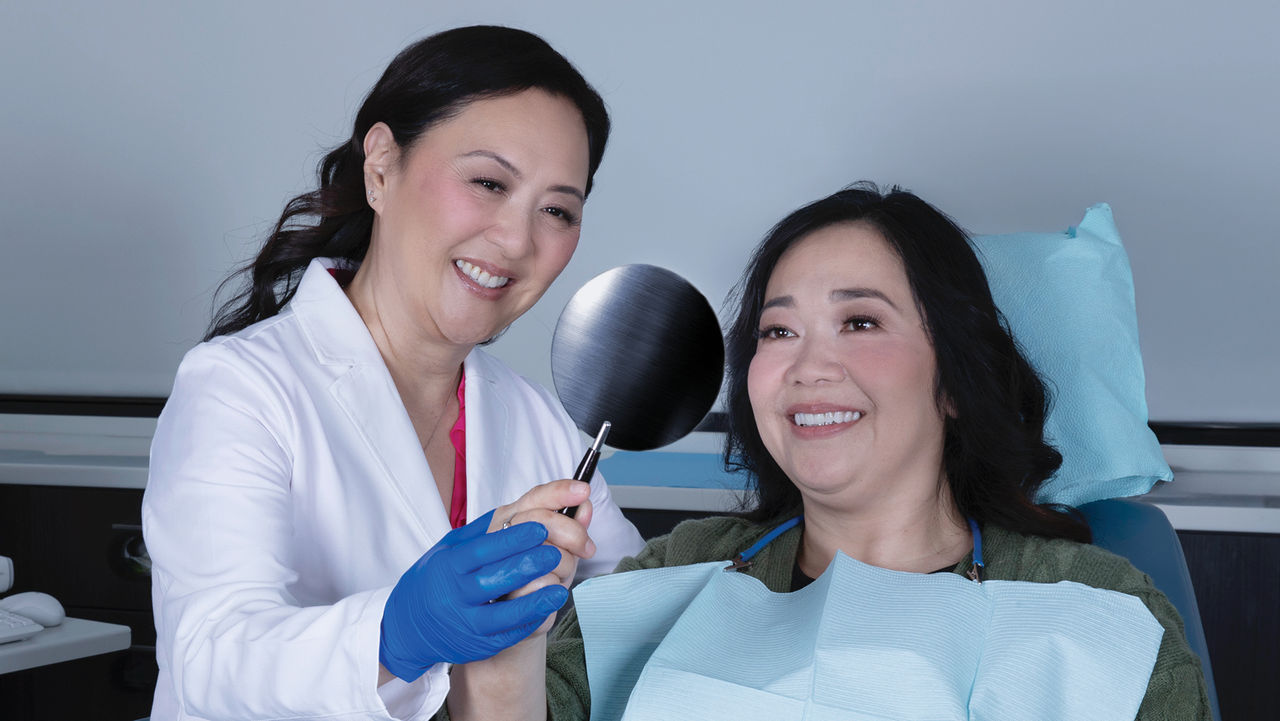
Dental practices can lose close to 40 hours of chair time per year to crown remakes and adjustments. That is nearly a full clinical week that many dentists have never actually calculated.
When it comes to crown remakes, dentists often think in terms of time and money. But underneath those costs is something less measurable but equally important: certainty. And certainty is where the real cost adds up.
Having confidence in your skills is not the same as having certainty in the system. Certainty is what you feel when the systems around you from the lab and workflow to the infrastructure support your work. When you know what to expect from your lab, you run a fundamentally different kind of practice.
This article breaks down why lab inconsistency is one of the most underestimated costs in restorative dentistry, what drives it, and what to look for in a lab that treats consistency as a system rather than a craft.
A practice running 15 crown cases per week with a 10 percent remake or significant-adjustment rate, which most labs would consider normal, loses roughly 1.5 cases per week to rework. Across a year, that's approximately 75 cases. Each one represents:
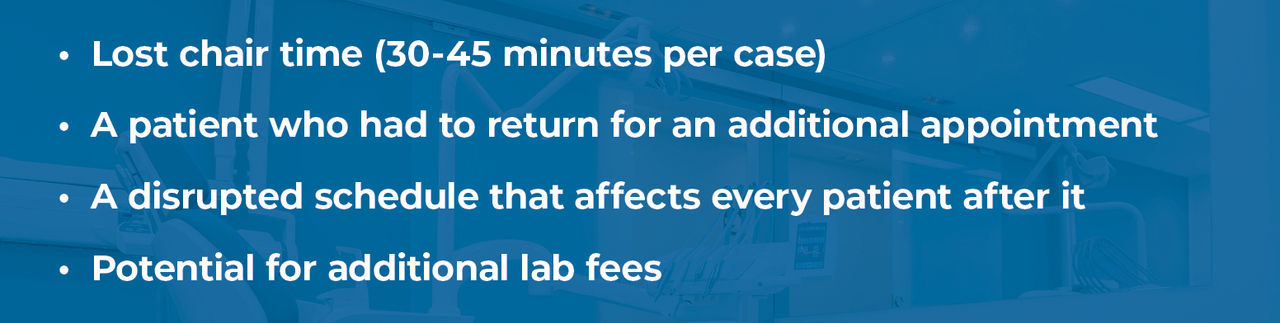
The chairside adjustment time alone adds up to more than 40 hours per year. That's about a full week of clinical time redirected away from treatment.
And that's before the less visible costs: the patient who doesn't rebook, the referral that never happens, and the quiet erosion of certainty that comes from never fully knowing whether a routine seating appointment will stay routine.
Lab inconsistency isn't a minor inconvenience. It's a systemic tax on the practice.
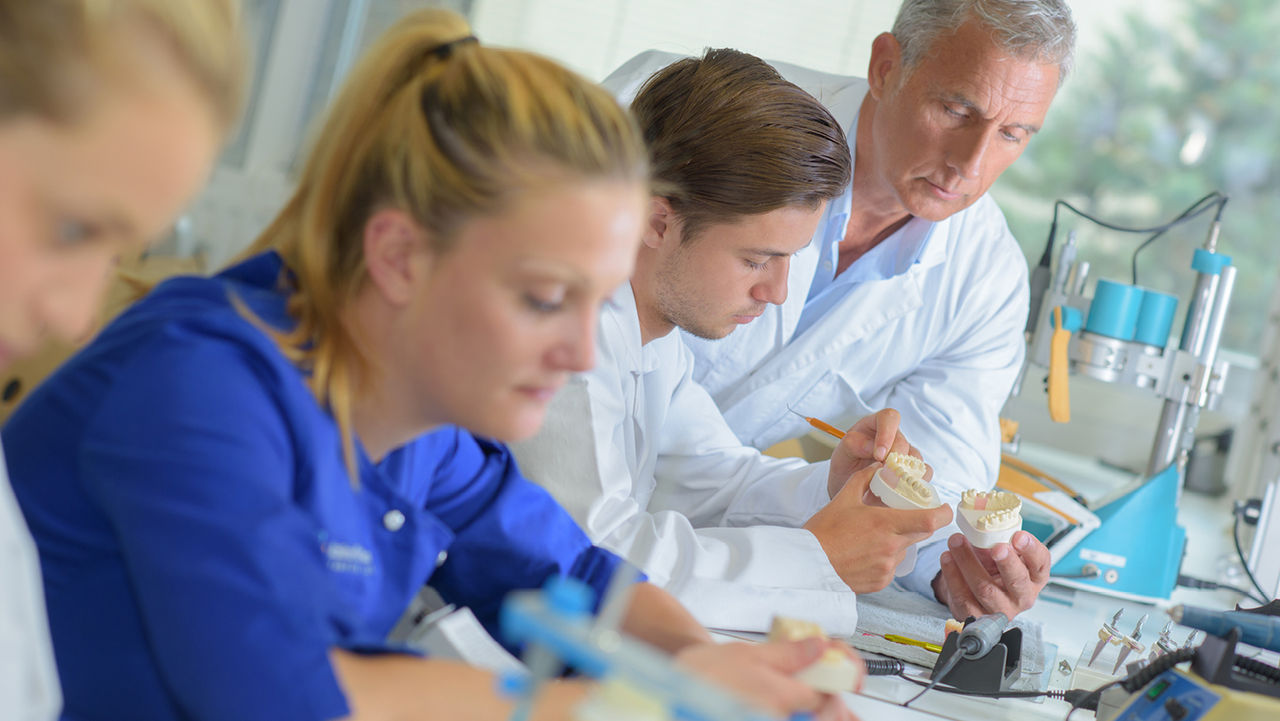
To understand how to reduce remake rates, it helps to understand where variance originates.
Most dental labs are built around technicians’ skill. In a given day, a technician handles a mix of case types, applying judgment at each step from margin interpretation and occlusal design to contact pressure. But even the most skilled technicians bring natural variation to their work, and their performance can vary between morning and afternoon.
On top of that, physical impressions add another layer of variability. Distortion during shipping, inconsistencies in how stone models are poured, and subtle differences in margin interpretation can all affect how a crown fits, even before a technician touches it.
Digital scanning reduces some of that variance, but not all of it. Scanner techniques, software processing, and how a lab handles digital files all introduce their own sources of deviation.
What you end up with is a bell curve of outcomes. Some cases seat perfectly on the first try, some require chairside adjustment, and some go back. The width of that curve, and how often it tails into the remake zone, is determined almost entirely by the systems and infrastructure behind the lab. Over time, that variability begins to erode your certainty.
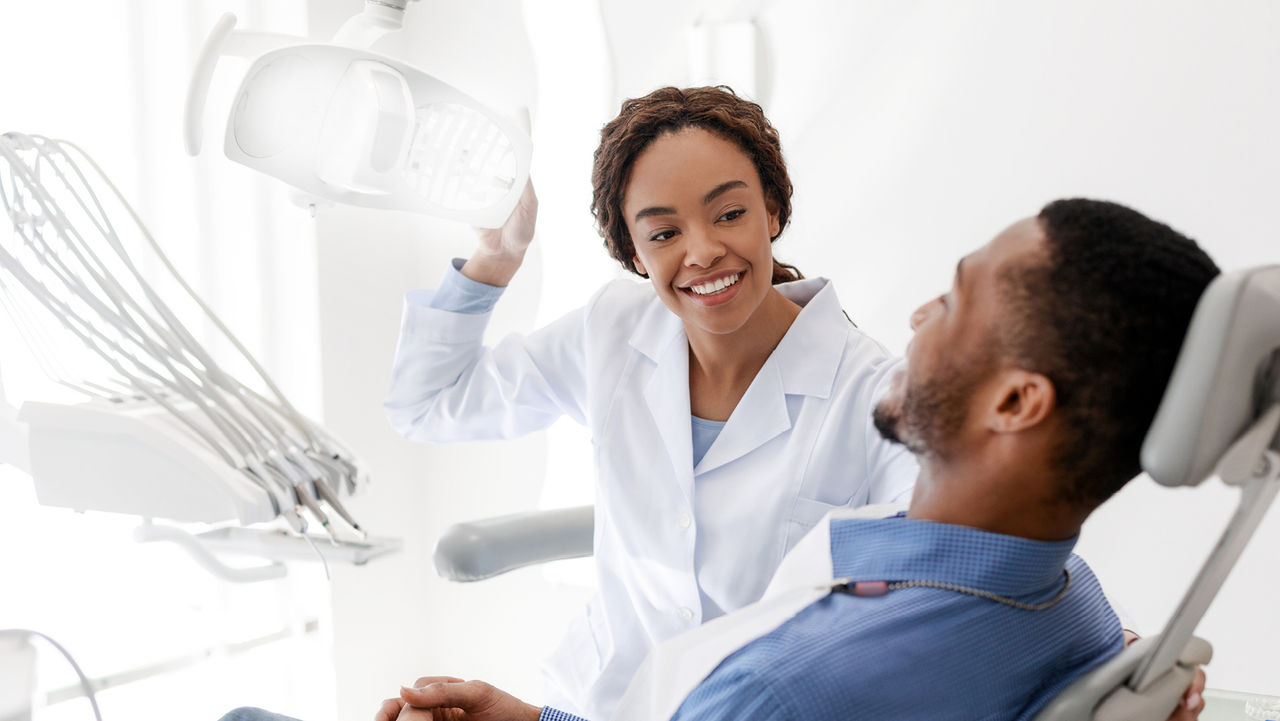
Here’s what that variability looks like in practice.
It’s a Tuesday morning. Your 9 o’clock is in the chair for a straightforward molar crown, a case you sent to the lab two weeks ago. The crown arrives. You open the box. You try it in.
It doesn’t seat.
What follows takes about ninety minutes. You adjust. You check contacts. You adjust again. You send the crown back, place a temporary, call the lab, and reschedule a patient who took half a day off work. That’s the version where things go relatively well.
Now consider the alternative. Not a better technician, but a different system.
At Glidewell, AI-powered design tools trained on millions of cases, automated manufacturing that measures tolerances in mere microns, and machine vision quality control work together to catch issues before a case ever ships. The goal is not simply to make good restorations, but to make consistent ones across every case.
The difference of our technology is measurable.
Now the same Tuesday looks different. The crown arrives. It seats. Contacts are right. Occlusion is right. The appointment takes 45 minutes. Your 10 o’clock is on time.
That version of Tuesday shouldn’t feel remarkable. But for many practices, it still isn’t the default. The goal of a systems-based lab is to make it the norm.
Lab choice isn’t just a quality decision. It’s a scheduling decision, and ultimately a certainty decision.
When you can rely on crowns arriving fit-ready on a predictable timeline, your schedule changes. At Glidewell, 65 percent of BruxZir® cases are now processed within two working days, making rapid turnaround a consistent operational capability rather than an exception.
That reliability removes variability from the day. Emergency cases don’t require extended temporization. Patients who need a crown this week can get one within days. And a seating appointment becomes what it should be: a 20-minute procedure, not a variable one.
Schedules are built without unnecessary buffer time. Appointments are booked with confidence, not contingency. When a patient asks when their crown will be ready, the answer is a commitment rather than a hedge.
It also changes what it feels like to run the day. The uncertainty around whether a seating appointment will go smoothly is subtle, but constant. When that uncertainty is removed, the practice becomes noticeably lighter, more efficient, and easier to run.
Most dental laboratories are built around skill, which means they can produce excellent work under the right conditions. But consistency in that model is never guaranteed. It depends on the technician, the case, and the inputs.
That variability shows up in the outcomes. The difference between a crown that seats immediately and one that requires adjustment or remake is rarely random. It is a reflection of the system behind the lab.
Most dentists have learned to work around this. They build buffer time into their schedules, plan for contingencies, and adjust expectations accordingly. Over time, that becomes the norm. But normalization is not the same as inevitability.
If you’ve never tracked your remake rate, that’s the place to start. Even an informal count of how many crown cases in a month required significant chairside adjustment or went back to the lab will give you a baseline.
Once you have that number, the more important question becomes what’s driving it. Ask your lab:
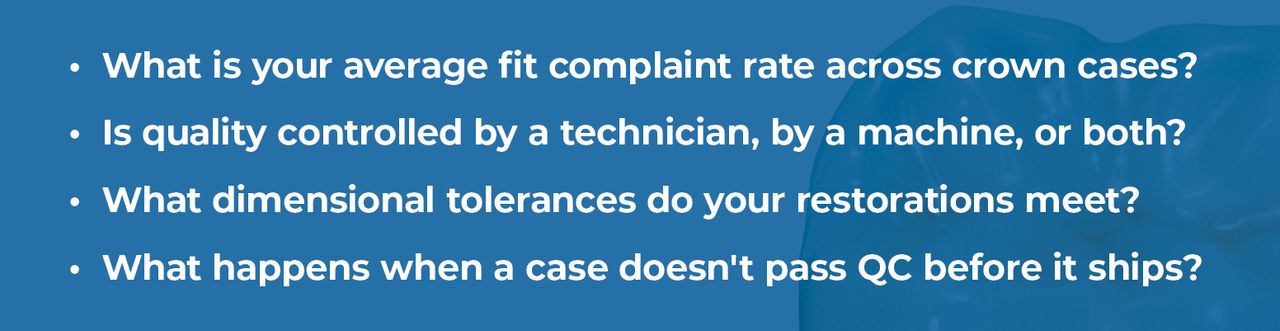
The answers will tell you whether your lab is treating consistency as an engineering problem or relying on the skill of whoever happens to be at the bench that day.
Because a crown that doesn’t fit isn’t just a bad morning. It’s a signal about the infrastructure behind the work.
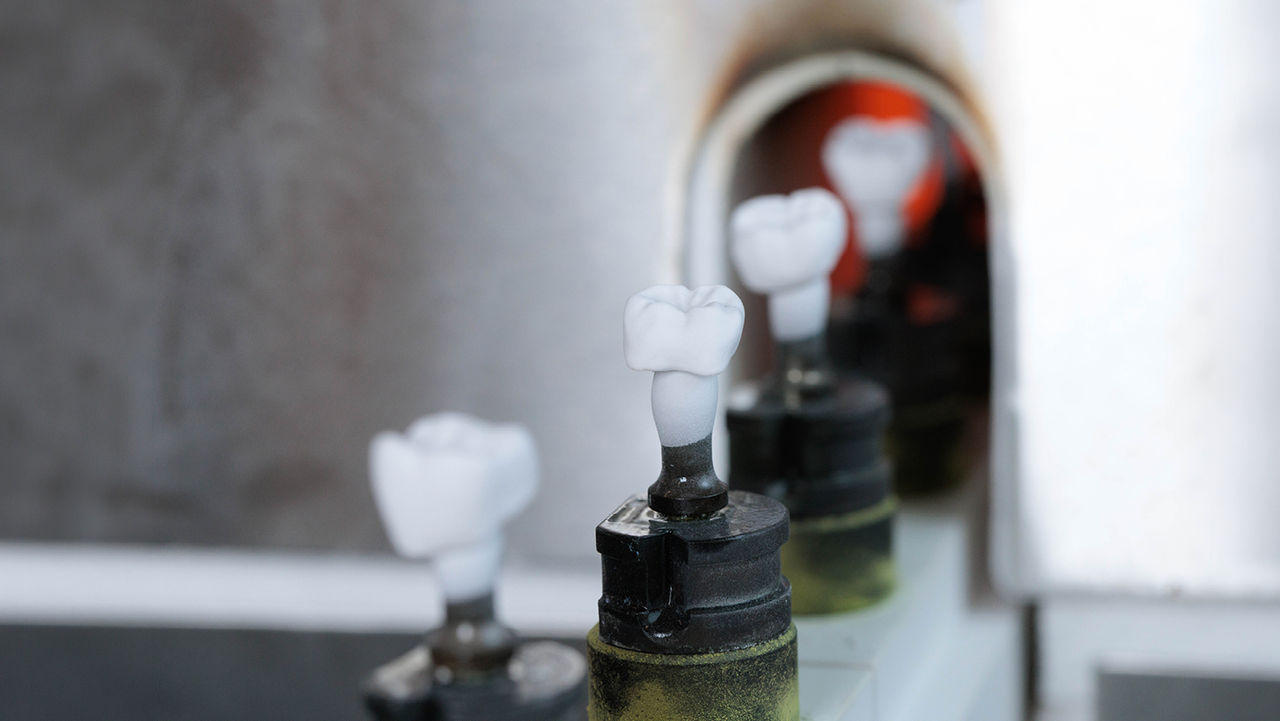
The shift from a skill-based laboratory to a system-based one isn’t primarily about technology. It’s about what that technology is designed to achieve.
At Glidewell, the underlying goal is to remove the variables that introduce uncertainty. To make consistent restorations across every case, regardless of who designed it, which mill produced it, or what day it shipped.
The AI systems that generate more than 95 percent of Glidewell’s restoration proposals are trained on tens of millions of curated cases — decades of clinical and technical knowledge refined through volume and validated against real-world outcomes. When the system designs a crown, it isn’t improvising. It’s applying institutional knowledge of what a well-fitting restoration looks like, with a level of consistency no individual technician, however skilled, can replicate across thousands of daily cases.
At scale, with more than 10,000 cases per day, consistency is no longer aspirational. It becomes a requirement. That’s why AI-assisted design, automated manufacturing, and multi-stage QC are not future investments. They are the infrastructure behind every case produced today.
The tolerances are not targets. They are minimums. Every restoration is verified through automated optical scanning against its digital design file before it leaves the facility. If it doesn’t meet the standard, it doesn’t ship. Quality control is built into the system itself.
The result is measurable: fewer fit issues, fewer remakes, fewer seating challenges, fewer disrupted schedules, and more predictable delivery. These aren’t marketing claims; they are the outcome of optimizing for certainty rather than average performance.
When dentists choose a laboratory, they often compare quality, price, and turnaround time. Those matter. But underneath all of them is something more important: whether the lab delivers certainty or simply competence.
Most labs offer competence. But certainty is different. Certainty is opening the box without wondering. Seating the patient without bracing. And running your day without building contingency into every crown appointment.
That’s what Glidewell is built to deliver, not just restorations, but the infrastructure and consistency that allow dentists to practice with confidence in every case.
If you’re ready to see what a lab built on systems rather than technician variability looks like in practice, start with a case. Explore Glidewell’s restorative solutions or speak with a Glidewell representative to learn more.
Send blog-related questions and suggestions to hello@glidewell.com.
/GL-DB-6859919-080426-1.jpg/_jcr_content/renditions/thumb-jpeg-mobile-full.jpeg)

2201 Dupont Dr., Irvine, CA 92612
© 2026 Glidewell. All rights reserved.