
2201 Dupont Dr., Irvine, CA 92612
© 2026 Glidewell. All rights reserved.
800-854-7256 USA
Everything you need to know about requesting, managing and documenting medical clearance, so you can treat complex patients with confidence.

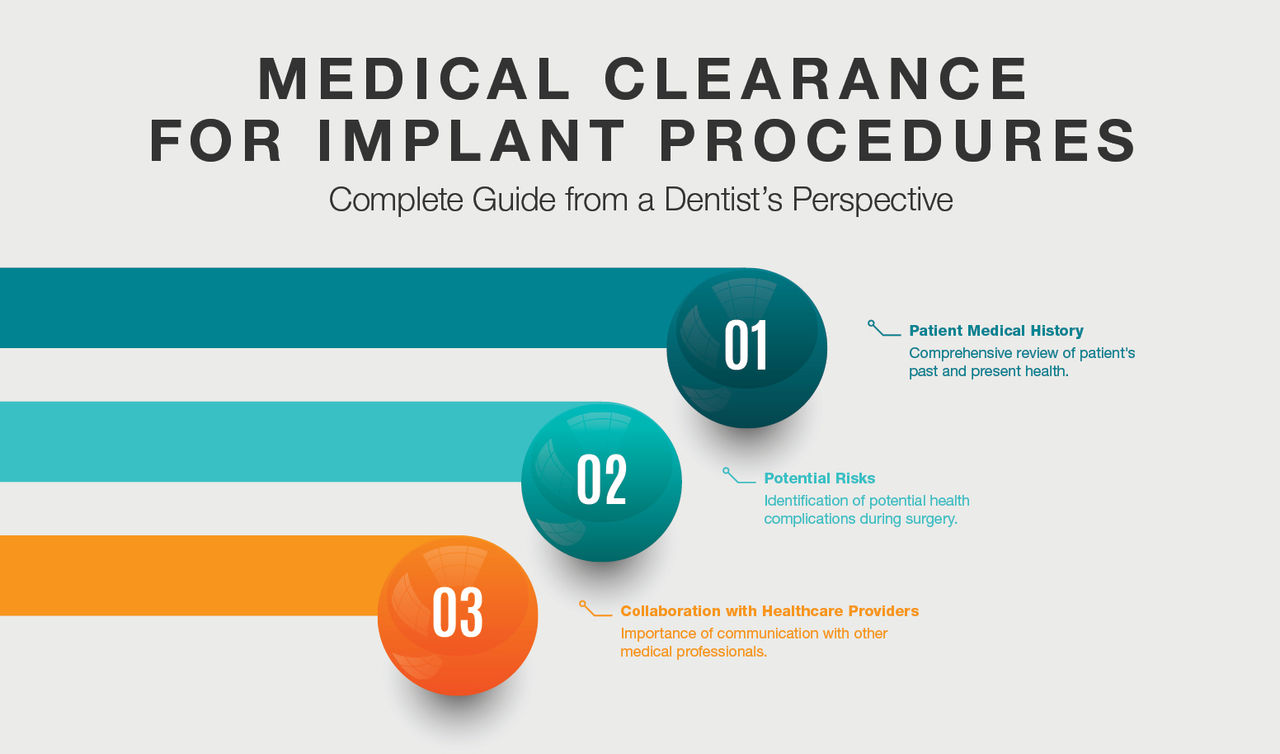
Dental implant therapy is widely recognized as a predictable and evidence-based treatment modality for the replacement of missing teeth; however, successful outcomes depend on far more than surgical proficiency alone. As today’s implant population becomes progressively older and more medically complex, clinicians are increasingly treating patients with systemic diseases, multiple chronic conditions, and extensive medication histories that may directly influence perioperative safety, anesthetic management, wound healing, and osseointegration.
Despite these realities, medical clearance in implant dentistry is frequently misunderstood or approached too simplistically. For some clinicians, it may consist only of confirming glycemic control or obtaining a brief verbal approval from a physician. In reality, comprehensive medical clearance is a structured process of systemic risk assessment designed to identify medical conditions, medications, and physiological factors that may alter treatment planning, surgical risk, anesthesia considerations, or postoperative healing. Equally important, effective medical clearance requires clear, procedure-specific communication between the dentist and physician to support safe, predictable, and medically appropriate implant care.
Medical clearance is a formal request for physician evaluation to determine whether a patient is medically stable to undergo a proposed dental procedure. Its purpose is not simply to obtain “approval,” but to assess how underlying systemic conditions, medications, and overall health status may influence perioperative safety, anesthetic management, surgical risk, and postoperative healing. An effective medical clearance process requires a structured, procedure-specific form that provides the physician with detailed information regarding the planned treatment, anticipated surgical duration, sedation modality, expected blood loss, and proposed perioperative medications, allowing for a more meaningful and clinically relevant assessment.
In implant dentistry, obtaining appropriate medical clearance is an essential component of comprehensive risk management and patient safety. When a patient’s systemic condition cannot be adequately evaluated or stabilized, elective implant therapy should be deferred until additional medical assessment is obtained. Equally important, medical clearance should be thoroughly documented in writing rather than relying solely on verbal communication. A detailed, signed physician response not only improves interdisciplinary collaboration and treatment planning, but also strengthens informed consent, enhances medicolegal defensibility, and helps establish that appropriate standards of care were followed prior to treatment.
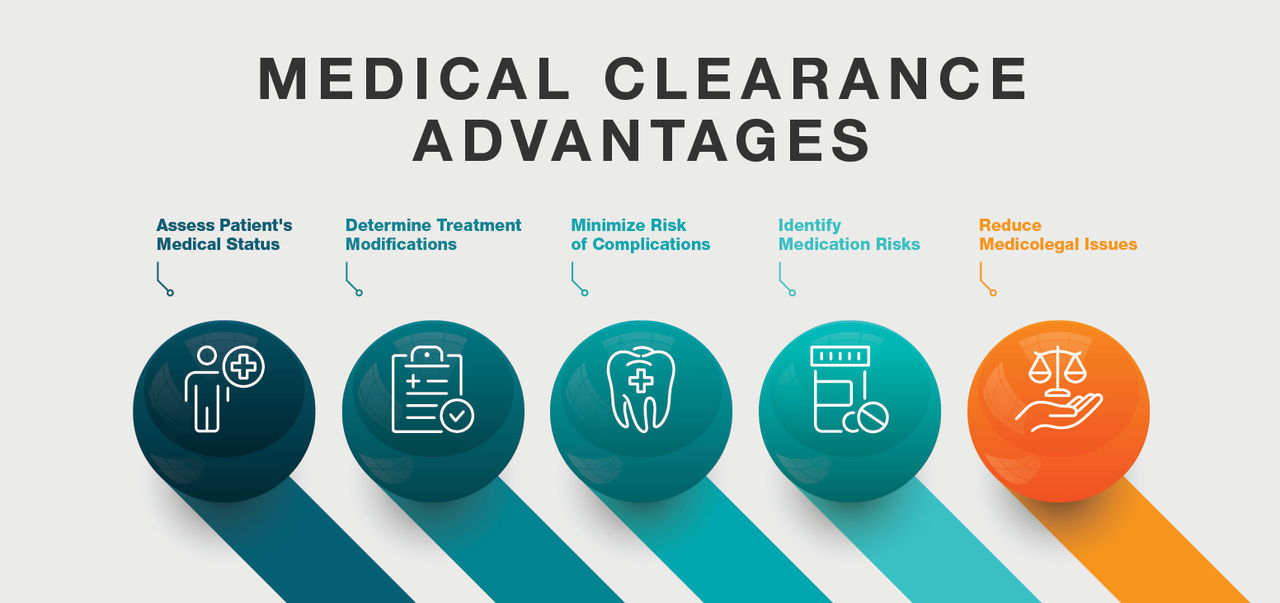
Obtaining medical clearance comes with several advantages:
There is also an age component that is further necessitating medical clearance before dental procedures. According to recent studies, the global population is seeing an increase in patients over the age of 60.1 In 2020, there were approximately 1 billion people in this age group; and by 2050 estimates show there will be about 2.1 billion.
This data suggests that dentists who will be practicing over the next 25 years will be seeing more of these medically compromised patients. Having a protocol in place for reliably obtaining medical clearance, therefore, is more important than ever for dealing with the increase in geriatric patients.
Despite its importance, medical clearance is frequently misunderstood within implant dentistry. One of the most common misconceptions is confusing medical consultation with medical clearance.
A medical consultation is an interdisciplinary exchange in which a physician evaluates the patient’s systemic health status and provides recommendations regarding medical management, medications, or procedural considerations. Medical clearance, however, specifically refers to the physician’s assessment of whether the patient appears medically stable to undergo the proposed dental procedure based on the information provided. Importantly, meaningful clearance requires a detailed, procedure-specific request from the dentist that outlines the planned surgery, anticipated duration, anesthetic approach, expected blood loss, and perioperative medications.
Another major misconception is the belief that obtaining written medical clearance transfers responsibility for treatment outcomes from the dentist to the physician. In reality, medical clearance does not shift liability or clinical responsibility for implant therapy. The treating dentist remains fully responsible for treatment planning, surgical execution, anesthetic management, intraoperative decision-making, complication management, and postoperative care. The physician’s role is limited to evaluating systemic medical stability and identifying potential medical risks or necessary modifications.
Accordingly, dentists remain responsible for procedural and surgical risks associated with implant therapy, including:
For example, complications such as inferior alveolar nerve injury, implant malposition, infection, or implant failure remain the responsibility of the treating clinician, regardless of whether medical clearance was obtained. Rather than eliminating liability, medical clearance should be viewed as a collaborative tool for systemic risk assessment, interdisciplinary communication, and comprehensive patient management.
Medical clearance should be considered whenever a patient presents with systemic conditions, complex medical histories, or medications that may influence perioperative safety, anesthetic management, wound healing, or implant success. As implant patients become older and medically more complex, clinicians must recognize that not all medical conditions carry the same level of risk.
Rather than assuming all patients can safely undergo implant therapy with minor modifications — or conversely that certain conditions automatically prohibit treatment — systemic diseases and medications should be viewed along a spectrum of risk. Depending on the severity of the condition, level of medical control, and complexity of the planned procedure, they may represent no contraindication, a relative contraindication, or an absolute contraindication to implant treatment.
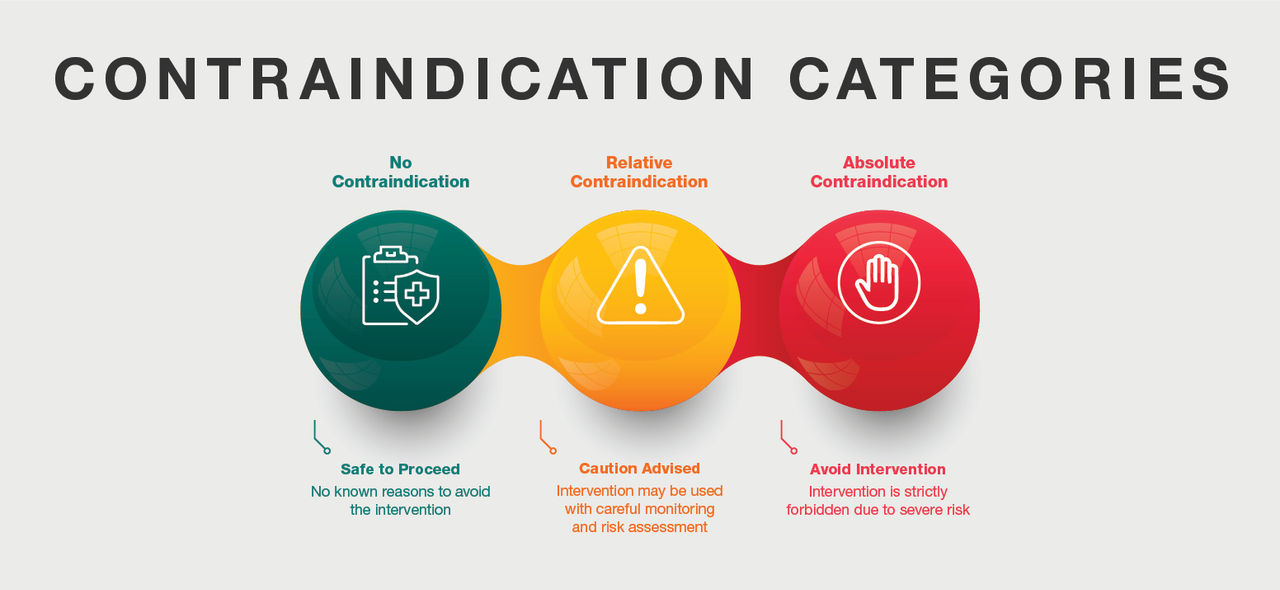
Let’s look deeper at contraindications that dentists in implant practices need to understand.
A fundamental component of medical risk assessment is understanding the concept of contraindications. A contraindication refers to a clinical condition in which the risks associated with treatment may outweigh the anticipated benefits unless the condition is appropriately controlled or modified. In medicine and implant dentistry, contraindications are generally classified into two categories:
While absolute contraindications generally preclude treatment, relative contraindications often allow clinicians to reduce risk through treatment modifications, altered surgical protocols, medication adjustments, or less invasive approaches.
In implant dentistry, contraindications can also be categorized according to how they affect treatment:
These factors must be carefully evaluated by both the implant clinician and the patient’s physician to determine whether treatment can be performed safely and predictably.
Here are some important patient statistics:
One in four patients are medically complex, meaning they may have multiple systemic diseases and are on multiple medications. Medically compromised patients only have successful implant outcomes ~77.5% of the time compared to healthy patients at ~94.5%.5 Factoring in the steady increase in geriatric patients, it’s clear that there’s a need for every implant practice to have a means of identifying potential contraindications.
Risk assessment in implant practices starts with the medical intake form. Before even taking an intraoral scan, this form is used to gather the patient’s medical history and serves as the clinician’s interpretation of the patient’s medical status in relation to the planned procedure. Here are some best practices for making the most accurate interpretation of a patient’s medical status:
Thorough evaluation of the patient’s medical history is essential, as systemic diseases and medications may represent no contraindication, relative contraindications, or absolute contraindications depending on severity, level of control, and procedural complexity. A detailed intake process helps clinicians identify potential risks early and determine whether additional medical evaluation or physician consultation is indicated prior to treatment.
Medical Intake Form: There are many useful resources that dentists can use for interpreting patients’ medical status. For a reliably up-to-date version of a patient intake form, the ADA form is a great option for implant practices.
Medical Reference Source: Epocrates is another highly recommended tool for dentists, as it lists all medications and what they are used for. This database also provides crucial information on drug interactions, which is another important factor to consider for medical clearance.

A thorough and up-to-date medical intake form is the first step in a predictable medical clearance workflow.
There are several systemic issues that can have an effect on dental implant procedures. This section will identify and elaborate on the most common ones to look out for from the dentist’s perspective, starting with diabetes.
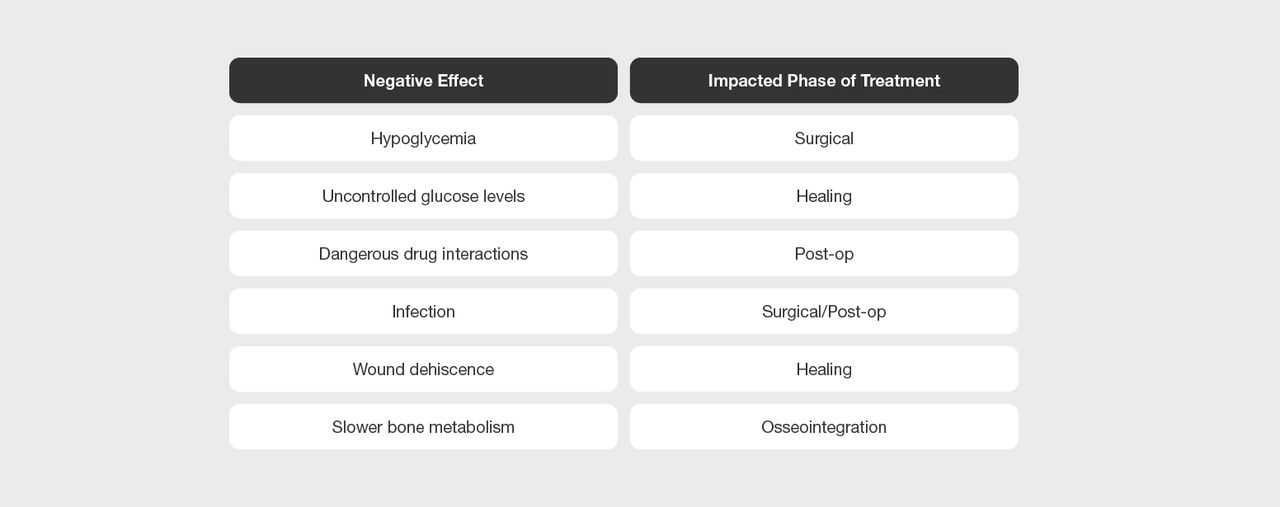
Diabetes is a problematic systemic disease for implant treatment, because it can create negative outcomes in many ways. Here are the most common effects:
Evaluating diabetics used to primarily be done using only blood glucose levels. Today, the most effective way is to evaluate the patient’s HbA1c (A1C), or glycosylated hemoglobin. This metric tests the patient’s glucose control over a period of three months, versus only looking at a snapshot of the patient’s blood glucose levels at a past point in time. Glycemic control can fluctuate month to month based on a number of factors, so having the A1C is a better indicator over a period of time.
Non-diabetics are usually 4%–6%, and well-controlled diabetics ideally have a level of less than 7%. These two classifications of patient are ideal for implant survival and peri-implant health.6 7%–8% are classified as relative contraindications, and greater than 8% are absolute contraindications for implant procedures.
Non-diabetic patients typically demonstrate A1C levels between 4% and 6%, while well-controlled diabetic patients generally maintain A1C levels below 7%. Both groups are associated with more favorable implant survival rates and peri-implant tissue health.6 Patients with A1C levels between 7% and 8% are generally considered relative contraindications and may require treatment modifications and closer monitoring, whereas A1C levels greater than 8% are commonly regarded as an absolute contraindication to elective implant therapy until improved glycemic control is achieved.

The negative effects of cigarette smoking on oral health and implant outcomes have been well established in the dental literature for many years.7 Prospective implant patients who smoke experience:
In recent years, many patients have transitioned from traditional cigarette smoking to vaping or electronic nicotine delivery systems. Although vaping is often perceived as a lower-risk alternative because nicotine exposure per puff may be reduced compared to conventional cigarettes, emerging evidence suggests that vaping may still adversely affect implant treatment outcomes. Recent studies have demonstrated that vaping can negatively influence bone remodeling by reducing osteoblast activity and decreasing alkaline phosphatase levels, both of which are important for normal bone mineralization and healing.8 Accordingly, it is important for implant clinicians to specifically include vaping and electronic nicotine use as part of the medical and social history intake process.
Frequency of tobacco use ultimately determines whether it’s an absolute contraindication or the patient is still okay for implant treatment. If deemed a relative contraindication, it’s imperative to consult with the patient’s physician via medical clearance.
Tetrahydrocannabinol (THC), the primary compound in cannabis (marijuana), is increasingly becoming an issue for patients electing to get undergo implant treatment. It has become increasingly accessible and is now being reported more frequently on patient medical intake forms. Recent studies9 are showing that THC use is leading to:
Currently, there are no definitive protocols for treating patients who are on THC; however, this article in the Journal of Interdisciplinary Clinical Dentistry™ gives the most up-to-date protocol that can help reduce risk of complications.
In the early days of implant dentistry, a key selling point to patients was that titanium was the most biocompatible material known to man. However, there has been an increase in the number of patients experiencing titanium allergies, primarily because of the use of titanium alloys in implants.
Patients are becoming more sensitive to titanium through exposure to things like jewelry, sunscreen and eyeglasses. If the medical history or intake form suggests a history of metal sensitivity or allergic reactions, the patient should be referred for appropriate medical evaluation and clearance prior to implant treatment. The ideal test for this is a MELISA test, or Memory Lymphocyte Immuno-Stimulation Assay test. This tests the effects of all metals on the patient’s body and can be administered by a family doctor or allergist.
Implant-supported restorations represent one of the most predictable and effective treatment options for replacing missing teeth; however, skeletal development remains a critical consideration during treatment planning. Implant placement in actively growing adolescents is generally contraindicated because continued craniofacial growth may compromise long-term esthetic and functional outcomes.

The image above demonstrates implant placement in a young patient. Because dental implants osseointegrate directly to bone and lack a periodontal ligament, they do not erupt with the adjacent natural dentition during continued facial growth. As a result, the implant restoration became infraoccluded relative to the surrounding teeth, creating esthetic discrepancies and increasing the potential for long-term restorative and peri-implant complications. Image courtesy of Dr. Randolph Resnik.
Importantly, skeletal and facial growth may continue well beyond adolescence in some individuals. Accordingly, implant clinicians should evaluate skeletal maturity rather than relying solely on chronological age. Coordination with the patient’s physician may be beneficial, particularly when serial growth records are available. Implant therapy is generally deferred until growth has stabilized and no significant changes in stature or facial development have been observed over time.
Every medical intake form should include a comprehensive review of the patient’s medication history, including prescription medications, over-the-counter drugs, herbal therapies, supplements, and documented drug allergies. Implant clinicians must carefully evaluate not only the medications being taken, but also their indications, dosage, duration of use, and potential effects on surgical risk, anesthesia, wound healing, and osseointegration.
Particular attention should be directed toward medications that may influence bleeding, immune response, bone metabolism, cardiovascular stability, or drug interactions related to perioperative care. This section provides an overview of the medications most commonly associated with medical clearance considerations prior to implant treatment.
From the implant clinician’s perspective, anticoagulant therapy is an important consideration because it may increase the risk of intraoperative and postoperative bleeding; however, anticoagulant use alone is not typically considered an absolute contraindication to implant surgery, and treatment decisions should be based on the patient’s overall medical risk profile, physician recommendations, and the invasiveness of the planned procedure.
Common anticoagulant medications include:
The use of anticoagulants has increased substantially in recent years10, reflecting the growing number of patients being treated for cardiovascular disease, atrial fibrillation, thromboembolic disorders, and other systemic conditions. Importantly, many patients require continued anticoagulation to reduce the risk of serious or life-threatening thrombotic events. Accordingly, implant clinicians must understand current anticoagulation management principles and become proficient in surgical bleeding control, local hemostatic techniques, and interdisciplinary communication with the patient’s physician.
Patients taking long-term low-dose aspirin therapy, particularly 81 mg daily, discontinuation is not supported by the available literature. In most cases, implant procedures can be safely performed while maintaining aspirin therapy through appropriate treatment modifications, including minimizing surgical duration and invasiveness and utilizing effective local hemostatic measures.
Patients taking higher-dose aspirin therapy, such as 325 mg daily, may require additional evaluation depending on the complexity of the planned procedure, the patient’s underlying medical condition, and overall bleeding risk. Because management recommendations can vary on a case-by-case basis, consultation with the patient’s physician is often appropriate prior to treatment. Regardless of dosage, careful surgical technique and meticulous bleeding control remain essential components of perioperative management.
Dual antiplatelet therapy (DAPT), most commonly consisting of aspirin combined with a P2Y12 inhibitor such as clopidogrel (Plavix®), is frequently prescribed following coronary stent placement and other cardiovascular conditions. Because interruption of therapy may increase the risk of serious thrombotic events, including stent thrombosis, modification prior to implant surgery is often not recommended and should only be considered in consultation with the patient’s physician or cardiologist. When treating these patients, implant clinicians should minimize surgical trauma and utilize meticulous local hemostatic techniques to reduce perioperative bleeding risk.
Bisphosphonates are commonly prescribed for the treatment of osteoporosis and other metabolic bone diseases because they reduce bone resorption and help decrease fracture risk. However, because these medications suppress osteoclastic activity and alter normal bone remodeling, they may negatively affect wound healing, osseointegration, and long-term implant stability, while also increasing the risk of medication-related osteonecrosis of the jaw (MRONJ).
Two major categories of bisphosphonates are clinically relevant in implant dentistry:
Denosumab (Prolia®) is another antiresorptive medication that has become increasingly relevant in implant dentistry because of its potential effects on bone remodeling and the associated risk of MRONJ. These medications are commonly prescribed for osteoporosis, metastatic bone disease, and cancer-related skeletal complications. Physicians are often reluctant to discontinue therapy because interruption may significantly increase the risk of rapid bone loss and spontaneous vertebral or pathologic fractures. Therefore, a common protocol includes the following:
There are some medicines dentists may encounter that don’t indicate medical clearance before an implant procedure; however, just because they don’t need clearance from a physician, doesn’t mean dentists shouldn’t be cautious.
A common example are proton pump inhibitors (PPIs), such as omeprazole, lansoprazole, pantoprazole, rabeprazole, and pantoprazole. These are relative contraindications because they can lead to negative outcomes like compromised integration, increased bone loss, increased peri-implant disease, and implant failure, but no acute safety threats. Dentists need to use informed consent with the patients before proceeding.
Selective serotonin reuptake inhibitors (SSRIs) like paroxetine, sertraline, citalopram, escitalopram and fluoxetine are another example that don’t require medical clearance. They pose similar threats to implant failure as PPIs do, but no acute threats intraoperatively. Like with PPIs, informed consent with the patient is the best approach.
For a more detailed list of medications and their varying effects medical clearance, read this article.
Obtaining medical clearance is an essential component of implant practice, yet many clinicians receive limited formal training on how to efficiently coordinate this process with physicians. Successful medical clearance depends on implementing a structured, consistent workflow that is both efficient for the dental team and easy for the patient to navigate.
Two key elements contribute to an effective medical clearance system:
Without a well-defined process, delays and miscommunication frequently occur. Patients may present to their physician without the appropriate documentation, while physicians may receive vague or incomplete requests that lack sufficient procedural detail to provide meaningful recommendations. Effective medical clearance requires a structured, procedure-specific request that clearly outlines the planned treatment and relevant perioperative considerations. The following section reviews a practical step-by-step approach for obtaining medical clearance in implant dentistry.

All information provided on the medical intake form — including medical history, medications, supplements, and allergies — should be personally reviewed and verified by the dentist with the patient to ensure accuracy and completeness.
Any time a patient marks “Yes” for a systemic disease or medication on the medical intake form, it’s imperative that the dentist follow up for additional information. For example, just because a patient has indicated that they have diabetes, it doesn’t paint the full picture of their condition. Is it Type 1 or Type 2? What medication is the patient taking to manage it? What is the current A1C? Is it controlled? These are questions that the patient can elaborate on to suggest something might be only a relative contraindication or an absolute contraindication.
Even a condition that seems unrelated to the implant procedure, like rheumatoid arthritis, can have medical clearance implications. These patients might be on biologics or chemotherapeutics that would indicate potential contraindication. They may also have dexterity problems that could complicate long-term maintenance if treated with a removable prosthesis.
Regarding medications, patients may occasionally take certain drugs for off-label indications. Therefore, it is important to carefully review every medication and supplement listed by the patient. The dentist should confirm the indication, dosage, frequency and duration of use for each medication to ensure the medical history is accurate and clinically relevant.
The cover page, formatted like a cover letter, gives the physician an easy-to-understand summary of what’s being requested. An ideal cover page has the following components:

Including all this information on the cover page is essential for creating a more efficient and streamlined medical clearance process with the patient’s physician.
The recommended dental medical clearance form has two sections, the first of which is for the dentist to fill out for the physician. Here’s what that looks like:
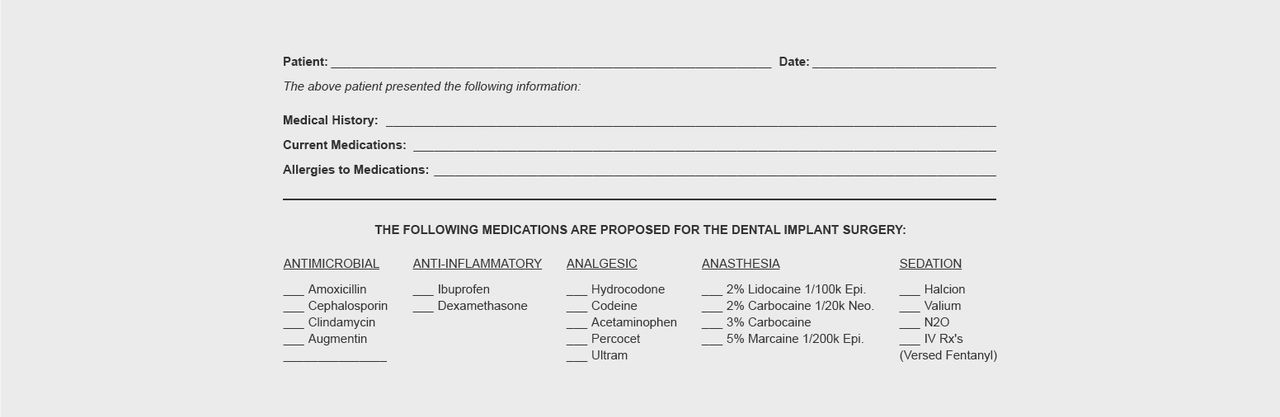
The dentist should fill out the top part with the relevant information to the best of their knowledge based on the medical intake form. There are times when patients fail to mention something that is important for their physician to know. Additionally, the middle part of the form lists medications to be used for the implant procedure. This lets the physician see exactly what the patient might take and where the potentially harmful drug interactions might occur.
With the cover page and first part of the form filled out, dentists can now send patients to their physicians with confidence. It’s important to note that half of the form is still not filled out. Here’s what that looks like:
Above is the portion of the medical clearance form for the patient’s physician. By design, this section should be simple and quick to fill out for the doctor. It includes the most essential information regarding medical clearance, including areas for them to list all conditions and medications that the patient failed to mention previously. A common example where this occurs is with SSRIs. Some patients don’t want to disclose this information and aren’t privy to its potential effects on implant treatment, so this part of the form plays a significant role in clarifying this information for dentists.
Another critical component of this form is the section designated for the physician to provide recommendations or medication modifications. This section should always be completed by the physician’s office, as recommendations made by the dentist may create unnecessary confusion for the patient. In most situations, it is safest and most appropriate for the physician to directly manage and communicate any medication adjustments with the patient.
The final step after receiving the completed medical clearance form is to carefully review it for any new information, treatment limitations, or required follow-up actions. If the form is complete, clearly documented, and properly signed and dated by the physician, it should be added to the patient’s record, and the patient may proceed to the next phase of treatment planning. However, if the form is incomplete — for example, if it lacks the physician’s signature or contains unclear recommendations — treatment should not proceed, even if the patient verbally states that medical clearance was provided.
To get started with this court-tested medical clearance protocol, dentists can visit the Resnik Implant Institute website and download both the cover page template and medical clearance form in one convenient document.
Medical clearance is a request for a physician’s evaluation to determine if a patient is medically safe for a planned dental treatment. It requires a medical clearance form that gets sent to the patient’s physician, which lets them evaluate the planned procedure and provide their opinion on whether the patient is systemically stable enough to proceed. Medical clearance modifies risk and is not a justification for treatment. The dentist is responsible for any decisions and treatment he or she provides to the patient, as no patient is completely free of risk when undergoing a procedure.
Dentists should request medical clearance from a physician when the patient’s medical intake form indicates underlying systemic health conditions, or that they are taking high-risk medications, such as anticoagulants, aspirin or bisphosphonates.
In patients who require medical clearance, treatment should not be initiated without a completed and signed medical clearance form. Proceeding without physician documentation may create significant medical and medico-legal risks for both the patient and the dentist.
Implant dentistry can significantly enhance the growth and profitability of a general practice, but these procedures also carry inherent risks. The purpose of medical clearance is to identify and help modify those risks — not to justify treatment or transfer liability to the physician. Understanding this distinction allows dentists to make informed clinical decisions while implementing an appropriate medical clearance protocol.
For a comprehensive look at medical clearance from the physician’s perspective, read Dr. Robert Resnik’s post on what he looks for when approving his patients for implant procedures. For any additional information regarding implant services at Glidewell, email your Glidewell representative or call 800-839-9755.
All third-party trademarks are property of their respective owners.
Bongaarts J. United nations department of economic and social affairs, population division world family planning 2020: Highlights, United Nations Publications, 2020. 46 p. Population and development review [Internet]. Wiley; 2020 Dec;46(4):857–8.
Boersma P, Black LI, Ward BW. Prevalence of multiple chronic conditions among US adults, 2018. Preventing chronic disease [Internet]. Centers for disease control and prevention - preventing chronic disease; 2020 Sep 17;17.
Hales CM, Servais J, Martin CB, Kohen D. Prescription drug use among adults aged 40–79 in the United States and Canada. NCHS Data Brief. 2019 Aug; (347):1–8.
Guilbert JJ. The world health report 2002 - reducing risks, promoting healthy life. Educ Health (Abingdon). 2003 Jul;16(2):230.
Parihar AS, Madhuri S, Devanna R, Sharma G, Singh R, Shetty K. Assessment of failure rate of dental implants in medically compromised patients. J Family Med Prim Care. 2020 Feb 28;9(2):883–5.
James Y, Butt WMM, Shahid H, Ahmad S, Imran MTB, Anthony N. Success rates of dental implants in patients with diabetes: a systematic review. Cureus. 2024 Dec 25;16(12):e76361.
Moraschini V, Barboza Ed. Success of dental implants in smokers and non-smokers: a systematic review and meta-analysis. Int J Oral Maxillofac Surg. 2016 Feb;45(2):205–15.
Rouabhia M, Alanazi H, Park HJ, Gonçalves RB. Cigarette smoke and e-cigarette vapor dysregulate osteoblast interaction with titanium dental implant surface. J Oral Implantol. 2019;45(1):2–11.
Nogueira-Filho G, Handbook of cannabis and related pathologies. 1st ed. London: Elsevier Academic Press; Chapter 8, Cannabis and Oral Health: Deleterious Effects on Periodontitis and Dental Implants; 2017 Dec;e72–9.
Troy A, Anderson TS. National trends in use of and spending on oral anticoagulants among US medicare beneficiaries from 2011 to 2019. JAMA Health Forum. 2021 Jul 23;2(7):e211693.
Send blog-related questions and suggestions to hello@glidewell.com.
/GL-DB-6859919-080426-1.jpg/_jcr_content/renditions/thumb-jpeg-mobile-full.jpeg)



2201 Dupont Dr., Irvine, CA 92612
© 2026 Glidewell. All rights reserved.