
In this issue:
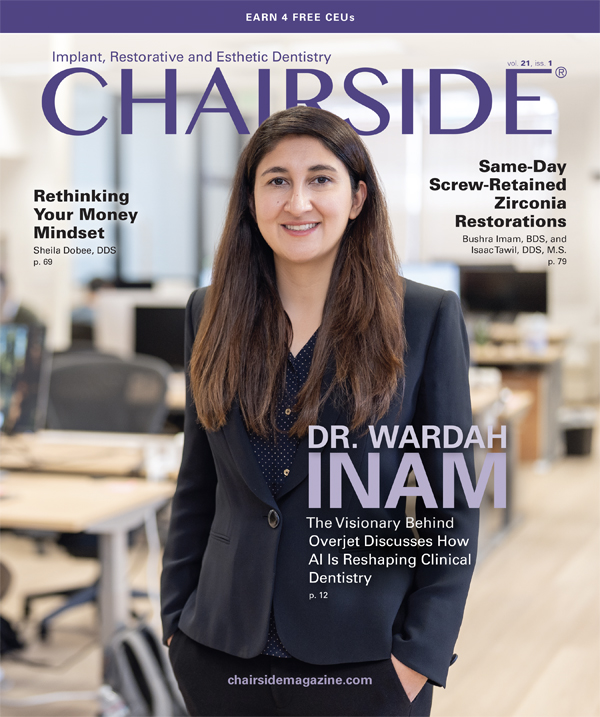
Featured Q&A: Interview with Wardah Inam, Ph.D.
Interview by
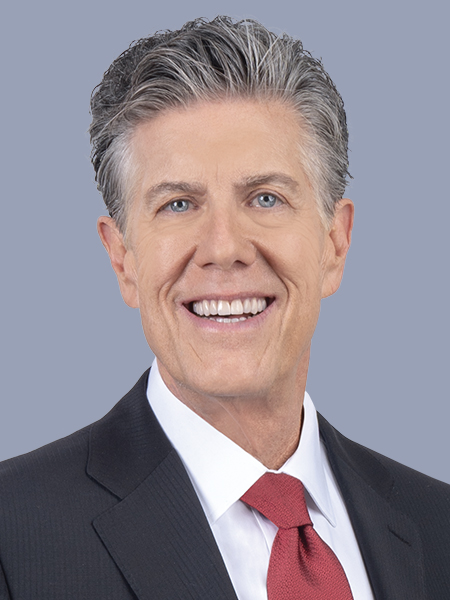
Interview with
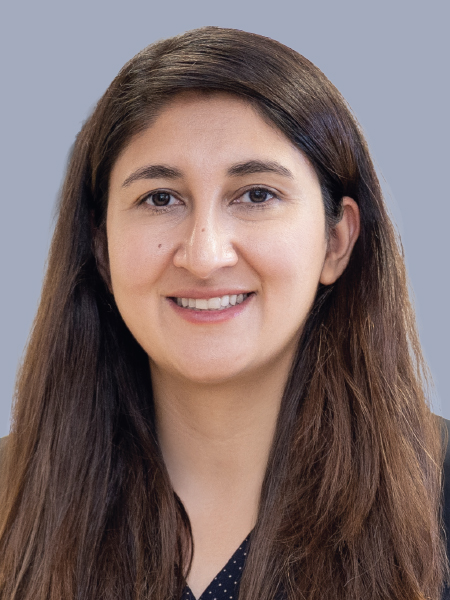
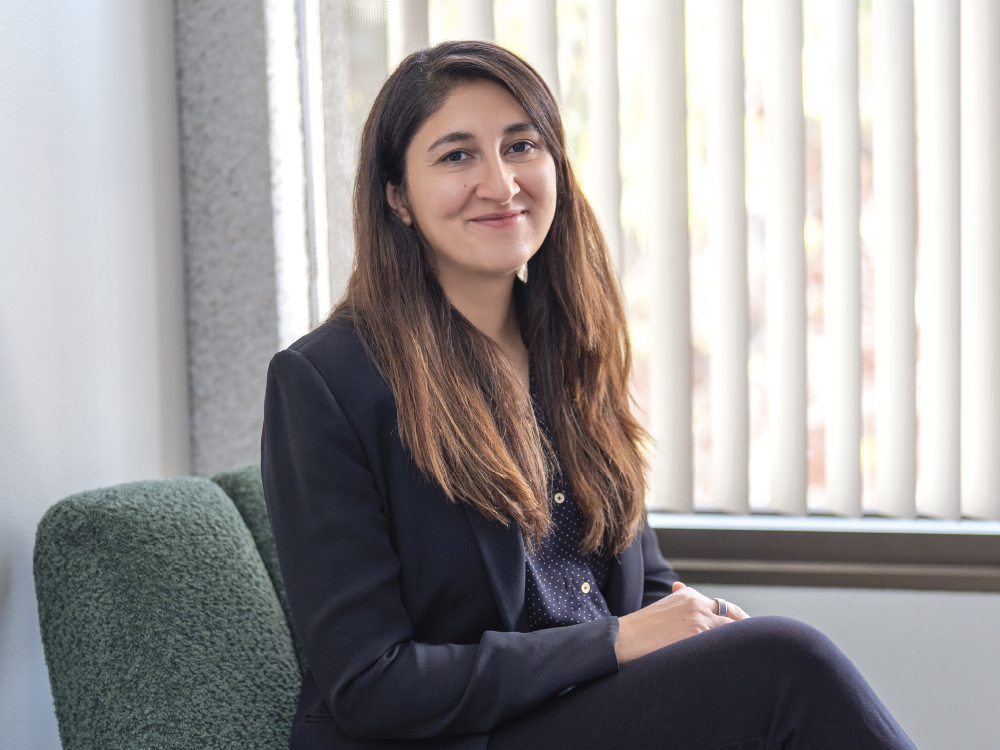
Dr. Wardah Inam is the founder and CEO of Overjet, a company recognized for bringing artificial intelligence to the practice of dentistry. After earning her master’s degree and Ph.D. from MIT, she built her career at the intersection of advanced technology and healthcare innovation. In this interview, she reflects on the evolution of dental AI, Overjet’s expanding impact on diagnostic precision and communication, and her role as a leader shaping the future of patient-centered care.
DR. NEIL PARK: Can you tell our readers about your background and prior experience in technology and business before Overjet?
DR. WARDAH INAM: I did my master’s and Ph.D. at MIT, working on autonomous systems, first on clean energy. Then, I made a conscious decision to move toward healthcare and did my postdoc in the computer science and artificial intelligence lab, working on biomedical sensing using machine learning and wireless signals to detect things like heart rate, breathing, gait, and falls. That was really exciting work. After that, I worked at a startup for a year doing biometric imaging with MRI data, which has its challenges. These are large machines that are expensive and take too long to image anything. We felt you could make them much cheaper and do full-body imaging much faster, making it more accessible across the world.
NP: And how did you get interested in dentistry?
WI: During this time, I changed dentists and was provided a treatment plan that was very different from what I had received before. That got me interested in dental diagnosis. I asked for my X-rays and started reading up on Dentistry 101. The more I read, the more I realized that it was what I wanted to do.
NP: You were motivated to focus on dentistry due to this divergence in treatment planning?
WI: Yes, I didn’t have any friends or family members who were dentists. It was just the fact that, as a patient, I experienced care and a diagnosis that I could not understand. How could two dentists provide such different analyses and not be able to explain why? That piqued my interest. The more I read, the more I watched, and the deeper I dived, the more I fell in love with the field. First, because it impacts almost every person in the world. Second, there was an opportunity for AI to play a role. My background was, of course, in technology and AI. Third, we can actually make a difference in our lifetimes. Sometimes, healthcare problems seem so large and broken due to our healthcare system. But, with dentistry, incentives are more aligned, and I feel it is slightly simpler.
NP: Please share your elevator pitch. What is the purpose of Overjet and how can it help dentists and patients?
WI: Overjet is on a mission to improve oral health, and we want to do that by having dentists provide exceptional care and reduce administrative costs. The technology that we create helps us make dentistry more clinically precise, efficient and patient-centric.
NP: I think you did a really good job of formulating the problem. Dentists, given the same data, will come up with different treatment plans and convey them in conflicting ways. The real gap is in their ability to communicate. Have you designed Overjet as a communication tool to help dentists talk to patients?
WI: Yes, that’s how it started. But I would say if you go one step deeper, it isn’t just the fact that there’s subjectivity in the analysis. The deeper problem is that you have all this unstructured data. Think about X-rays, notes, and other patient information data. AI can help structure that data in a way so computers can analyze it. Simply put, if you went into a practice that doesn’t have Overjet and said, “How many patients have cavities?” they wouldn’t be able to provide an answer. This is because you don’t have diagnostic codes and the data is sitting somewhere else, like in X-rays. You can see what treatments happen, but you don’t actually know how much untreated disease there is or how many cavities there are. That’s a fundamental problem. In the rest of healthcare, this is solved by using diagnostic codes, where the information is codified. In dentistry, we use more treatment codes and fewer diagnostic codes — we have kind of lost that information. The question is, can we use AI to structure the data? Once computers can analyze the data, you can augment human decisioning with it. You can automate a lot of things.
The technology that we create helps us make dentistry more clinically precise, efficient and patient-centric.
NP: You’re looking beyond just the dentist and his patient. You’re looking at a public health issue as well, occurrences of disease across the entire population.
WI: Yes. Of course, it starts off with the patient and dentist relationship. But then you can say, “Okay, let’s start to aggregate at the provider level and see what that looks like.” Then you can go further and ask, “When we look at DSOs, how is the care being delivered? What’s happening? What’s not happening? What should be happening?” Having clinical information and metrics allows you to look at these organizations the same way you would with financial metrics. We’ve always had financial metrics to determine if a practice is doing well. But can we measure how much disease there is? How patients are really doing? How many have been treated? How do we improve their health? And what does that look like? That is what Overjet is able to do. Of course, parts of it help in communication. As we were building the technology, we said, “What will help us visualize this information so we can help patient-dentist communication?” Looking at the practice level, we help by checking for insurance. We can diagnose more effectively and help clinicians think through treatment planning. We’re introducing voice as well. We can capture the information through voice, whether it is patient-dentist communication or periodontal charting. Then, we started asking, “How do we approach this?” First, patient-dentist communication; next, the DSOs; and then, across the entire industry.
NP: Very ambitious. When you started this company, what were your biggest challenges? Was it putting your team together? Funding? What kept you up at night?
WI: In 2018, the question was, “Can AI even do this?” Back then, everything we were building was from scratch. We were building something that nobody had built before. Looking back, anybody can see how this makes a lot of sense. We were the first dental AI company to get FDA clearance for our product.
NP: There’s nothing similar in medicine? There were no AI programs that analyzed radiographs?
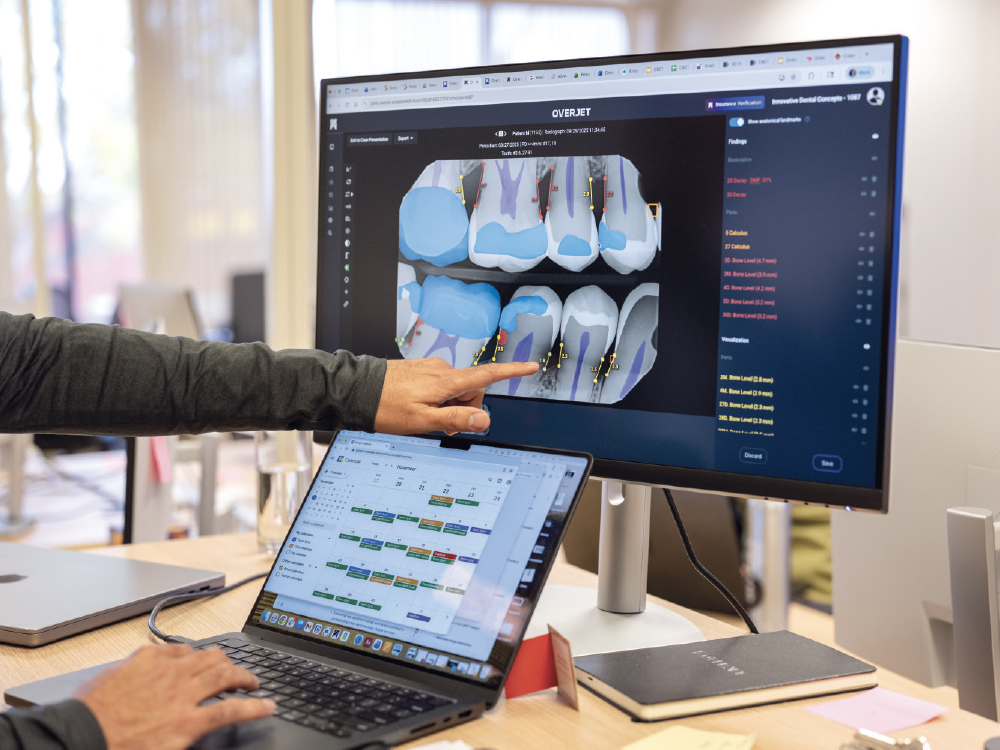
WI: In medicine, the first ones were in retinopathy with eye scans or diabetic retinopathy detection. That was, I think, the first-ever FDA-cleared technology out there. Then, you had things for lung nodule detection and breast cancer. It was a detection problem: is it detected or not? Is there disease or not? We had a much bigger problem. We wanted to quantify it. In dentistry, it’s not just about detection. You can detect a cavity, but does that mean you need a filling? Does that mean you need a crown? Does that mean you need a root canal? It really depends on how large that cavity is and the interaction with the rest of the anatomy. Is it close to the pulp or not? Has it crossed the enamel? It’s a different problem that requires segmentation. We pioneered that in dentistry, and now that’s the normal way of doing it.
What it looks like is outlining. We don’t just say, “Here’s the cavity.” We outline the carious lesion. The first thing we got cleared for was bone level measurements. We don’t look at an X-ray and say whether there is bone loss or not. That’s very subjective. We find the key points, like the cementoenamel junction and the crest of bone, and then measure that distance in pixels and convert it into millimeters. In X-rays, how do you convert pixels to millimeters? We have a patent on that. We quantified it and made it objective. Medicine is more about triage and how to do it faster. If somebody is having a stroke, how do you know what is important to look at? You triage it to determine what you really have to look at. Dentists are eyeballing, for example, bone levels and bone loss, and there is a lot of subjectivity. One dentist will say there’s bone loss and the other will say there’s no bone loss. It’s not the dentist’s fault — it’s simply very hard to do. Even for a trained eye, looking at 2–3 millimeters is difficult to assess. Is it 2 millimeters or 3 millimeters? Humans just cannot measure with that level of precision.
NP: You’re also looking at a two-dimensional representation of a three-dimensional situation. So, you could have different bone levels at the buccal or the lingual, but they’re superimposed.
WI: That’s absolutely true. You’re talking about very short distances, and we don’t have rulers in our eyes. But AI can identify and measure accurately so that dentists can be much more effective in what they do.
NP: Really interesting. You mentioned that the first FDA clearance you had was for bone level measurement. What other clearances do you have?
WI: I think we have about ten FDA clearances. We have all the different pathologies now. Bone levels, carious lesions, periapical radiolucencies, and all kinds of restorations and tooth numbers. Not just bite wings, but in periapicals and panoramics. Anything a dentist can identify, we can identify as well.
NP: I’ve had regulatory experience for over 30 years in dentistry, and I know that it sometimes can be a big hurdle to overcome. What validation was required for these clearances? What data did you have to submit?
WI: When we were getting the first clearances, there were only draft guidelines. We couldn’t find anything around segmentation getting cleared. On bone level measurements, we had to look at something that had been done before — knee measurements and joint measurements, for example. Bone levels are easier because, again, you’re simply measuring. When you talk about carious lesions, what really should be ground truth is to take the tooth out and see whether there is a lesion or not. But, of course, you can’t do that. So, what methodology do you use? For us, it was multiple dentists diagnosing and figuring out what was the best agreement. Then, we had to prove two things: first that the AI is as good as or better than the dentist, and second that dentists are better when using AI. That’s the bar the FDA sets.
NP: How do you demonstrate that?
WI: First, multiple dentists diagnose a case. Then, a third reviewer sees everybody’s data to establish ground truth, which is a term we use in machine learning to denote empirically validated observations. Then, another set of dentists diagnose without AI while Overjet’s AI diagnoses for comparison. Then, the benchmarks are reviewed. Everything comes to a stop for a few weeks so the same dentists don’t remember their original diagnoses. After the waiting period, the dentists diagnose the cases again, but they also can see the AI findings there. Finally, it’s determined which diagnosis is closer to the ground truth. We’ve proven in almost all cases that dentists using AI are much better than dentists without AI.
NP: People have different X-ray machines and methodologies. Of course, patients are so different. How do you ensure that these models are accurate across different types of imaging equipment and different patient anatomies?
WI: We have to collect data across different sensors, populations and genders. We have to do it across different disease prevalences as well. If 50% of the population has the disease, then it’s easy to collect the data. But if only 2% have the disease, it is more difficult because you have to collect much more data to find the patients who have the disease. You have to demonstrate that you have a statistically significant data set across all different age groups, genders and types of sensors.
NP: Let’s talk about adoption. You mentioned that one of your problems early on was to determine whether AI could actually do this task. Now that you know it can, how do you convince dentists that AI can be a diagnostic tool for them?
WI: I think there’s a pre-ChatGPT world and a post-ChatGPT world. Pre-ChatGPT, when we did the demo, some would say, “This is crazy. This can’t be.” They were very surprised. I would say post-ChatGPT, dentists know that AI can do it.
NP: I can definitely see that. As people are exposed to AI programs like ChatGPT and realize the capabilities, it fits much better with their understanding. You mentioned some of the data that you can accumulate and what that data can mean to us. What about DSOs and insurance companies? Do you have analytics that can help them?
WI: For us, we have our DSO analytics dashboards that are used by regional managers all the way to chief dental officers and even chief operating officers. Before this, you didn’t have a pulse on clinical performance in your practice. The tool you had was a chart audit, and that was a very limited tool in terms of the number of charts that would get audited, as well as the amount of effort it would take. It was definitely not scalable. But now, you’re looking at every case and every time there’s a difference or something gets missed, so you’re able to dive deep. You can go all the way from top-line analytics about the organization down to the practice level, provider, or patient. I think a lot of DSOs had a challenge before because they had only financial metrics. Now, with Overjet, you can see the disease profile and better determine how much you can actually do. It really changes the conversation and gets DSO leadership and clinicians on the same page because you’re not talking about random numbers. You’re talking about the care that is needed.
NP: Instead of a DSO saying, “You’re doing 20% fewer restorations than average,” which is a nebulous thing that you can easily argue with, they’re saying, “It appears that you’re diagnosing only 60% of the lesions that are coming into your practice.”
WI: Exactly. They can pinpoint exactly what they are instead of it just being a guesstimate.
NP: What’s the strategy to scale? Are you in a situation where your users are still early adopters?
WI: I would say it’s still early adopters, but it’s surprising who these early adopters are. It’s not a certain age group. It’s not a certain demographic. It’s not a certain location. Some are at the end of their careers, some are at the beginning, and some are in the middle. Some have associates and some don’t have associates. It’s such a powerful platform. There is something for everyone. One dentist I met said, “I always had this fear in the back of my mind that I missed something that would catch up with me.” Another dentist with a very different profile said, “I would see it, but I wasn’t quite sure, and I would not be confident sharing it with the patient. This brought me confidence.” For some that are not great communicators this becomes a really solid tool for them to use for visual communication. Hygienists really like it because they’ve been practicing dentistry for so long that they can diagnose pretty well but are not confident in stating it to the dentist. They’re pointing out things with much more confidence now.
NP: One of the techniques I’ve taught over the years is this concept of co-diagnosis, where you and the patient sit together and discover what’s wrong so you can work out a treatment plan together. Overjet is such an amazing tool for that. Because once the patient sees it in front of them, they want to be treated.
WI: Absolutely.
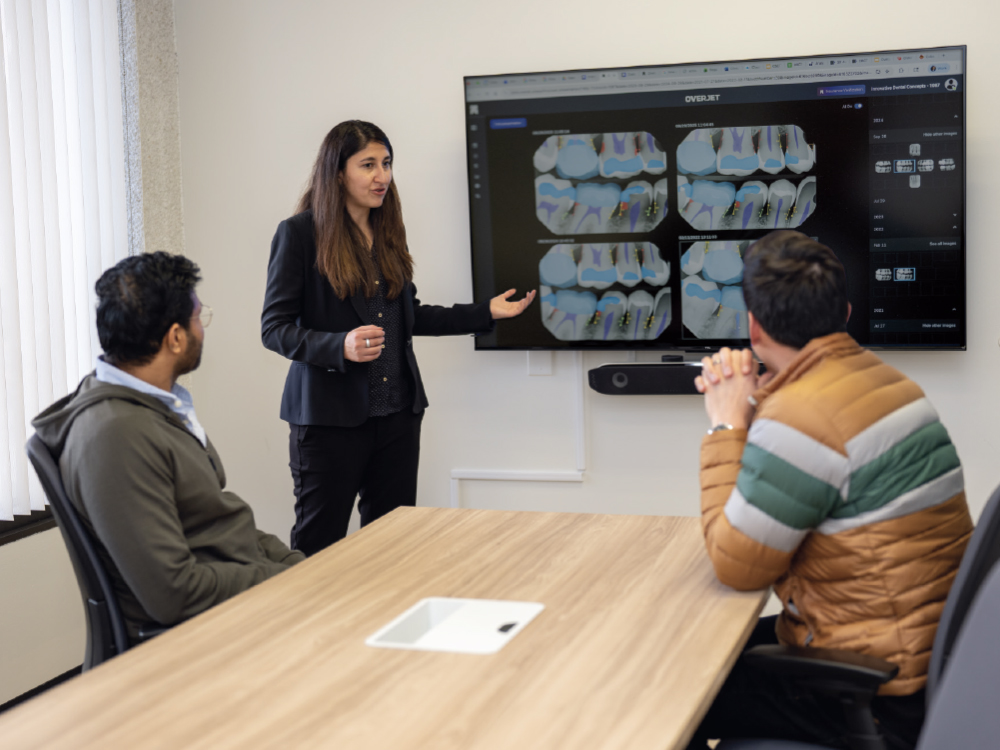
NP: It gets dentists away from that uncomfortable situation of trying to treat them for something they’re not convinced they have. I practiced in Florida, and most of my patients had moved from up north. I was looking at them for the first time, and maybe they were in their 60s or 70s, and I was telling them about problems that their previous dentists never talked about. If there was an objective third party giving a factual read, I think that’d be really helpful. Over the long term, how do you see AI and Overjet changing the role of the dentist?
WI: I don’t think the role of the dentist changes. I think they get to perform their role much more effectively. We can improve the efficacy and efficiency of dentists so they can spend more time with the patient, explain things more effectively, and do the treatments they need to do because patients are more accepting. The administrative work is done automatically. For example, the notes they have to write and the narratives for insurance companies are taken care of. AI gets all the administrative work done automatically so dentists can focus on providing care and helping patients understand their disease so it can get treated effectively.
NP: What is coming up? What FDA clearances can we look forward to for Overjet?
WI: The next thing coming up very soon is 3D, so CBCTs. We are very bullish on CBCT not only for things that people have thought through like nerve finding, implant placement, and airway detection, but also other findings, like incidental findings around carotid arterial calcification and other challenges that people face. How do we equip them for some of these medical conditions, like blockages, where they need an oral radiologist? That’s something we’re very excited about. We’re also excited about streamlining the lab work in terms of capturing the data and sending it out more easily to labs so remakes can be minimized.
NP: Does Overjet analyze intraoral scans?
WI: We haven’t released it yet, but we are working on it.
I don’t think the role of the dentist changes. I think they get to perform their role much more effectively.
NP: Have you noticed any surprises as you’ve brought this new technology into dentistry?
WI: My first early surprise was as a patient. I thought there was overdiagnosis in dentistry, but when I started looking at the data, I realized there was underdiagnosis. I think every patient believes the opposite. Why is there so much variation with diagnosis? It’s because we’re using very little radiation, which is good for the patient, but you have lower resolution and incipient carious lesions are very hard to see. Then, you have the Mach band effect. Also, dentistry is practiced in a very bright environment, and usually a dentist is busy doing some work when they’re asked to get up, go into another room, and diagnose quickly. There’s a context shift happening as well as a lighting difference. And we know our pupils expand and contract, making it difficult to diagnose. In its current state, dentistry is a very hard job.
In the 2012 FRONTLINE documentary called Dollars and Dentists, there was a company providing unnecessary stainless-steel crowns to children. At the time, it felt like dentistry was headed in the wrong direction. I thought, “If that’s the future, it’s going to be bleak.” That’s what Overjet set out to change. I would say we’re very lucky that that’s not how the industry evolved. Most DSOs are passionate about patient care and are doing it not just to make money. Money is a byproduct of the better care that they’re providing, and more and more people are understanding that. There was this fear of AI being abused, but providers have adopted it very responsibly.
NP: On a more personal side, as one of the most visible women in a leadership role in dentistry, what advice do you have for other women who wish to become leaders?
WI: Don’t hold yourself back. I think people sometimes put themselves in boxes or put limitations on themselves. People are not a statistic. It is the work you do. I think having a good mission to work hard on is what’s needed.
NP: What do you wish more dentists understood about AI?
WI: People think all AI is created equal, but it’s not. In an evolving technology like this, there are huge differences. Maybe in 10 years everything will be much more similar, but it is not right now. I would say accuracy matters. Precision matters. Utilizing software that has the highest accuracy really can make a difference for the provider and the patient.
NP: Your company was the first player in this field. To get FDA clearances, you had to submit data and prove validation. Will other companies be able to come in on your coattails?
WI: People do piggyback on it, but some cut corners. We tell our machine learning scientists to ask themselves, “If this were to get utilized and the dentist found something where they would have to drill, would you accept it?” This is a better approach than just releasing something because somebody else released it.
NP: We have Overjet in our clinic at Glidewell, and I look forward to getting to know the software better. I’ve enjoyed our chat, and I’m enthusiastic about the product and what it can do for dentistry. Thank you so much for your time.
WI: Thank you. It was a pleasure speaking with you.