
In this issue:
Featured Q&A: Interview with Neil I. Park, DMD
Interview by
Interview with
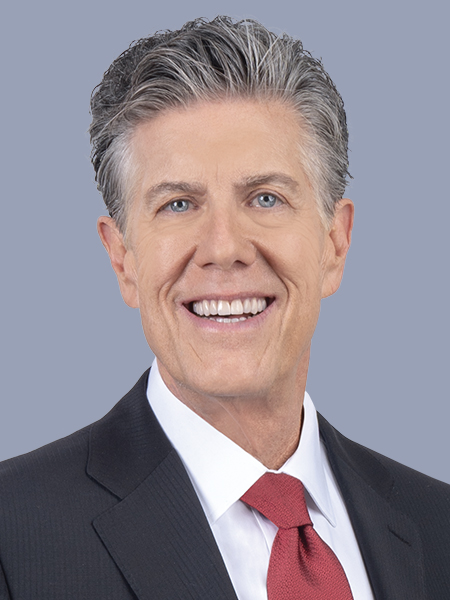
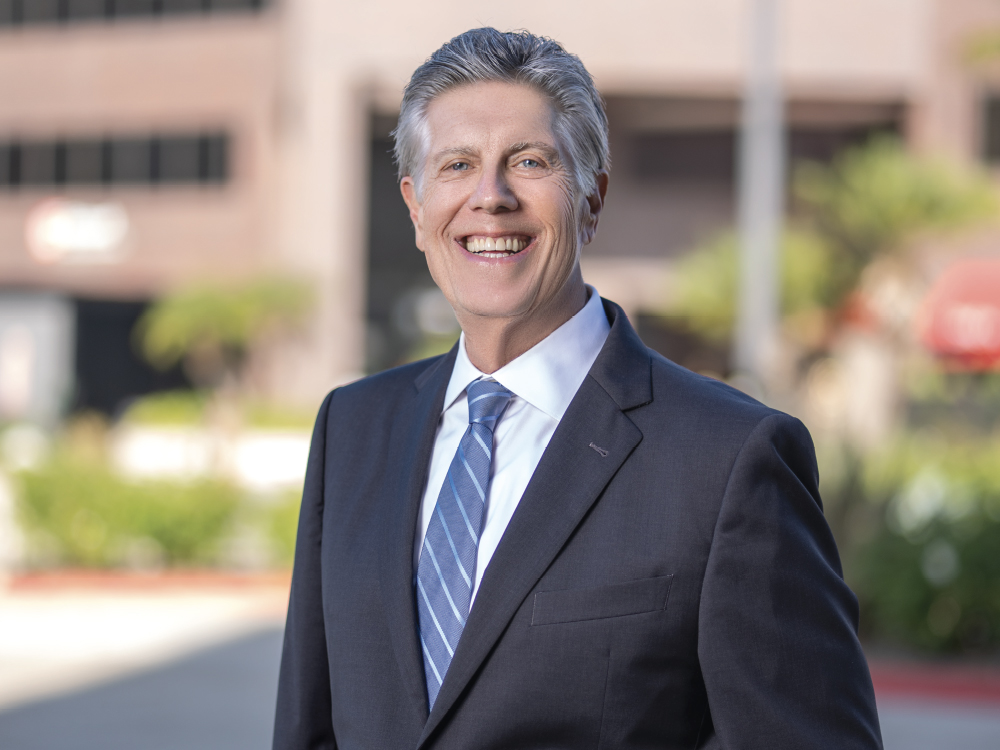
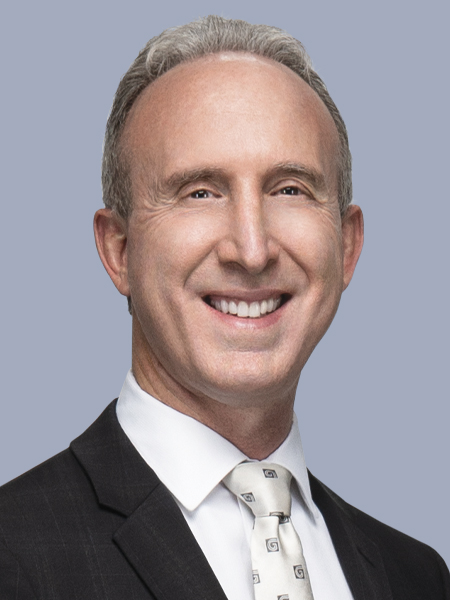
Dr. Neil Park earned his dental degree from Temple University and began his career serving as a commissioned officer in the Indian Health Service in Arizona. He went on to practice general dentistry in Florida before transitioning into leadership roles within several of the leading global dental companies, such as Nobel Biocare, ClearChoice, and Henry Schein. In this interview, we explore his early experiences, his path from clinical practice to industry leadership, and some of the lessons he has learned along the way.
ANDY KLEIN: What was your undergraduate degree? Where did you go to dental school?
DR. NEIL PARK: I graduated from Bucknell University, a small private school in central Pennsylvania, majoring in Psychology and Biology. Then I attended dental school at Temple University in Philadelphia. Temple is a state school and was inexpensive by today’s standards. It was an opportunity to get a great education at a very low cost.
AK: What did you do once you graduated?
NP: I came out of school and really had no idea what to do or where to do it. One of the department chairs at Temple Medical School had been an area director for Indian Health, so there was some conversation about the Indian Health Service and some of the opportunities there. To be perfectly honest, after spending four years in North Philadelphia, heading to the high desert of Northern Arizona sounded like the perfect thing to do.
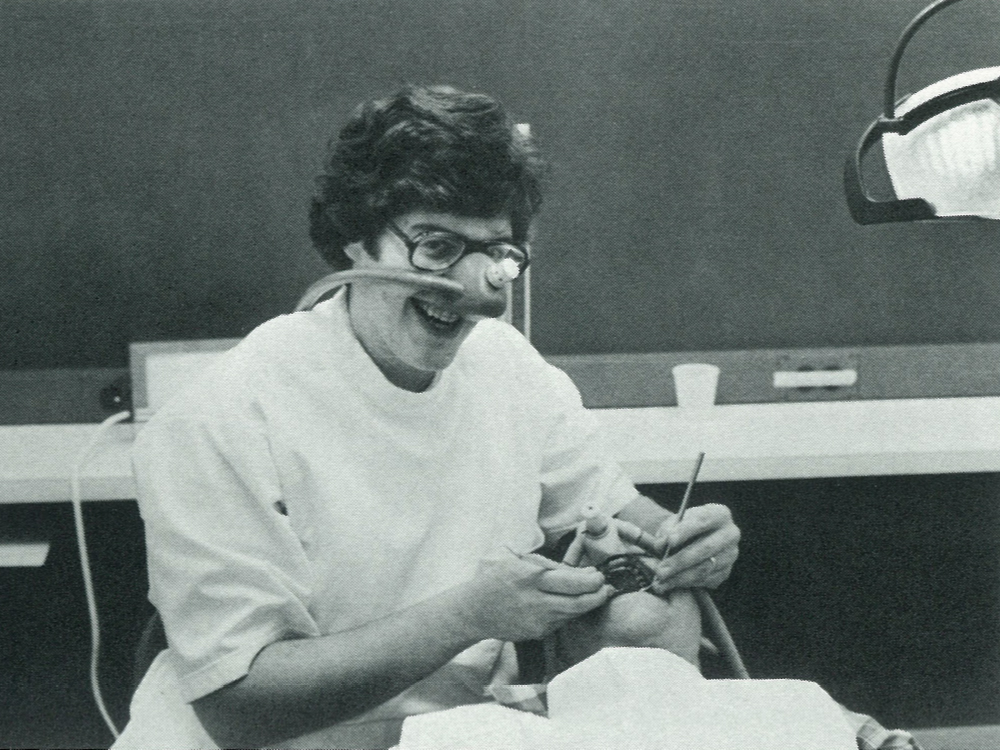
So, I became a commissioned officer in the Indian Health Service, and I was stationed on the Hopi reservation in Northeastern Arizona. And that was a wonderful opportunity. It was a chance to do lots of dentistry and refine my skills. My patients were members of the Hopi and Navajo tribes and had tremendous dental needs. There I was, a young dentist, basically unsupervised, with an opportunity to provide comprehensive treatment without worrying about the cost to the patient. I even reduced mandibular fractures, something I was never trained to do. But, when you’re the only guy for 300 miles, that’s what you do.
AK: And then what was the next step?
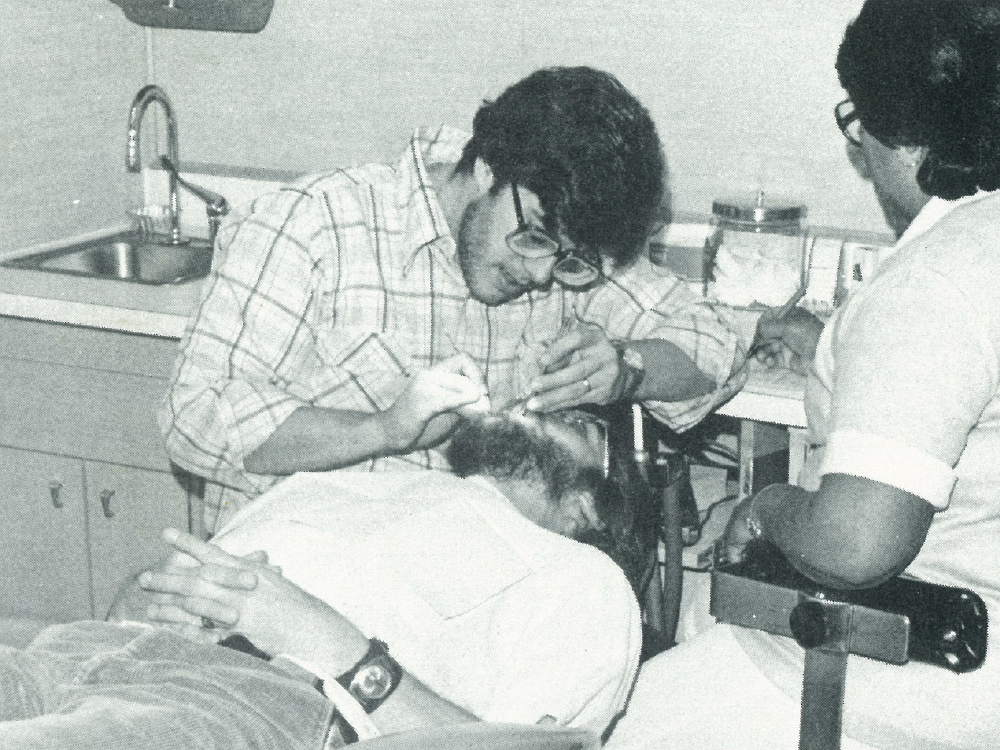
NP: I took the Florida Dental Boards and came back to Florida after a couple of years in Arizona. My private practice time in Florida was divided into two segments. First, I spent three years as an associate with another doctor who had two offices. One was in Winter Park near Orlando, and the other was in Mount Dora, which was a more rural area. I had two opportunities and two sets of patient populations to work with.
AK: So you shifted between the two practices?
NP: I did. I worked both practices, alternating days with the owner-dentist. He was a very generous person and took me under his wing. He was very good at communicating with patients. I learned a lot of that from him, including the generosity of spirit that you need to have in order to deal with patients. He also was helpful in making the adjustment to private practice, as far as sharing some of the clinical methodologies he’d adopted. He was a great mentor.
AK: How long were you in that practice? What happened after?
NP: I was in that practice for three years. At that point, I decided to open my own practice because there wasn’t an opportunity for me to buy into that practice. I also wanted to be my own person. I wanted to have my own practice. So, I bit the bullet, borrowed the money, and opened up a de novo practice.
AK: Was this also in the Orlando area?
NP: It was in the nearby town of Longwood. I had a non-compete, so I had to get out a map and draw a radius and find out where I could open up because I had to stay five miles away from either one of his two offices. So, I found a spot that was outside of that range.
AK: What did you like about owning your own practice?
NP: I liked the opportunity to make my own decisions. I felt the most important thing was to create my own brand for the practice, built around the things I wanted to be known for. I wanted to attract a certain patient base and people I liked working with. We had mostly families and senior citizens. Seniors were an important part of my practice, like many practices in Florida, and I enjoyed working with them.
AK: How long did you have your private practice?
NP: I owned my private practice for nine years. It’s interesting how you want to be your own boss, to have this freedom, but freedom carries with it a certain set of responsibilities — the main one, after your patients, is to your employees. That’s quite different from being an associate. As an associate, you just have to worry about your patients and yourself, and you’re fine. But when you own a practice, you’re accountable for your employees. Owning a dental practice is tough. There’s no question about it. It’s hard work and a lot of responsibility.
AK: I know that you eventually sold your practice and moved on to positions outside of “wet finger” dentistry. Walk me through that journey a little bit.
NP: There were other things I wanted to do. When you own and run a practice, you’re very much restricted with your time. I wanted to explore public speaking. I wanted to explore writing. I wanted to explore other phases of business. In my mindset at that time, the right way to approach this was to go to law school and become an attorney. I applied to law school and put my practice up for sale. The practice sold immediately because I was only 37 years old, and people that sell practices are usually older and have declining practices. Here I was still in the growth phase of my practice. It was a very attractive practice to purchase, and it sold quickly. At that point, I was ready to start law school. I was accepted at the University of Florida’s program. But along the way, the folks from Nobelpharma, which eventually became Nobel Biocare, offered me a job. I thought, well, I’ve got a few months before law school starts. Let me start this job in the brand-new world of implant dentistry and see if I like it. But from the first minute, I knew that I was in the right place. I could learn and practice the new skills needed in this business career while staying in the world of dentistry. So, I let the law school idea fade away.
AK: What did you do at Nobelpharma?
NP: These were the early days of implant dentistry, so this was very much an educational role. I started by spending time in Sweden at two dental schools, being trained in implant dentistry by some of the early pioneers. Then I came back, and I was a restorative and treatment planning consultant, working with dentists initially in northern Florida and then all over the East Coast. As implant dentistry was developing at that time, oral surgeons and periodontists were placing the implants, and they relied on referrals from general dentists. My job was to go out and work with those general dentists, helping them with treatment planning implants and referring the cases. Then, after the implants were placed, I would come back and help restore the implants.
AK: How long did you do that and what was the next part of your journey?
NP: I spent 19 years at Nobel Biocare and became the vice president of professional relations. My main role was to try to get implant dentistry to become part of the pre-doctoral curriculum at dental schools, which was uncommon at that time. I worked with great academicians in the U.S., Europe, and Canada to develop a curriculum. I then worked with faculty and administrators to institute the curriculum at 32 universities.
AK: Tell me about what led you to Glidewell.
NP: I consider my tenure here at Glidewell to be the most fortunate accident of my career. At the time, I was working with Zimmer, which was in the process of merging and becoming Zimmer Biomet, which is now ZimVie. I had some people working for me that were looking for jobs because of the merger and the closing of the office in Carlsbad, California. I reached out to some good friends of mine that worked at Glidewell to see if they could find positions for them. They were great. They said to me, “Absolutely, Neil, we’ll help you find positions for your employees, but what are you going to be doing?” I said, “I’m going to retire,” and they said, “No, you’re not retiring. You’re going to join us here.” That was 10 great years ago.
AK: When you joined, what projects and initiatives did you lead? And what are you most proud of?
NP: When I arrived, Glidewell’s implant manufacturing business was just ramping up. The Hahn™ Tapered Implant System (now Glidewell HT™) was being launched, and I assisted in that very successful launch. We determined soon after that we needed to offer some regenerative products as well. So, I developed Newport Biologics™, which later became Newport Surgical™ Bone Grafting Solutions. The strategy was to ask, “What’s the smallest number of products that would enable a doctor to treat the most common implant cases?” That was the basis for the assortment of products under the Newport Surgical brand. We didn’t want or need to have 600 products in our catalog. We wanted 10 to 20 products that were applicable to the widest range of indications and that we could sell at a great price. I am very proud of that.
I’m particularly proud of the educational programs developed under my leadership at Glidewell. The first step was to develop a group of lecturers — let’s call it a faculty — that were a little different. I wasn’t trying to get world-renowned academicians. I wanted to get people that were great clinicians who were committed to the success of our course attendees.

AK: I think you’ve done an excellent job of instilling that in the culture of the team here.
NP: Well, Andy, you’ve been a huge part of that because I’m great at dreaming up programs, but you’re the one that executes them and makes them work. We did 10 symposia and 144 live events in 2025. That takes a village, and you’re the mayor of that village. You were there for the first symposium we did, and we’ve refined, developed, and evolved that format into something that works. This year we will have 14 symposia here on our campus. I’m proud of that. Then there are the on-demand online courses. We have about 80 free on-demand courses that any dentist in the world can access. Tens of thousands of doctors access these courses, and they provide good, solid education that is available for free. I’m proud of that as well.
AK: Rightly so. Talking about being proud, are there particular milestones, honors or professional achievements that mean the most to you?
NP: Very early in the game, I became a fellow of the Academy of General Dentistry. I think the Academy of General Dentistry is important in recognizing the achievements as well as the needs of the general dentist. All the specialties have strong organizations, and I’m glad that the general dentist has a strong organization, as well. I’m proud to be recognized there. I’m also a diplomate of the International Congress of Oral Implantologists. I was also recognized and nominated last year as a member of the Pierre Fauchard Academy for the things I’ve done within dental education.
But it’s funny. When you asked that question, one of the things that popped in my mind was not any kind of award or recognition. It was the weekly Glidewell Online Study Club we’ve been doing for the past six years. I’ve been recognized for that more than anything else I’ve done because we have so many doctors who attend. We have close to a thousand doctors every week tuning in to the webinar. We’ve become this giant family where any time I attend a national dental meeting, they treat me like I’m a celebrity. They want to take a photo with the guy that runs the Glidewell Online Study Club.
AK: That’s a great contribution to the industry. What do you feel has been your greatest contribution to advancing dentistry?
NP: There are three things I’ve done that I hope are noteworthy. One is, earlier in my career, working to bring implant dentistry into the pre-doctoral curriculum. It’s something that probably would have happened whether I worked on it or not, but I was there and I was able to help shape the curriculum. I was able to have meaningful conversations with faculty members about how they could change their curriculum to incorporate what is now such an important modality in dentistry. It’s the biggest change in dentistry that we’ve seen in my career.
Secondly, the magazine, of course — and Andy, you’re a big part of the magazine as well. When I look at Chairside® magazine before I came here and Chairside magazine now, I’m proud of its evolution into a beautifully illustrated and documented practical guide to clinical techniques, focusing on implant, restorative, esthetic, and digital dentistry.
And finally, I believe that our overall educational strategy has been a benefit to our colleagues. What we do here at Glidewell is present high-quality, affordable education in a very approachable way. People that come here for a course are comfortable. We’re here for their benefit, not our benefit. We’re not trying to show off. We’re just trying to make people comfortable and give them a good educational experience. I’m proud that we’ve developed that culture over the ten years I’ve been here.
What we do here at Glidewell is present high-quality, affordable education in a very approachable way.
AK: When it comes to continuing education, what kinds of programs do you find resonate most with dentists?
NP: The private practice of general dentistry is challenging. So, our overall theme is that in this era of increased competition and higher cost structures, you can grow your practice by adding services. If you weren’t placing implants before, if you weren’t doing sleep dentistry before, if you weren’t doing cosmetic dentistry, you can learn those skills with us. It’s basically practice growth through increased clinical skills. I think we’ve done a good job with that approach to education.
AK: How have you seen dentistry change during your career, both clinically and in terms of business?
NP: I would say there are three main areas. We already touched on implant dentistry, which was basically a fringe area when I started, and now it is an integral part of restorative dentistry. That’s the first thing.
The second area is digital transformation. It started with digital X-rays, and then it moved to digital impressions. Now we’re in a stage where you can walk around the Glidewell campus for days without seeing a Bunsen burner and wax being used. The dental world is different. CAD/CAM has changed things. It’s not only changed the lab business, but it’s also changed the way we do clinical dentistry. There has been a remarkable improvement in patient treatment and in how we run our practices.
The third area involves DSOs and how they affect our profession. The development and rise of the DSO has had a profound effect. It’s got its positive points and its negative points. The positive points are huge. If you’re a new grad with lots of debt and need immediate income, it’s likely not the time to open a practice. We have DSOs that can provide great employment, a steady high-paying job, and career development. The negative is that it pays you enough to keep you from opening your own practice and realizing the opportunities that come from that. I believe that opening and owning your own practice is still the greatest opportunity in dentistry.
AK: What do you believe are the most exciting trends or innovations shaping the future of dentistry?
NP: Two main areas. The continued growth of digital dentistry, which has almost completely taken over intraoral impressions as well as the design and manufacture of restorations and appliances. The next step is the development of simulations for jaw relationships and virtual articulation. That’s the next step and we’re very close to it. Your virtual articulator will be just as accurate as the traditional analog articulator. The development of better restorative materials for milling and printing, both in the lab and in the office, will continue to improve dentistry.
The second thing is Artificial Intelligence. It’s become a cliché to talk about how AI will affect the future, but it has already changed things remarkably. Look at some of the companies like Overjet and Pearl that are making contributions to improving diagnosis, treatment planning, and patient communication using AI. Dentists that learn to use AI effectively are going to be much more successful.
AK: With all these advancements, how does dental education need to evolve to meet the demands of the next generation of dentists?
NP: Dental schools have a lot of work to do. They must constantly modify their curriculum to reflect the state-of-the-art. And they haven’t always been great at that. They need to make that their number one focus, because you can’t send dentists out into the world who have never scanned intraorally or designed a crown on a computer. Those folks aren’t ready to practice if they haven’t done those things. If they’ve never restored or treatment planned an implant, they’re not ready. And dental schools must get control of their costs. Dental school tuition and costs are too high, and we cannot continue to have young doctors come out a half-million dollars or more in debt. That is not the way to start your career. I have not seen the discipline and focus needed for dental schools to lower the cost of getting a dental degree.
AK: What advice would you give to young dentists who have incurred those costs and are starting out in their career today?
NP: First, surround yourself with experts. I mean real experts. Lawyers, CPAs, experienced practice consultants like Roger Levin and Carrie Webber and their companies. These people are skilled professionals and have helped many dentists become successful. Do not mistake your social media friends for experts. I often see doctors who are doing things based on a social media recommendation, using techniques they learned on TikTok or YouTube. That’s not the way. The uncurated education that you see out there is not the best route. That would be my number one suggestion: surround yourself with experts.
The other thing is to take an inventory of yourself. Do it every few years. Decide who you are and what phase you’re in. Decide if you’re an entrepreneur who’s willing to sacrifice short-term comfort for long-term success. And if you are, open a practice. Tighten that belt for a few years. Do the difficult things it takes to build a practice. But if that’s not who you are or that’s not the phase of your life that you’re in, then find yourself a great DSO that will support your professional growth and maybe even give you some equity. Then periodically take an inventory and see if you’re still in the right place.
AK: Looking ahead, you’re retiring after a long career. Do you plan to stay involved in dentistry in some capacity after retirement?
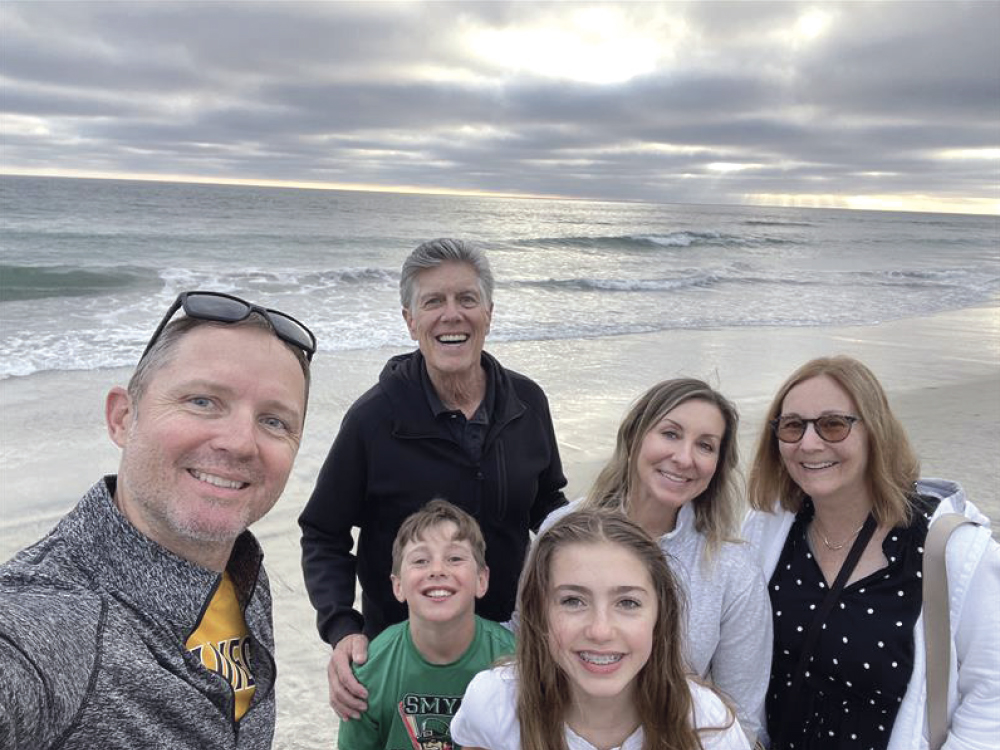
NP: I would like to continue to serve on corporate boards and serve as a consultant for companies, particularly those that are bringing new technologies to market. Right now, I’m on the board of a company called Stem Cell Implants that is looking to increase implant success and shorten healing time based on stem cell technology. I’ve brought many products to market in my career, and hopefully I’ve gained some expertise that I can share. I’d also like to do some speaking. I have moderated many meetings and symposia over the years, and I’d like to continue to do that. I would also like to lecture on decision-making in dentistry. I enjoy discussing how the concept of behavioral economics can help people understand how they can make better decisions.
AK: When you look back, how would you like to be remembered by your colleagues?
NP: We’ve talked about some of the programs at Glidewell: the symposia, the online courses, the online study club, and Chairside magazine. I hope those programs continue and are viewed as contributions to the dental profession. I’ve been fortunate to spend my career with some of the greatest companies in dentistry. To be with market leaders like Nobel Biocare, Henry Schein, and Glidewell has been an honor. I look back on so many people that I’ve brought into these organizations, mentored, and helped to become successful, and I’m proud of that. There are people that I’ve hired who are now CEOs and country managers. Hopefully, somewhere along the line, I helped them develop the skills and knowledge that contributed to their success. I have learned over the years that no matter what business you think you’re in, you are actually in the people business. Hopefully our readers will figure this out much sooner than I did. And the sooner they figure that out, the more successful they will be.
AK: We’re going to miss you around here at Glidewell. Will you join us at some of our events in the future. Is that in the plans?
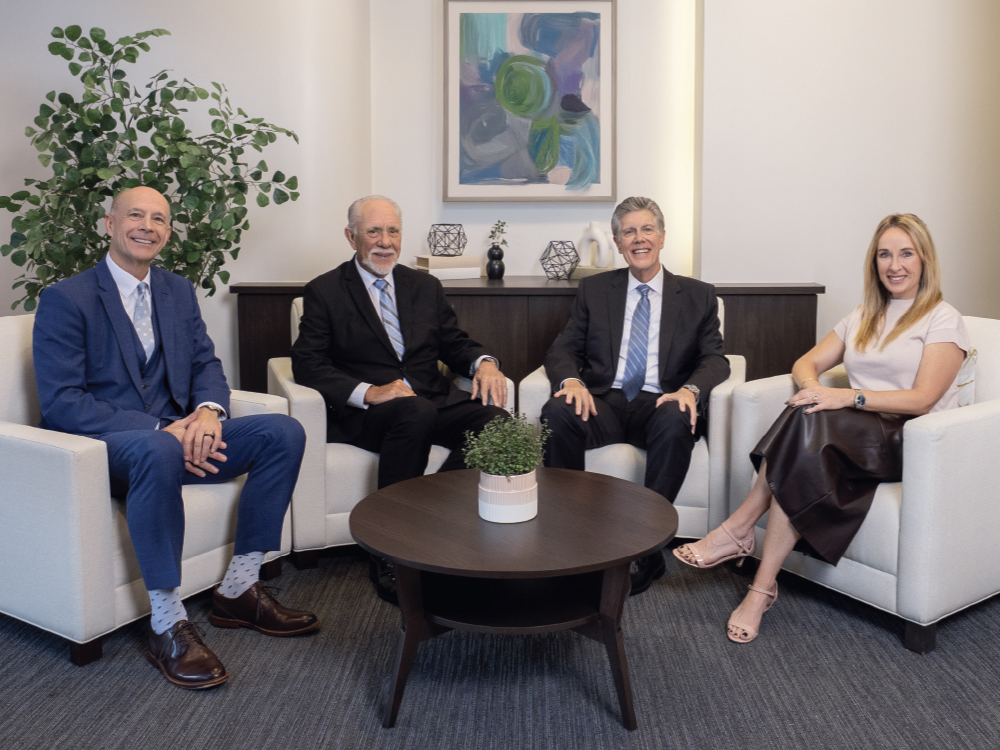
NP: Anytime you invite me, I’ll be here. I am deeply grateful to the thousands of colleagues I’ve had the privilege to work alongside at Glidewell, and especially to Jim Glidewell, Stephenie Goddard, and Rob Brenneise, whose encouragement and support have meant so much to me. Glidewell is a remarkable company, and I feel honored to have concluded my career here.
All third-party trademarks are property of their respective owners.