
In this issue:
Bridging Medicine & Dentistry: The Smarter Way to Secure Medical Clearance (1 CEU)
Author


Dental implant therapy is recognized as a predictable and evidence-based treatment modality for the replacement of missing teeth. Nevertheless, implant treatment is not without risk. Clinical success depends not only on technical proficiency but also on careful consideration of patient-specific systemic factors that may influence treatment outcomes.
The demographic profile of patients seeking dental implant therapy has changed substantially over the past several decades. Implant candidates are increasingly older with more complex medical histories. Epidemiologic reports suggest that approximately 15–25% of dental patients present with significant systemic disease, often requiring ongoing pharmacologic management.1,2
As global life expectancy continues to increase, it is projected that by 2050, the worldwide population of individuals over 60 years of age will exceed two billion, representing a doubling of this demographic cohort.3 Similarly, data from the Centers for Disease Control and Prevention (CDC) indicate that in the United States approximately 60% of adults have at least one chronic medical condition, and nearly 40% have two or more chronic diseases.4 Polypharmacy is also increasingly prevalent, with approximately 40% of adults — particularly those aged 40 to 79 years — reporting the use of five or more prescription medications.5
As a result, implant clinicians routinely manage patients whose systemic health status may directly impact perioperative safety, anesthetic considerations, wound healing, and osseointegration. Within this framework, obtaining medical clearance has become an important component of comprehensive treatment planning. However, its purpose is often misunderstood, and a disconnect sometimes exists between dental and medical perspectives regarding procedural risk. Accordingly, a clear understanding of the role, scope, and limitations of medical clearance is essential for safe and predictable dental implant practice.
DEFINING MEDICAL CLEARANCE
Medical clearance is a formal request for physician evaluation to determine whether a patient is medically stable to undergo a specified dental procedure. Its primary purpose is systemic risk assessment — specifically, to evaluate how underlying medical conditions may affect perioperative safety, anesthetic management, and postoperative healing. Importantly, medical clearance does not transfer clinical responsibility to the physician; rather, it serves as an adjunct to the dentist’s independent clinical judgment.
PRACTICAL CHALLENGES IN OBTAINING MEDICAL CLEARANCE
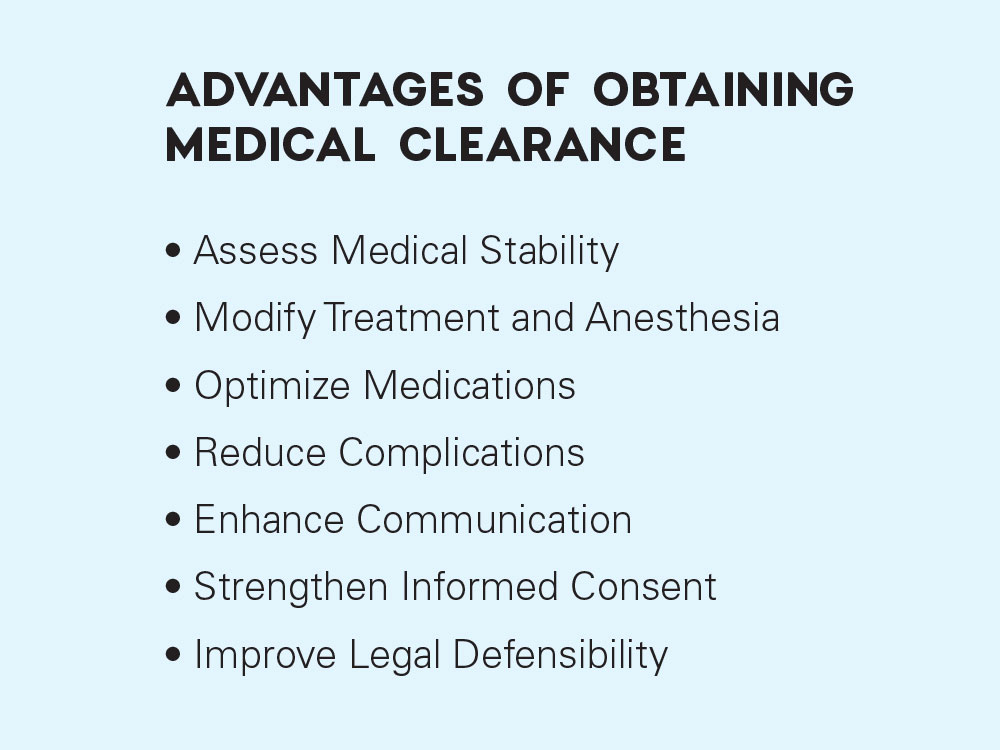
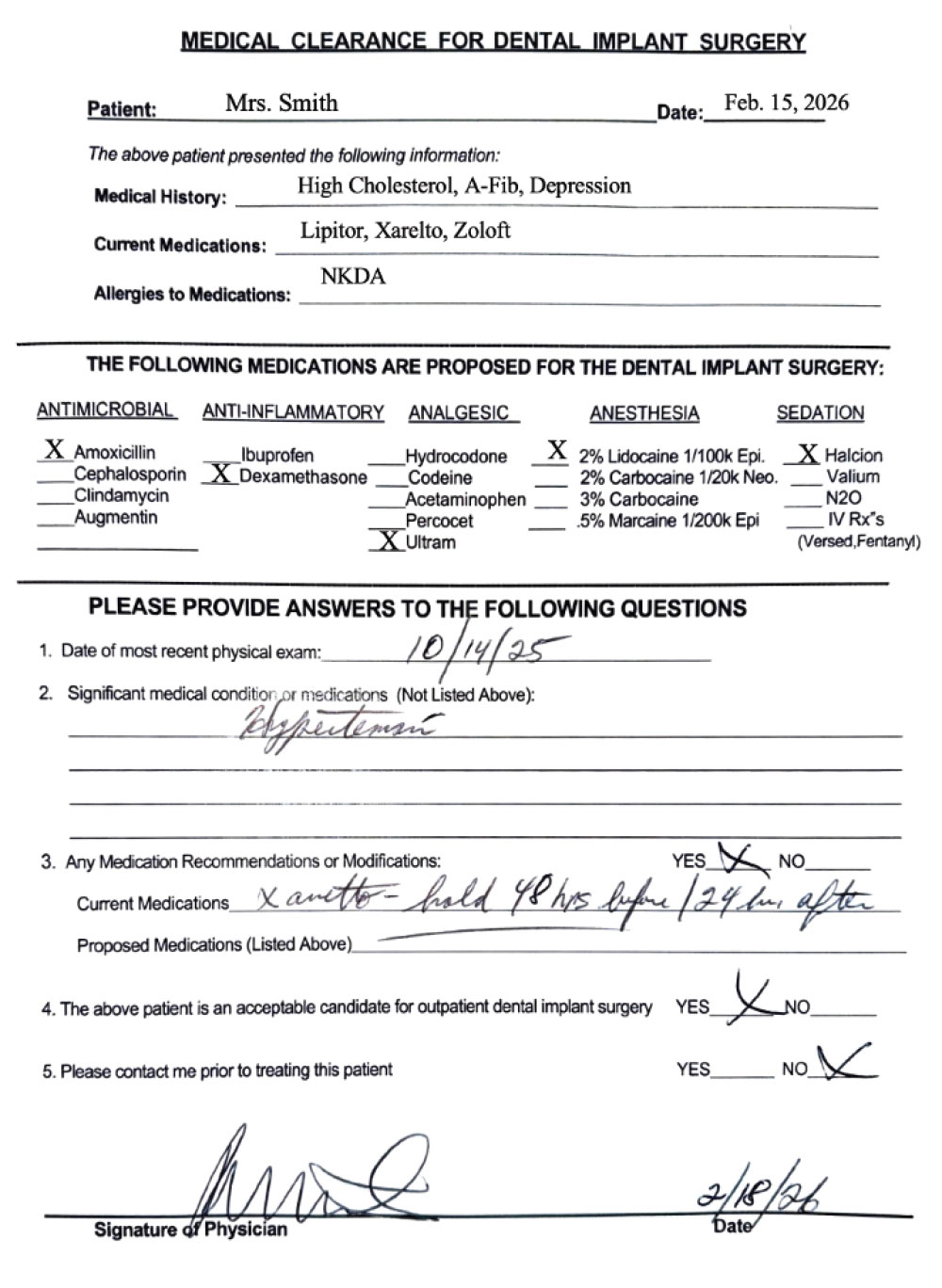
Obtaining medical clearance offers several advantages. It assists in assessing the patient’s current medical status, identifying necessary treatment modifications, minimizing the risk of perioperative complications, recognizing medication-related concerns, and strengthening medico-legal defensibility through documented interdisciplinary communication (Fig. 1).
Unfortunately, the process of obtaining this clearance is often challenging for the dentist. Physician offices may delay their responses to clearance requests or decline to complete standardized dental clearance forms. In some cases, returned documentation may be vague, overly restrictive without clinical explanation, or simply consist of copies of medical records without explicit recommendations. These inconsistencies can create uncertainty for the dentist, potentially delaying care or complicating treatment planning. Consequently, clear communication and well-structured, procedure-specific clearance requests are essential to facilitate meaningful interdisciplinary collaboration.
PHYSICIAN PERSPECTIVES ON MEDICAL CLEARANCE
From a physician’s perspective, medical clearance signifies that, based on the available medical information and the description of the proposed procedure, the patient appears medically stable to proceed. It does not transfer responsibility for implant treatment planning, intraoperative decision-making, management of surgical complications, or postoperative care to the physician. The ultimate responsibility for the dental procedure remains with the treating dentist.
Additionally, physicians are accustomed to providing clearance for procedures performed in hospitals or accredited surgical centers, where comprehensive medical support systems are in place. These settings typically include anesthesiologists, perioperative nursing teams, and advanced emergency resources that collectively mitigate procedural risk. In contrast, dental offices function in a fundamentally different clinical environment, which may influence a physician’s perception of risk and contribute to more cautious or generalized responses.
Within this context, the physician’s role is to evaluate the stability of diagnosed medical conditions, assess the adequacy of ongoing medical management and determine whether medication adjustments are necessary prior to treatment. The physician may also identify systemic considerations, including bleeding risk, impaired wound healing, immunosuppression, or the potential need for antibiotic prophylaxis. Importantly, the physician’s opinion is inherently limited by the medical information available and the procedural details provided.
WHAT DENTISTS CAN DO TO ADDRESS THE CHALLENGE
1. Develop a Clear Understanding of Contraindications
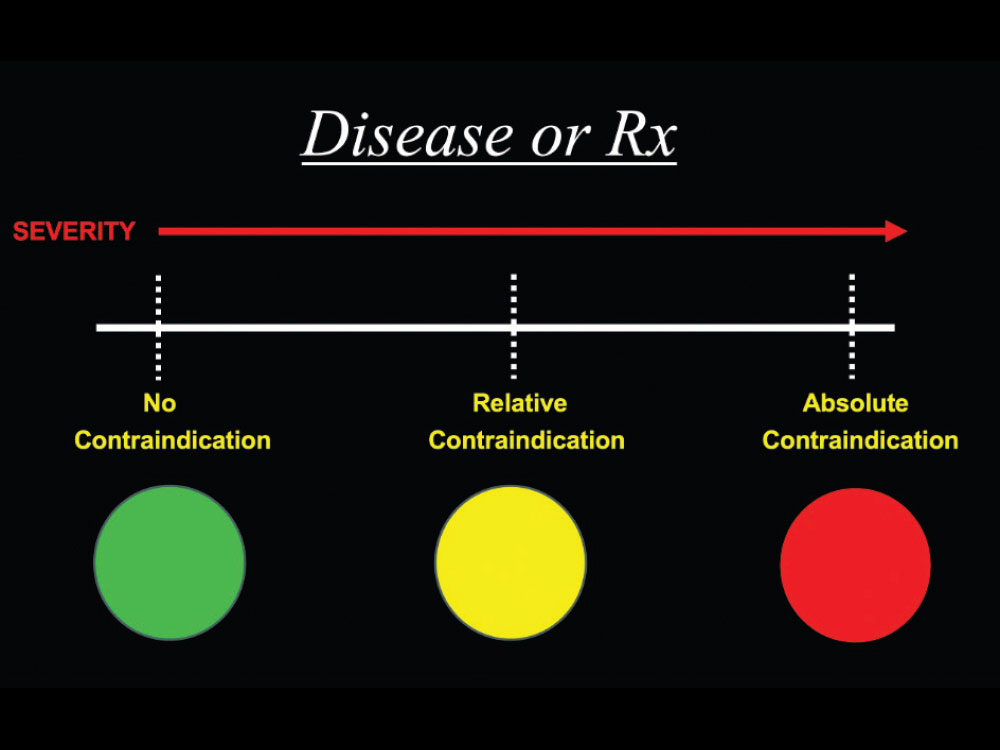
A fundamental component of comprehensive risk assessment in implant dentistry is the accurate identification and classification of contraindications. Contraindications represent clinical circumstances in which the risks of treatment may outweigh the anticipated benefits, either temporarily or permanently. Proper recognition and documentation of these conditions are essential for patient safety, sound clinical judgment, and adherence to accepted standards of care.
Absolute contraindications are present when the risk of proceeding clearly exceeds any foreseeable benefit under current conditions. In such cases, elective implant therapy should be deferred until medical stabilization is achieved. Examples include unstable cardiovascular disease; a recent myocardial infarction or cerebrovascular accident; uncontrolled systemic infection; or severe, uncontrolled metabolic disease. These conditions significantly increase perioperative morbidity and potential mortality. Therefore, treatment postponement and coordination with the patient’s physician are mandatory.
Relative contraindications, by contrast, describe clinical situations in which implant therapy may proceed if the anticipated benefits outweigh the associated risks and appropriate modifications are implemented. These cases require heightened clinical vigilance, comprehensive documentation, and a detailed informed consent process that explicitly communicates the patient’s elevated risk profile. Risk mitigation strategies may include staging surgical procedures, modifying surgical technique, coordinating medication adjustments, optimizing systemic health prior to treatment, or increasing postoperative surveillance (Fig. 2).
2. Understand the Full Spectrum of Risk
Comprehensive risk stratification in implant dentistry must extend beyond a singular focus on systemic disease and instead incorporate multiple interrelated domains of risk.
First, systemic risk is determined through a detailed review of the patient’s medical history and, when indicated, interdisciplinary consultation. This assessment includes evaluation of cardiovascular stability, level of glycemic control, immunologic status, bleeding tendencies, and the impact of current medications. Particular attention should be given to anticoagulants, antiplatelet agents, corticosteroids, immunomodulators, and antiresorptive therapies, as these may directly influence perioperative management and healing outcomes.
Second, procedural risk relates to the inherent complexity of the planned surgical intervention. Factors include anticipated surgical duration, extent of flap elevation and tissue manipulation, expected blood loss, implant number and position, and the need for adjunctive procedures such as sinus augmentation or guided bone regeneration. As surgical complexity increases, so does physiologic stress and potential complication risk.
Third, anesthetic risk varies according to the selected modality. Treatment performed under local anesthesia alone carries a different risk profile than procedures utilizing oral sedation, moderate IV sedation, or deeper levels of anesthesia. The patient’s physiologic reserve, airway considerations, cardiovascular status, and overall tolerance for sedation must be integrated into the overall risk assessment.
Finally, healing risk encompasses both biologic and behavioral variables that may influence osseointegration and soft-tissue stability. These include smoking status, nutritional status, metabolic control, compliance with postoperative instructions, history of periodontal disease, and the pharmacologic effects of medications on bone metabolism.
A comprehensive understanding of these four domains — systemic, procedural, anesthetic, and healing risk — allows the implant clinician to develop a balanced, patient-specific treatment strategy that prioritizes safety while maintaining therapeutic efficacy.
3. Utilize a Structured and Detailed Medical Clearance Form
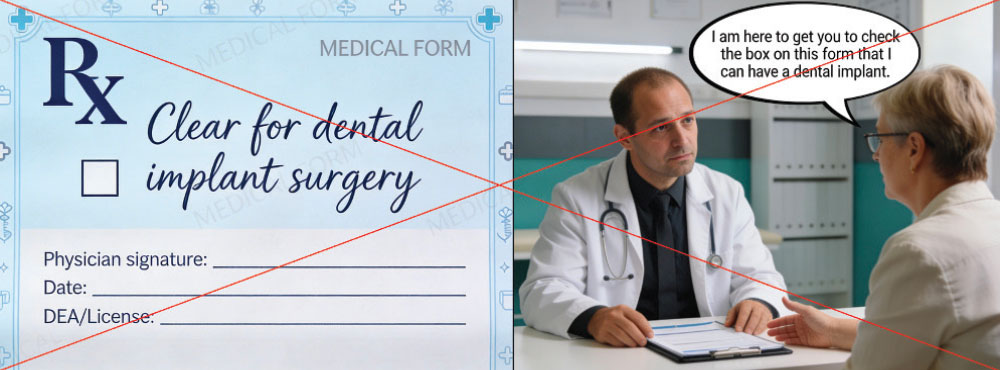
Breakdowns in communication frequently complicate the medical clearance process. Dentists often report frustration when physician responses are delayed, nonspecific, or overly restrictive. However, these outcomes frequently originate from deficiencies in the initial clearance request. It is necessary that the dentist’s request for medical clearance include a description of the planned procedure, the estimated surgical duration, anticipated blood loss, the intended sedation modality, and the proposed perioperative medications. A request that merely states, “Please clear this patient for implants,” lacks sufficient procedural context to allow for a meaningful medical risk assessment. In the absence of detailed information, physicians may understandably default to conservative or generalized recommendations that lack clinical specificity (Fig. 3).
Effective medical clearance is inherently bidirectional and dependent upon structured communication. The dentist must provide a clear, concise, and comprehensive description of the planned intervention, including the physiologic demands of the procedure and anticipated perioperative considerations. The physician, in turn, should offer specific guidance regarding medical optimization, medication management, and identifiable systemic risks.
Standardizing this exchange through the use of a detailed, procedure-specific medical clearance form significantly improves the quality of interdisciplinary communication. A structured document ensures that relevant clinical information is consistently conveyed and that physician responses address clearly defined questions. The use of a procedure-specific clearance document — such as the Resnik Medical Clearance Form (Fig. 4) — can enhance clarity, reduce ambiguity, and strengthen both patient safety and medico-legal defensibility in implant therapy.
RESNIK INSTITUTE MEDICAL CLEARANCE FORM
When the physician is given a clear description of the planned procedure — including surgical scope, anticipated duration, sedation modality, and perioperative considerations — the dentist is more likely to receive a thoughtful, clinically relevant recommendation. Conversely, incomplete or vague requests frequently result in generalized or overly cautious responses.
The Resnik Institute Medical Clearance Form is designed with this objective in mind and consists of two components: (1) a cover page outlining the proposed procedure and perioperative considerations, and (2) a structured clearance form that guides the physician in providing specific recommendations regarding medical stability, medication management, and risk mitigation.
By formalizing and standardizing this exchange, the clearance process becomes more efficient, more clinically meaningful, and more defensible from a risk management perspective.
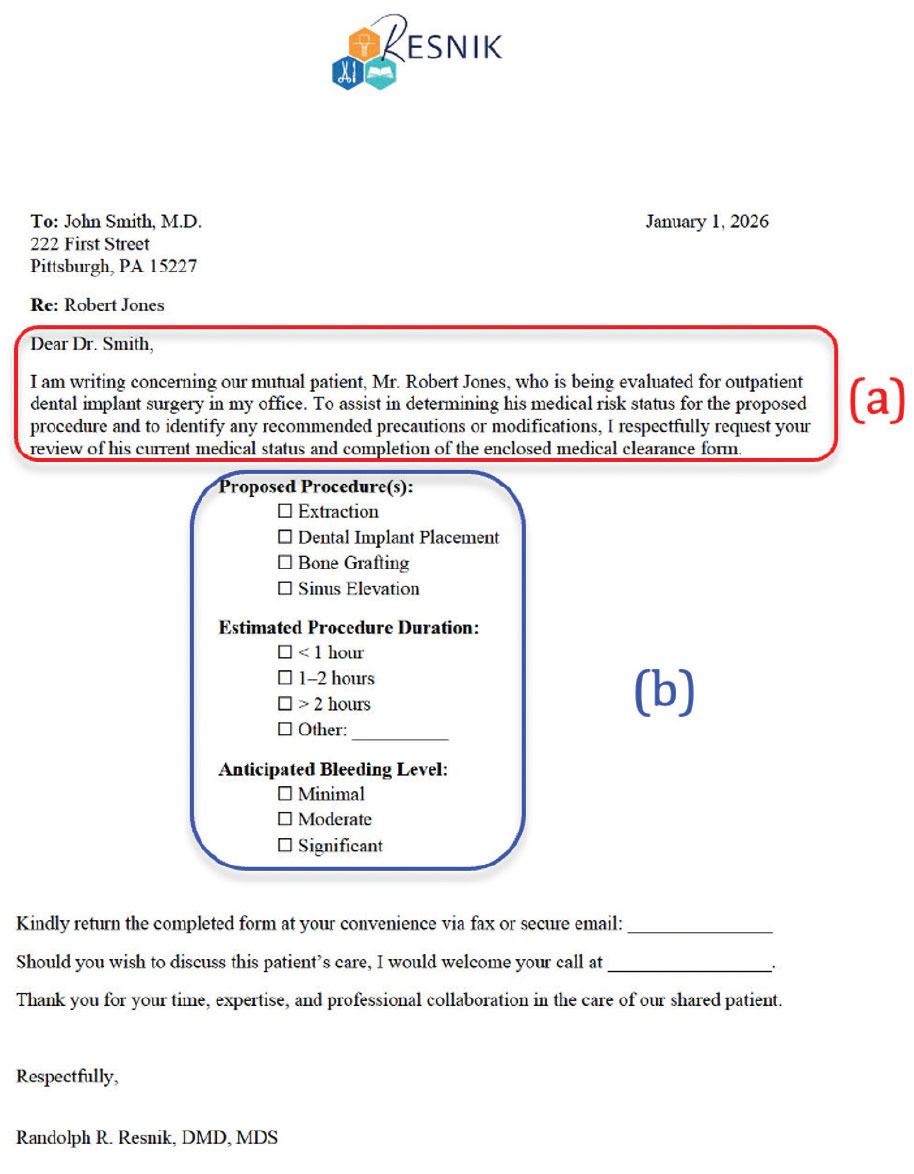
1. Cover Page
The cover page functions as a formal communication tool directed to the patient’s physician and provides a concise summary of the proposed implant procedure. It describes the general nature of the planned surgery, including the estimated treatment duration, anticipated degree of bleeding (minimal, moderate, or significant), and the intended anesthetic modality (Fig. 5a).
In addition, the cover page streamlines the transfer of key procedural information by utilizing a structured, checkbox format. This design enables the dentist to efficiently complete the form while allowing the physician to rapidly interpret the scope, duration, and expected physiologic impact of the procedure (Fig. 5b).
By clearly delineating these operative parameters, the cover page assists the physician in contextualizing the patient’s systemic health relative to the procedure and anticipated surgical stress. This structured and procedure-specific presentation enhances interdisciplinary communication and supports a more precise medical risk assessment.
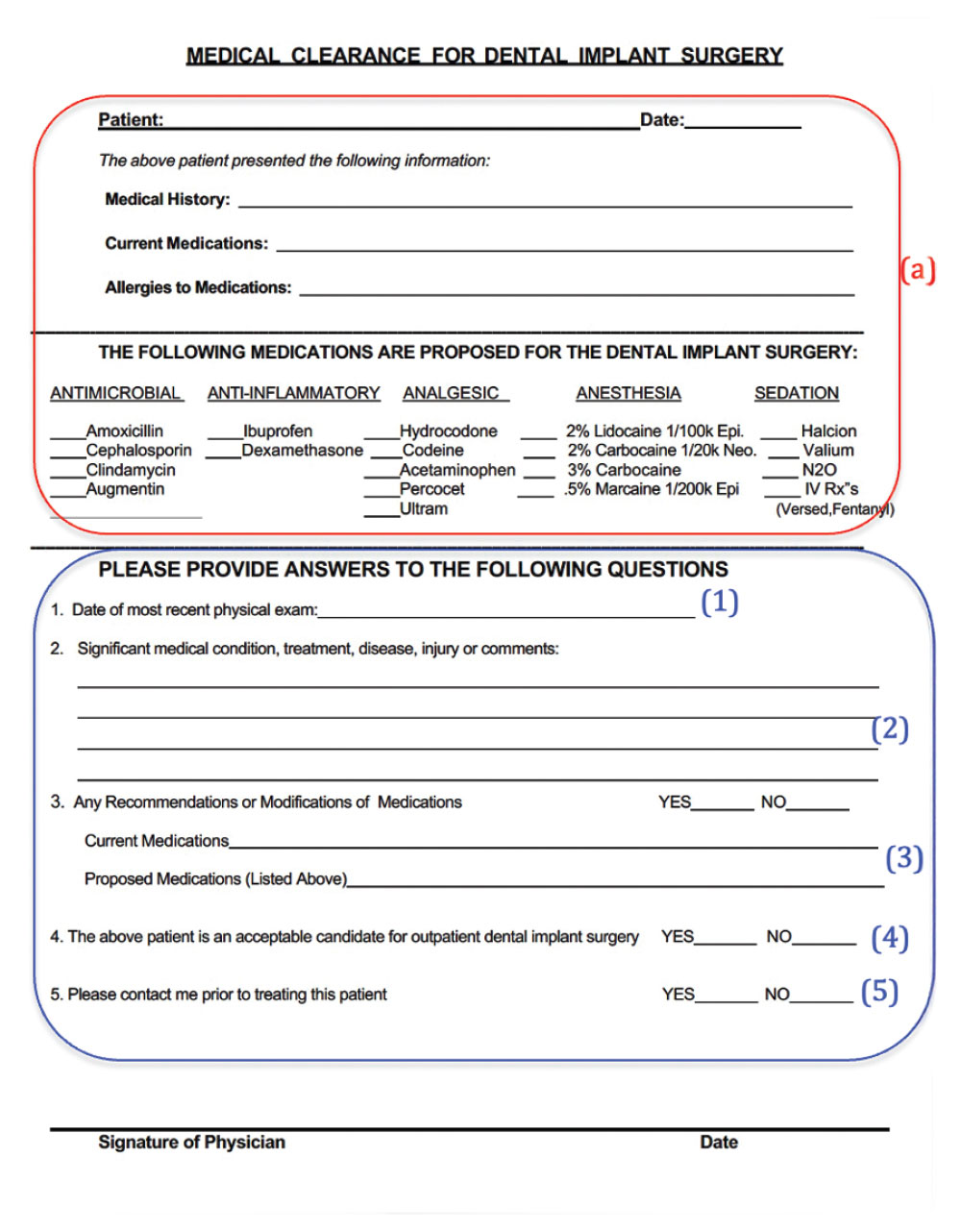
2. Medical Clearance Form
Part I – Dentist-Completed Section
The first section of the medical clearance form is completed by the dentist and is designed to provide the physician with a clear summary of the patient’s reported medical status. This includes the medical history as disclosed to the dental office, the current medication list, and any documented drug allergies (Fig. 6a)
Additionally, this section identifies the medications the dentist intends to prescribe or administer, including antibiotics, analgesics, anti-inflammatory agents, and any planned sedation medications. Providing this information enables the physician to assess potential drug interactions, contraindications, or necessary dosage modifications prior to the procedure. This proactive disclosure strengthens interdisciplinary collaboration and reduces the likelihood of perioperative complications related to pharmacologic management.
Part II – Physician-Completed Section
The second section is completed by the physician and serves to clarify and verify the patient’s current medical status (Fig. 6b). It includes documentation of the date of the patient’s last medical visit, which may provide insight into the patient’s compliance with ongoing medical care (Fig. 6b, pt. 1).
This section also allows the physician to identify any diagnosed medical conditions, medications, or relevant clinical information that may not have been disclosed to the dental office. The physician may highlight additional systemic considerations that could influence treatment safety (Fig. 6b, pt. 2).
A dedicated portion of the form is provided for specific recommendations, including modifications to the patient’s existing medications or guidance regarding medications to be prescribed by the dentist (Fig. 6b, pt. 3). Finally, the physician is asked to indicate whether the patient is medically stable to proceed with the proposed procedure (Fig. 6b, pt. 4), as described, and whether further communication is recommended prior to treatment (Fig. 6b, pt. 5).
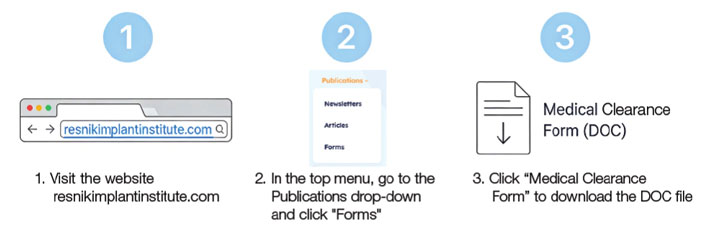
This structured format promotes clarity, reduces ambiguity, and ensures that both providers share a unified understanding of the patient’s medical risk profile. A copy of the form can be downloaded by dentists online at resnikimplantinstitute.com (Fig. 7).
CONCLUSION
Today’s implant patient is older, with a more complex medical history, and frequently managed with multiple pharmacologic agents that may influence perioperative safety and healing. In this environment, successful outcomes depend not only on surgical skill, but on thoughtful integration of medical information into procedural planning. In this environment, the process of obtaining medical clearance must evolve from a routine administrative task to a deliberate, structured component of comprehensive risk management.
Medical clearance does not shift responsibility from the dentist to the physician. Rather, it serves as a collaborative mechanism for systemic risk assessment. Bridging the gap between medicine and dentistry requires clear communication, mutual understanding of clinical roles, and procedure-specific information that allows physicians to provide meaningful recommendations. Vague or incomplete requests inevitably lead to generalized or overly cautious responses; structured, detailed communication promotes clarity and enhances patient safety.
By understanding the different levels of contraindication, appreciating the full spectrum of risks, and implementing a standardized medical clearance form, implant clinicians can transform the clearance process into a powerful clinical tool. When supported by meticulous documentation and transparent informed consent, this approach strengthens both patient-centered care and medico-legal defensibility.
Ultimately, the goal in securing medical clearance is not merely to request approval, but to foster informed interdisciplinary collaboration. When medicine and dentistry communicate effectively, patient safety is enhanced, clinical decision-making is strengthened, and implant therapy can be delivered with confidence — even in medically complex patients.
Available CE Course
References
-
Fernández-Feijoo J, Garea-Gorís R, Fernández-Varela M, Tomás-Carmona I, Diniz-Freitas M, Limeres-Posse J. Prevalence of systemic diseases among patients requesting dental consultation in the public and private systems. Med Oral Patol Oral Cir Bucal. 2011 Dec 6;17(1):e89–93.
-
Alonaizan FA, Almas K, Nazir MA, Almazrou D, Alzamil M, AlOlyani MA. Medical conditions, oral health practices, and barriers to treatment among patients visiting a teaching dental hospital in Eastern Saudi Arabia. ScientificWorldJournal. 2022 Feb 4;2022:4495757.
-
United Nations Department of Economic and Social Affairs, Population Division (2020). World Population Ageing 2020 Highlights: Living arrangements of older persons (ST/ESA/SER.A/451).
-
Boersma P, Black LI, Ward BW. Prevalence of multiple chronic conditions among US adults, 2018. Prev Chronic Dis. 2020 Sep 17; 200130.
-
Hales CM, Servais J, Martin CB, Kohen D. Prescription drug use among adults aged 40–79 in the United States and Canada. NCHS Data Brief. 2019 Aug;(347):1–8.