
In this issue:
Robotics and Automation
Manufacturing techniques developed in the 20th century were highly successful at producing large numbers of identical products. Dental laboratory production, however, presents a different challenge, requiring the production of individualized, complex, patient‑specific designs. Dentistry’s unique requirements limited the early adoption of advanced manufacturing techniques until the pioneering work of Duret and Mörmann in the 1970s demonstrated the viability of individualized CAD/CAM systems, laying the foundation for digital manufacturing in dentistry.
As digital workflows matured, laboratories adopted scanning, design, and milling software to address long‑standing challenges related to accuracy and turnaround time. These tools improved consistency, yet much of the process remained labor‑dependent, particularly in areas requiring subjective judgments like shade matching, fit evaluation, and case handling. Initially, automation existed in isolated steps rather than an integrated system.
Increases in case volume and increasingly complex restorative designs led to bottlenecks between digital design and physical production, and variability persisted when steps relied on manual transfer or human interpretation. This environment signaled the need to include customized robotic systems capable of coordinated movement, verification, and production decisions across the entire manufacturing process.
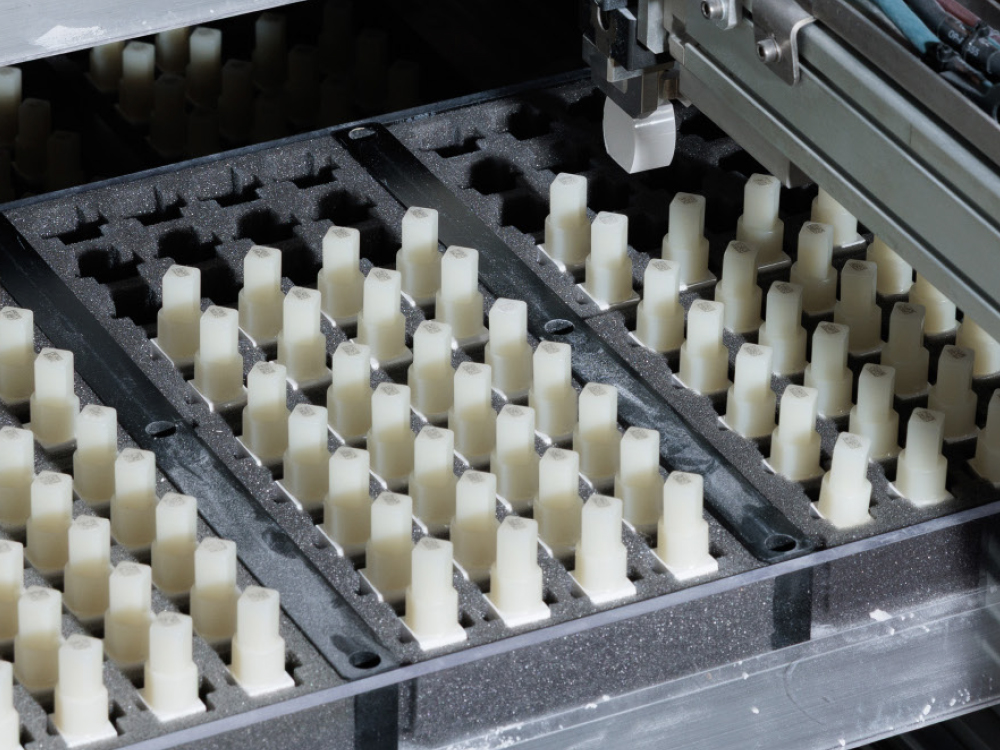
Rather than adapting traditional mass‑manufacturing models, Glidewell developed custom in‑house robotics tailored to dental manufacturing at scale without sacrificing anatomical individuality. Engineering teams focused on designing systems that manage thousands of unique restorations simultaneously and align digital design, material handling, and production sequencing within an accurate digital workflow.
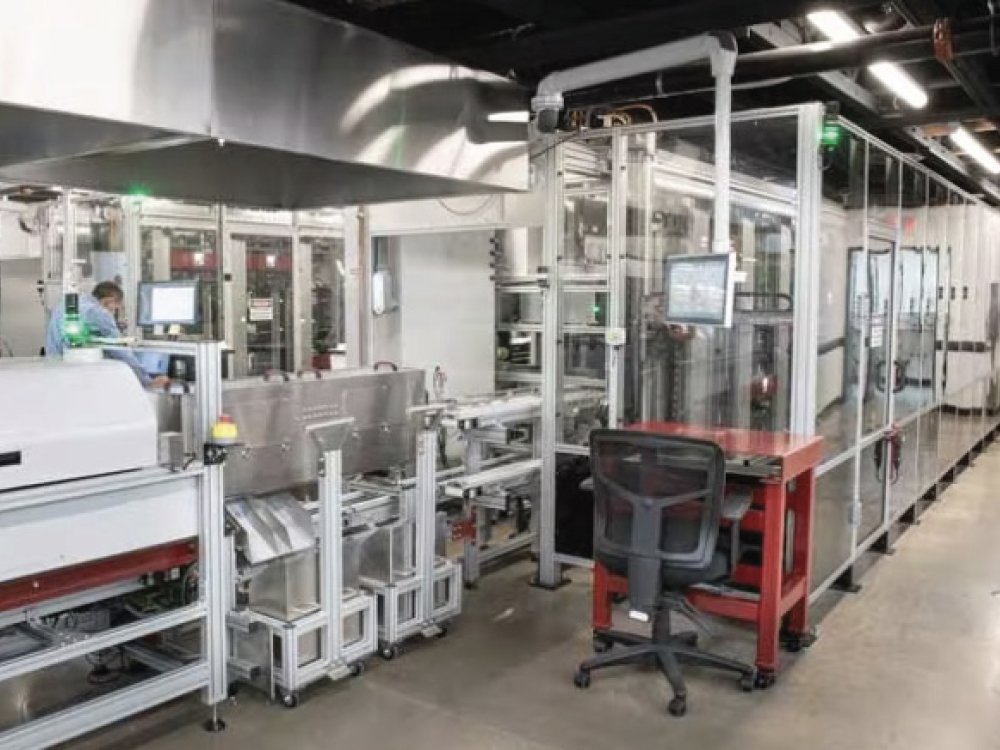
This approach culminated in the Glidewell Intelligent Manufacturing center, also known as BruxZir® Factory. Organized around multiple automation lines, real‑time tracking, and coordinated process control, the system supports consistent BruxZir Zirconia restoration manufacturing with little manual handling.
Intelligent Manufacturing From Scan to Finish
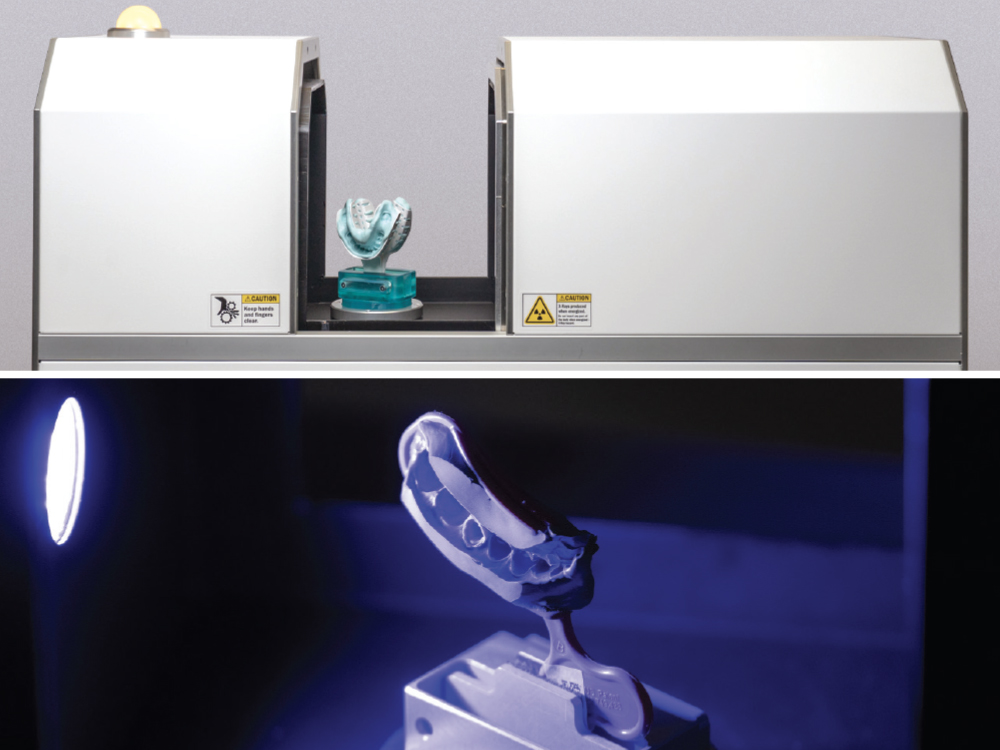
Most of the cases arrive at Glidewell as digital files, and about 30% arrive as physical impressions. In those instances, an in-house-designed CT scanner converts the impression into a digital file and transfers it to a fully integrated design system. Proprietary AI-assisted software then automatically generates a design, beginning with a virtual model process including die trim, cleanup, and margin marking before progressing to restorative proposals based on patient morphology. From there, a technician accepts or modifies the design and sends it through to manufacturing.
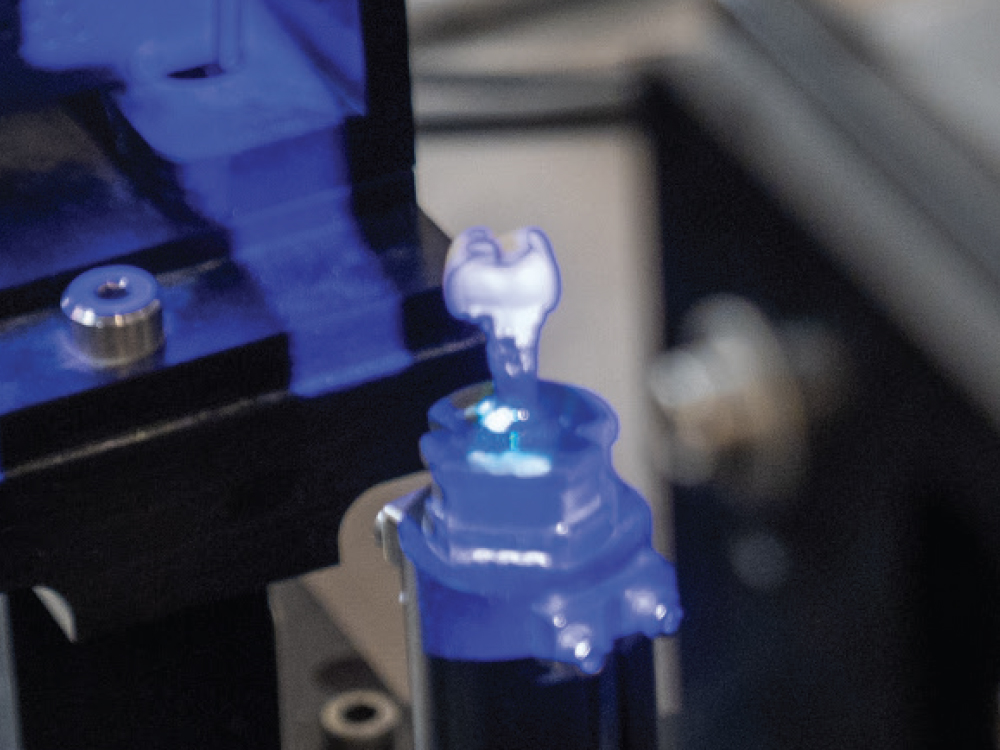
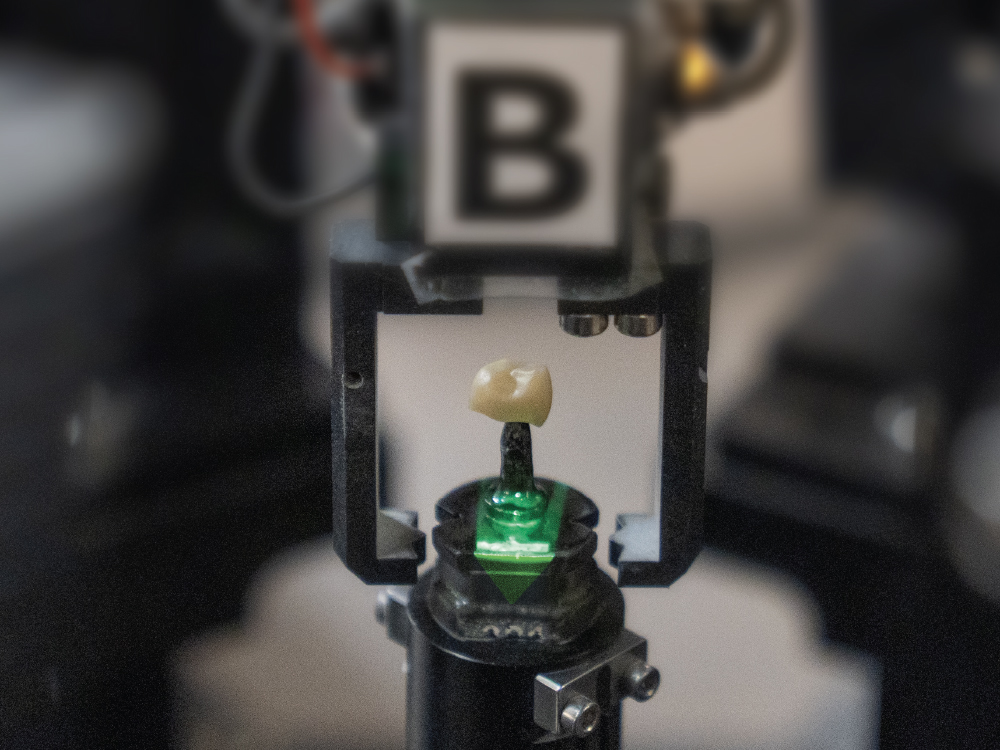
As a strong safeguard against mix‑ups, every single- or multiple-unit restoration produced in BruxZir Factory is assigned a unique code at the start to identify and monitor it as it moves through the production line. This ensures that the unit is matched with the correct patient case and has a complete, traceable history from start to finish.
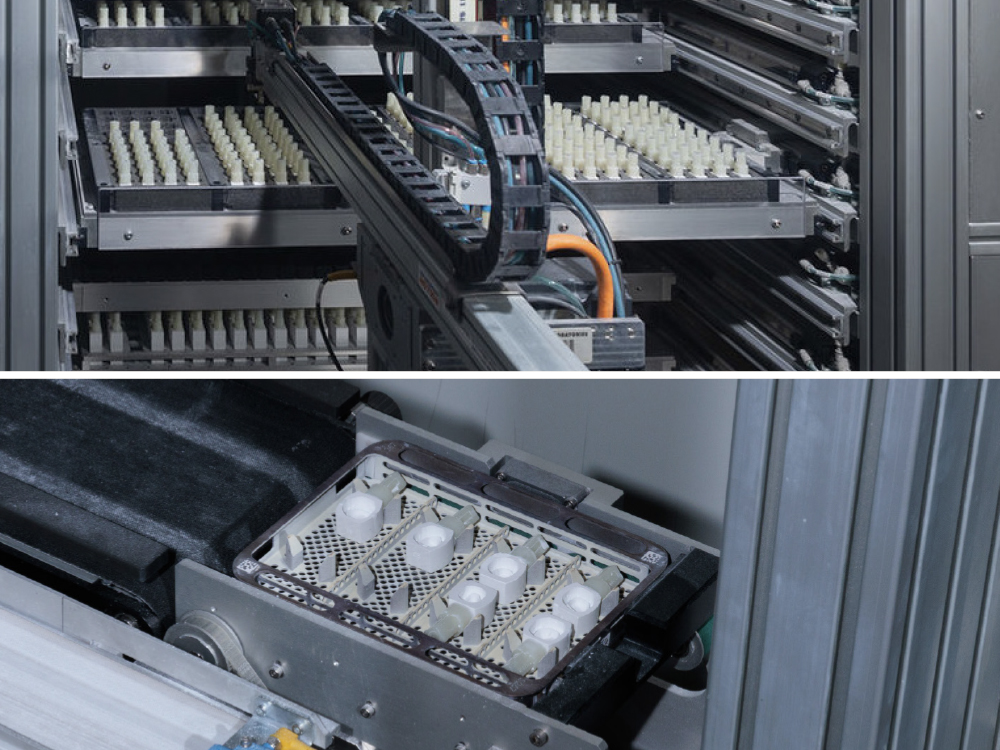
The manufacturing workflow begins with a series of robotic arms selecting a BruxZir Full-Strength or BruxZir Esthetic block based on digitally specified requirements, including dimension and shade. Once the appropriate block has been selected, it is passed on to the next available mill in the milling center.
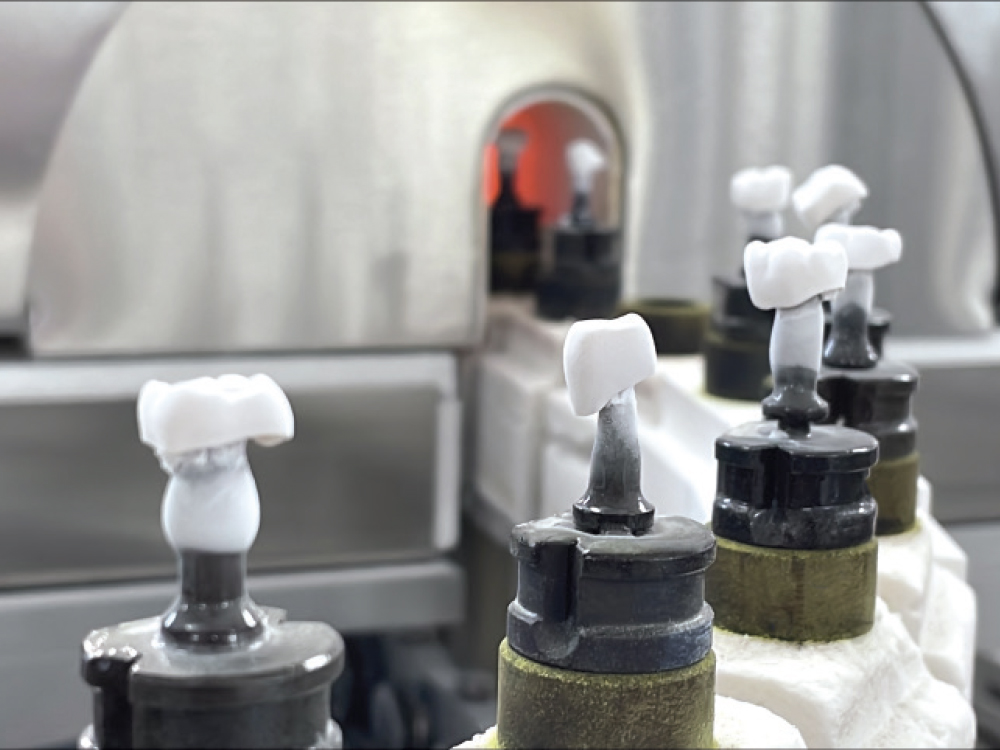
After milling, trained operators inspect the restorations for any milling errors, then apply specific shading recipes to each crown in a process known as presinter coloring.
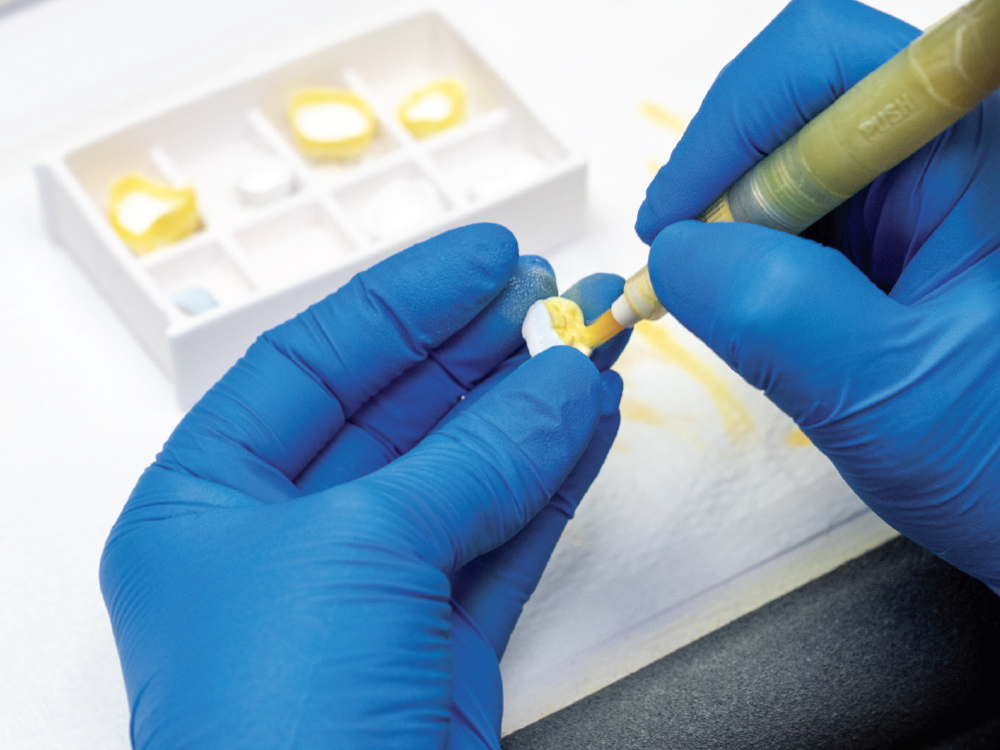
The units continue their journey to shade characterization, where a precolor technique is used to create lifelike shade gradients that are revealed after sintering. This also serves as an inspection point for technicians to validate milling accuracy.
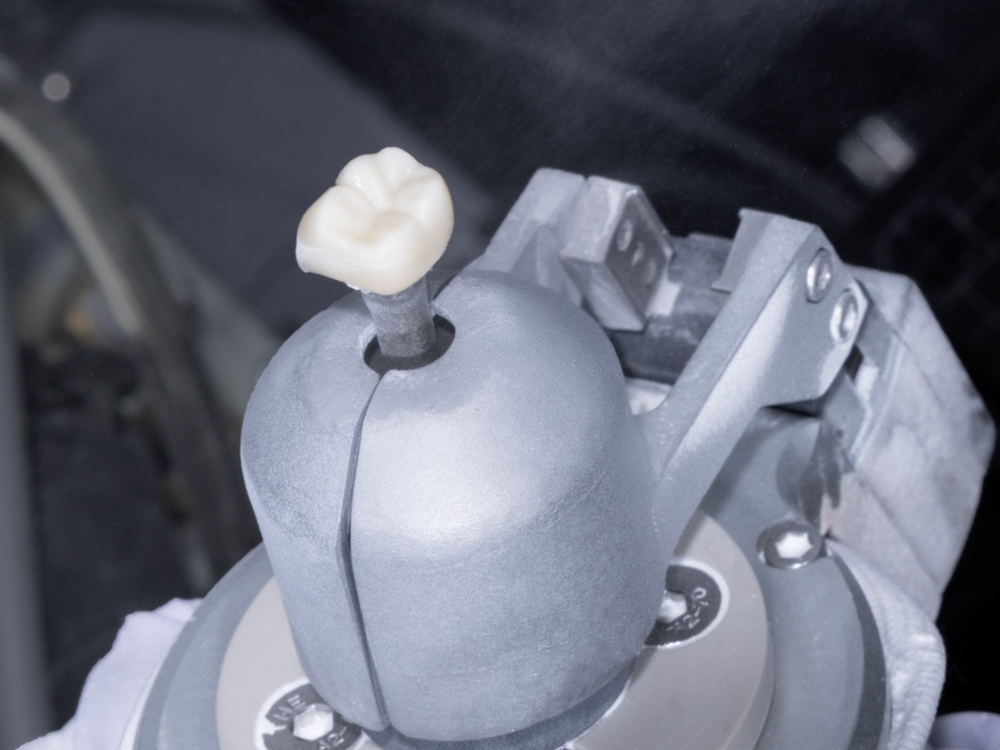
Operators deliver the sintered restorations to finishing and quality control, where technology developed by Glidewell engineers performs dimensional surface measurements to ensure accurate fit and glazing to provide each restoration with a natural, soft-tissue friendly surface finish.
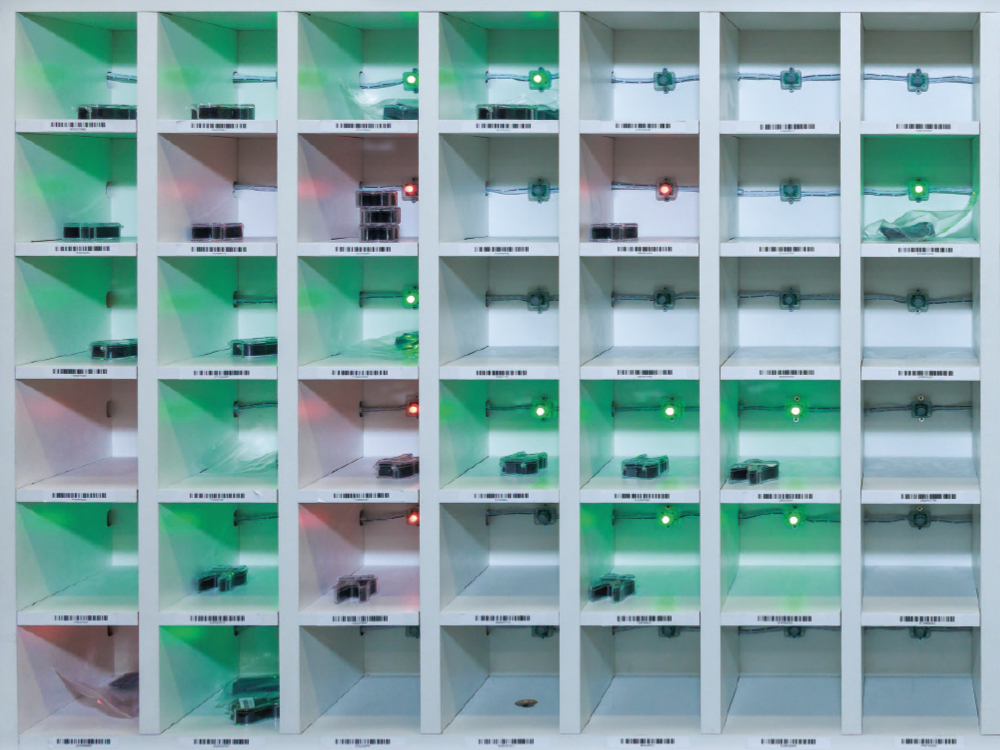
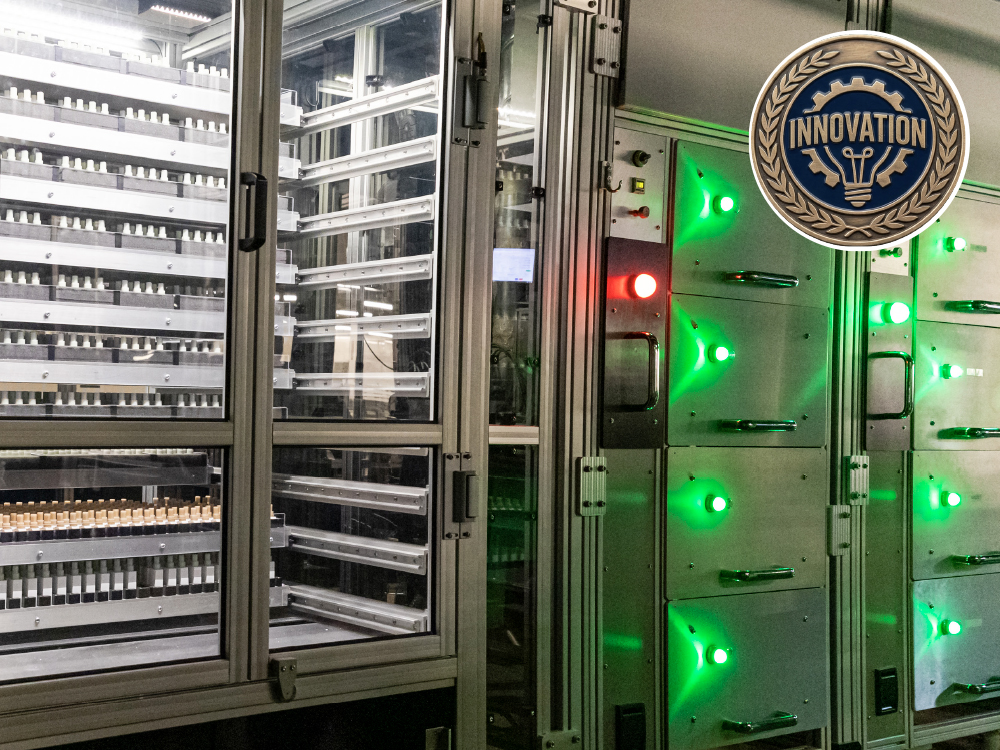
In the shipping area, staging cubicles and an LED light system have been devised to bundle multiple restorations per patient, and multiple patients per doctor, before packaging, helping to reduce outbound shipping costs for the dentist. LED indicators signal complete jobs, and the ready items are placed on conveyors that route them to packaging.
The entire process is continuously monitored and optimized for peak performance. This robust manufacturing software also automates essential tasks like calibrations and provides proactive technician service alerts to eliminate bottlenecks and quickly troubleshoot any production line issues.
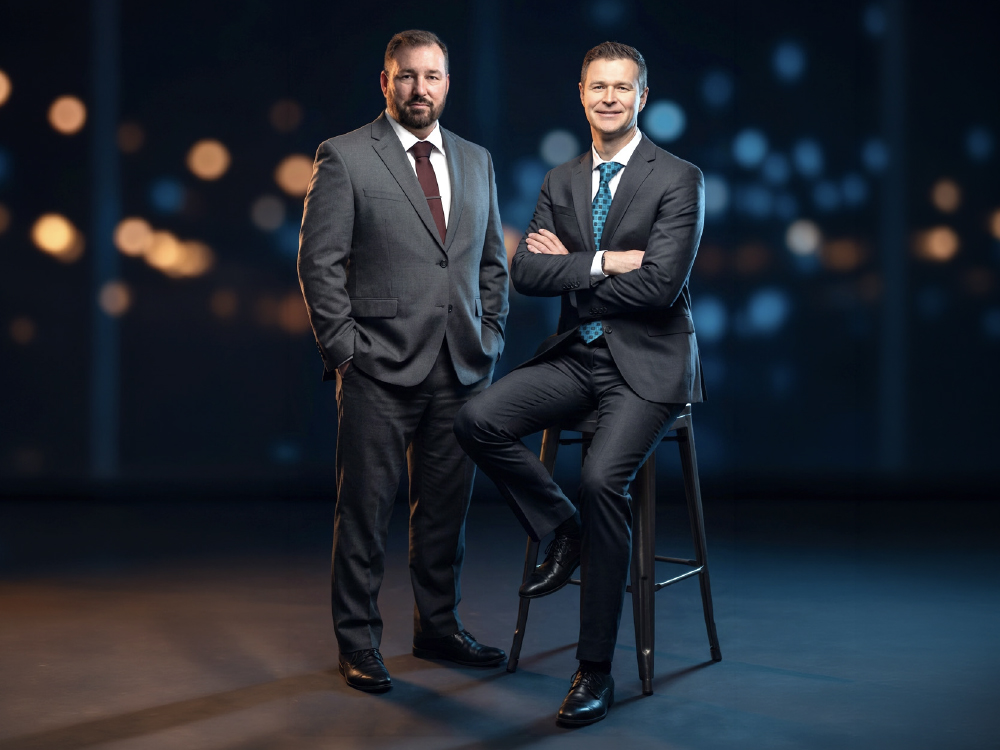
The Innovators
David Leeson
EVP of Engineering, Manufacturing, and R&D
With a background in high-performance Formula 1 engineering, David found dentistry to be an exciting arena for innovation. As executive vice president at Glidewell, he has led the transformation of traditional lab processes into highly automated, AI‑driven manufacturing systems. David champions “mass customization,” combining advanced robotics, data, and engineering to deliver consistent, patient‑specific restorations at an industrial scale, helping redefine how modern dental production is designed and delivered.
James Zamora
VP of Engineering
While he earned a Master of Business Administration, James worked as a mechanical engineer designing and developing custom automation manufacturing equipment for a variety of industries, including medical, pharmaceutical, automotive, and defense. At Glidewell, James leads several engineering verticals, including product development, automation engineering, process engineering, and digital equipment maintenance. He says, “Glidewell offers limitless potential for groundbreaking engineering achievements.”